
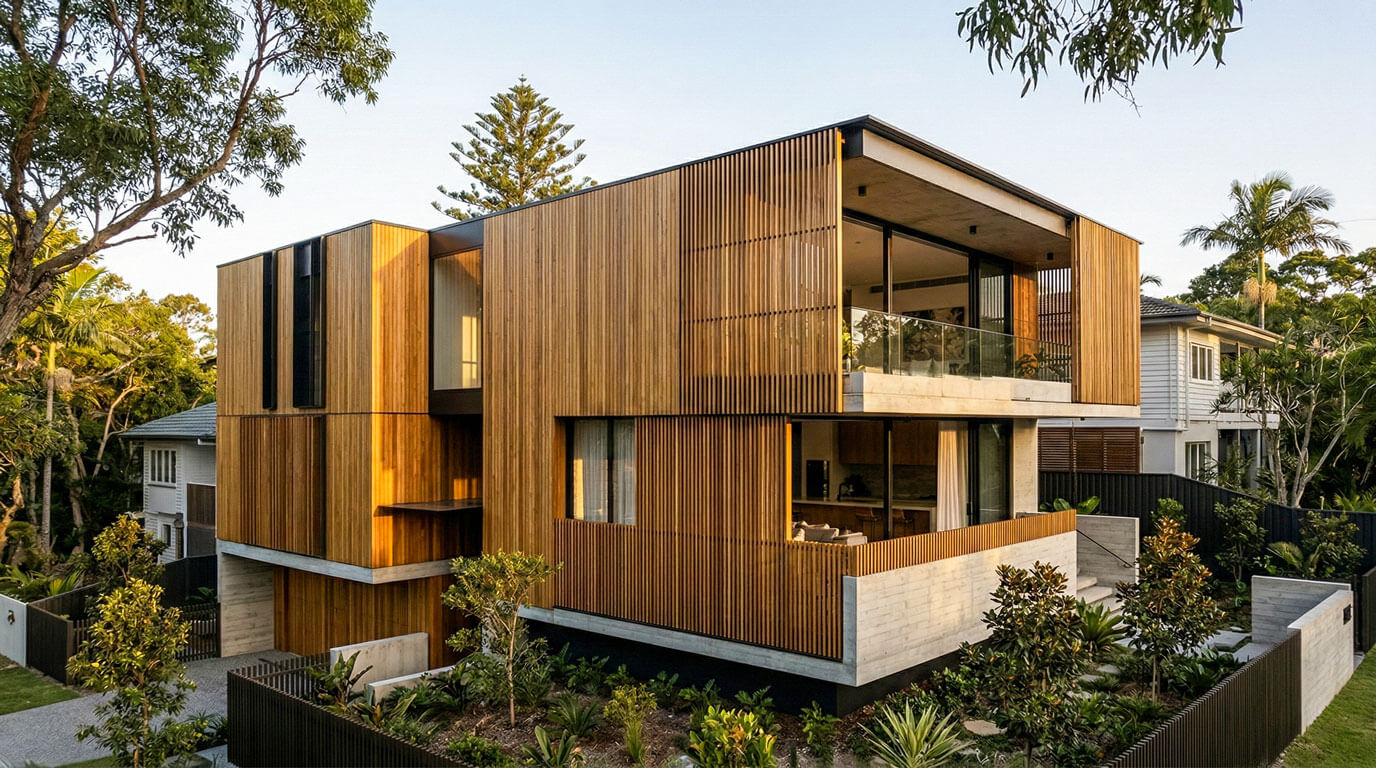
 Vertical timber screening creates a dynamic rhythm that 'animates' the building’s skin throughout the day.
The true power of timber is found in its ability to blur the edge between the sanctuary and the site.
 The 'vertical rhythm' of timber battens serves to anchor the home into the vertical forms of the surrounding landscape.
The Vertical Rhythm
The use of vertical timber battens or cladding serves to create a sense of rhythm and shadow play across a facade. Unlike static masonry, timber reacts to the movement of the sun; as the day progresses, the depth of the battens casts changing shadows, effectively 'animating' the building’s skin.
This verticality acts as a visual anchor, drawing the eye upward and integrating the home into the vertical forms of the surrounding palms and coastal trees. By selecting species with high natural durability - such as Spotted Gum or Ironbark - the architecture is prepared for the rigorous coastal sun while maintaining a refined, furniture-grade finish.
 Embracing the natural silvering of timber as a form of rugged elegance that reflects the maturity of the site.
The Silvering Path
A critical aspect of timber knowledge is the appreciation of time. Subject to the salt-laden air and intense ultraviolet exposure of the coast, timber naturally begins to 'silver' if left untreated - a process that many mistakenly view as a failure of the material.
A more considered architectural approach embraces this silvering as a form of rugged elegance. The transition from a honey-toned fresh board to a weathered silver-grey reflects the maturity of the site. When paired with raw off-form concrete or natural stone, the silvered timber assumes a stony, permanent character that requires less chemical maintenance and feels deeply embedded in the local landscape.
Inside-Out Continuity
The true power of timber is found in its ability to blur the edge between the sanctuary and the site. By matching the timber species and grain direction of internal ceiling planes with external eaves, the psychological barrier of the wall is invited to disappear.
The eye follows the continuous line of the grain from the lounge out into the garden, broadening the visual reach of the home. This material continuity is essential for creating a home that feels expansive and unified, where the warmth of the interior is shared with the landscape beyond.
 Material continuity from the lounge to the eave blurs the physical boundary, broadening the visual reach of the interior.
Maturing with the Coast
The alignment of material and site fosters a home that ages with grace. Embracing the natural lifecycle of timber supports a lifestyle of ease and longevity. This tactile connection to the landscape prioritises a grounded sanctuary where the architecture and the natural world exist in lasting harmony.
Want Timber That Weathers With Your Home, Not Against It?
Selecting the right timber for coastal conditions — and detailing it to silver gracefully rather than deteriorate — is a balance of species knowledge, orientation, and craft. If you're planning a project where timber plays a central role, we'd enjoy discussing the possibilities with you.


