
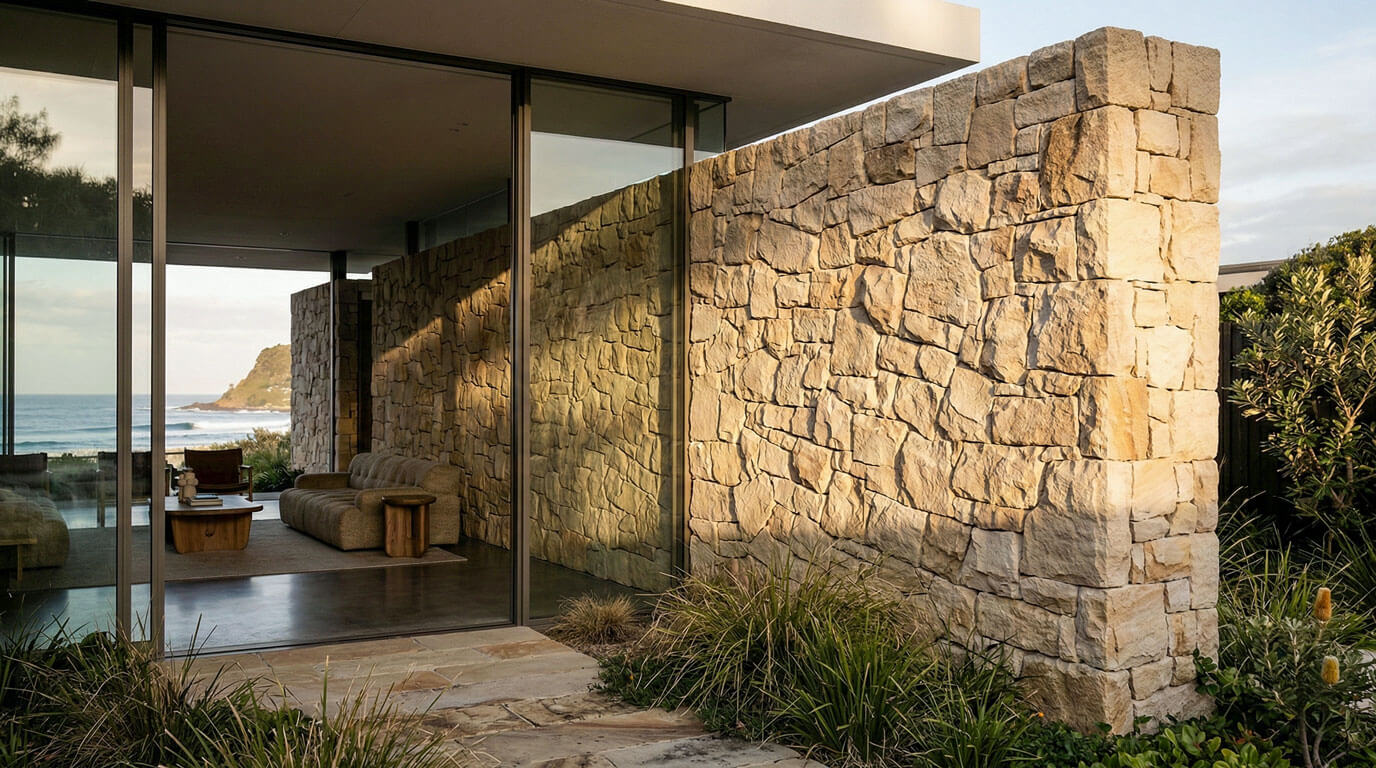
 Treating masonry as the 'spine' of the home—a heavy, tactile element that anchors the structure.
As the stone develops a natural patina over decades, it further settles the structure into its coastal context, becoming an enduring feature within the natural environment.
 Angled light reveals the deep crevices and haptic quality that grounds the occupant.
The Sensory Threshold
The primary value of stone cladding lies in its texture. Unlike the flat, reflective surfaces of modern cabinetry or plaster, natural stone - whether it be split-face sandstone or rugged granite - invites the hand to touch it. It provides physical resonance that grounds the experience of the space.
The strategic placement of stone at transition points - such as the main entry or a central fireplace - serves to create a pause in the visual journey of the site. This is the 'Architecture of Silence,' where the mass of the stone absorbs sound and light, creating a sanctuary of stillness within the open-plan coastal living zones.
 Utilising heavy stone as a thermal battery to naturally regulate the subtropical interior.
Thermal Mass and the Subtropical Climate
Beyond its poetic value, stone operates as a critical component of a home’s thermal performance. When positioned to receive winter sun, stone cladding acts as a thermal battery, absorbing heat during the day and radiating it slowly into the living space during cooler coastal evenings.
Conversely, in the height of summer, the cool touch of stone provides a psychological and physical relief from the humidity. The design intent is to utilise this thermal mass to reduce the reliance on mechanical heating and cooling, supporting a state of thermal repose throughout the year.
The Juxtaposition of Craft
The most resolved architectural moments occur where disparate materials meet, such as the deliberate pairing of heavy stone against the refined, horizontal lines of timber or the industrial precision of off-form concrete. This dialogue between the raw and the refined acknowledges that a home is not a singular entity, but a collection of materials that age in unison. As the stone develops a natural patina over decades, it further settles the home into its coastal context, becoming an enduring feature within the natural environment.
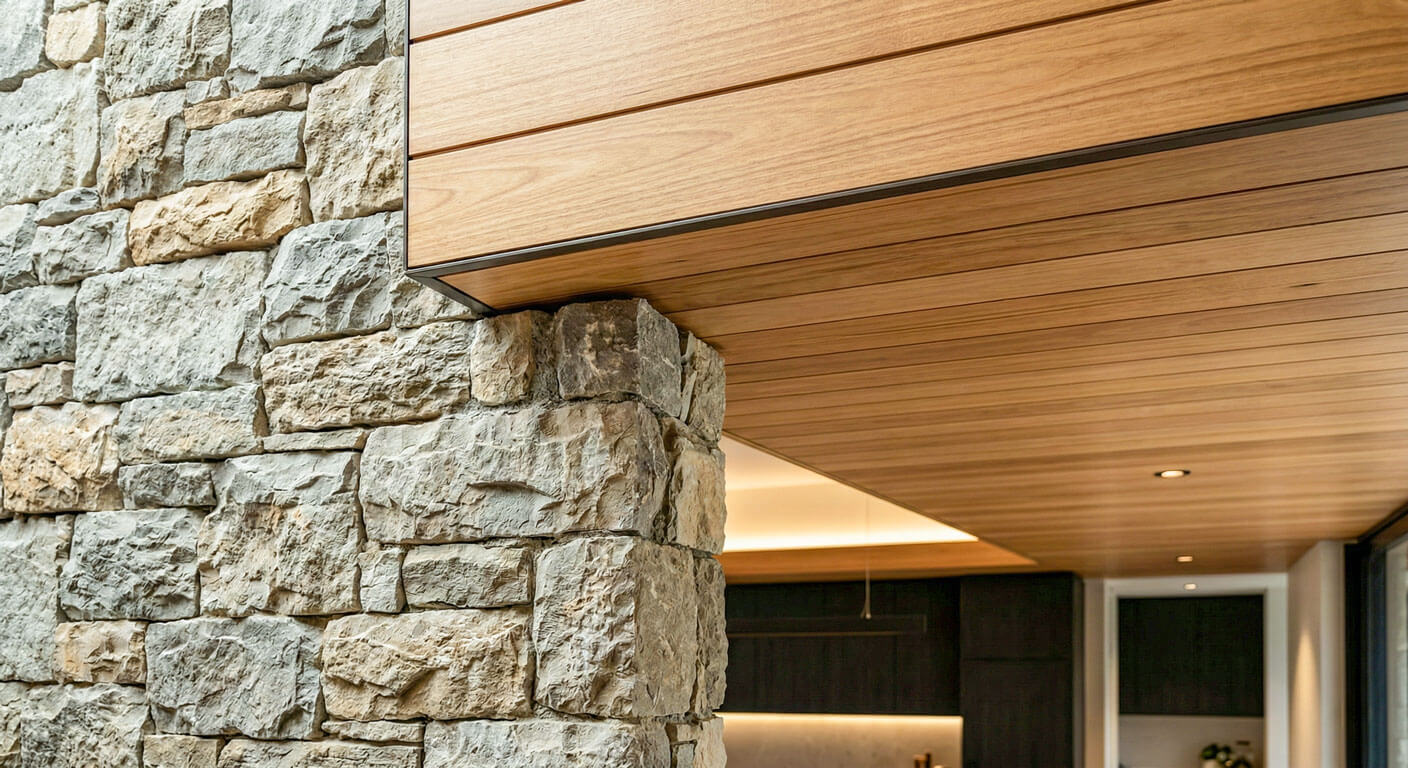 The sophisticated dialogue between the raw texture of stone and the refined warmth of horizontal timber.
A Stillness in Stone
The resolved integration of stone masonry results in a residence that prioritises durability and ease of maintenance. By selecting materials that age with character, a home gains a sense of steadfastness that supports social connection and individual well-being through a grounded, stable environment. This focus on enduring quality allows the architecture to remain relevant for generations, providing a sanctuary that is as much a part of the natural world as the built one.
Considering Natural Stone for Your Coastal Project?
Stone isn't just a finish — it's a structural and thermal strategy. On the Gold Coast, the right stonework provides thermal mass, coastal durability, and a sense of permanence that lighter materials can't achieve. If you're exploring natural stone for your home, we can help you understand which varieties work for your site, your budget, and your climate.


