
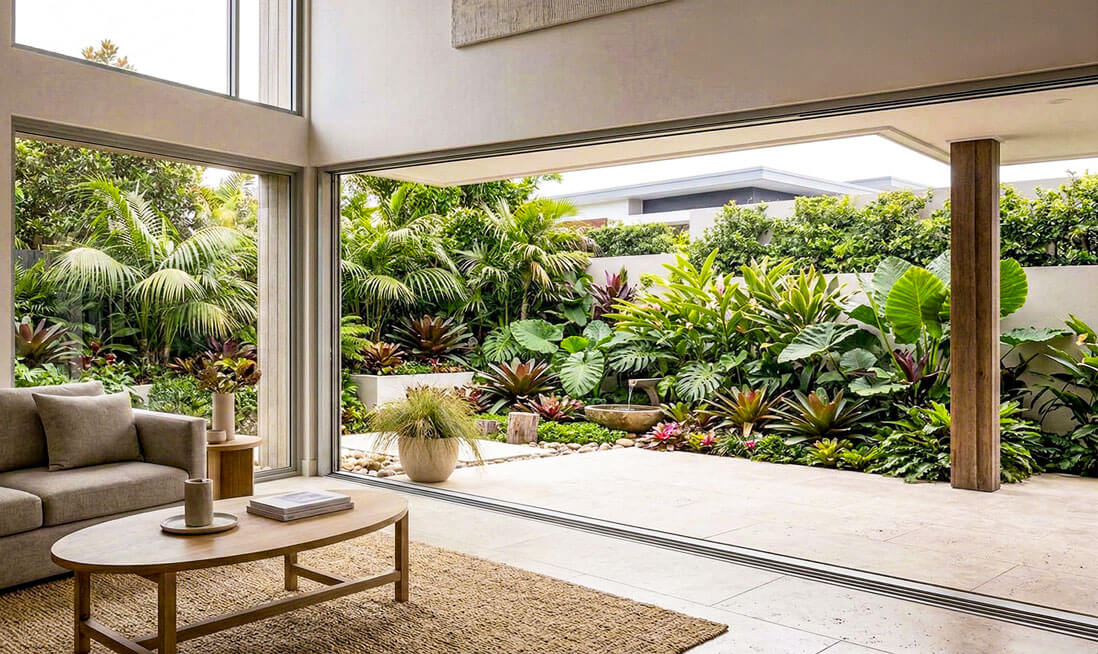
 Large-format honed travertine provides a sense of weight and geological history, maintaining a comfortable temperature underfoot across internal and external spaces.
Honed Travertine: A Cool Foundation
Large-format honed travertine provides a sense of weight and geological history to a living space. Unlike polished surfaces that reflect light harshly, the matte finish of natural stone absorbs and softens the Australian sun, maintaining a comfortable temperature underfoot.
When used across both internal floors and external terraces, it creates a seamless transition that encourages an open, breezy aesthetic.
When a design prioritises quality and authentic textures, the residence supports a slower pace of life and deepens the social connection between those who share the space.
 Large-format timber panels and integrated joinery serve as a warm counterpoint to stone, introducing acoustic softness and a rhythmic quality to the interior.
Australian Hardwoods: The Warmth of Grain
Timber serves as the essential counterpoint to the coolness of stone, introducing a necessary warmth and acoustic softness. Utilising large-format timber wall panels or integrated low-line joinery provides a rhythmic quality and a sense of scale to the architecture.
The natural grain of the wood introduces a fine-grain detail that invites the hand to follow its path.
Textural Layers: Linen and Light
The final layer of a material-driven interior is found in the soft furnishings that interact with the harder architectural edges. Heavy-weight linens in oatmeal and sand tones provide a softness that balances the rigidity of stone and timber. These fabrics catch the light and move with the coastal breeze, adding a dynamic, ephemeral quality to the room.
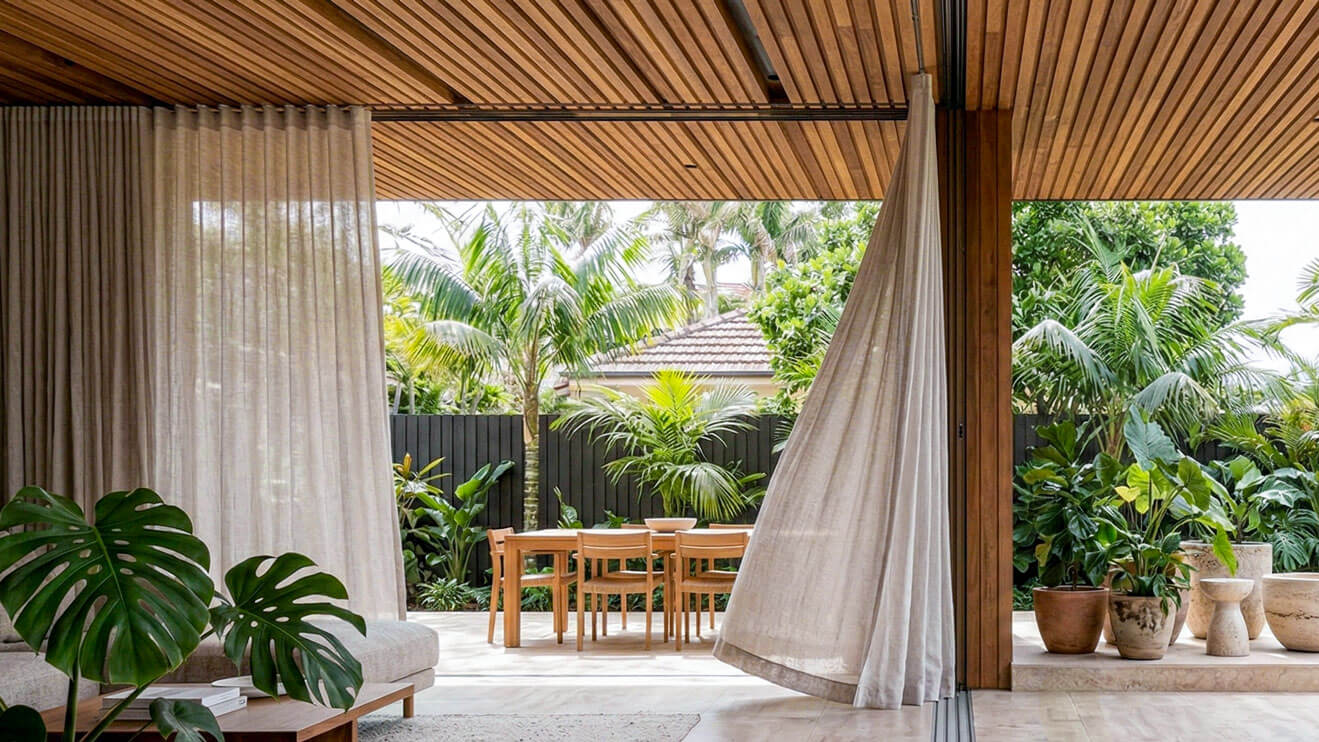 Textural layers of heavy-weight linen provide a softness that balances the rigidity of stone and timber, moving with the coastal breeze.
Longevity Through Material Integrity
A focus on material integrity provides a foundation for a home that ages gracefully, requiring less intervention as the years pass. When architectural design prioritises quality and authentic textures, the environment encourages a slower pace of life and provides a backdrop for social connection. This focus on longevity creates an environment that matures alongside the landscape, providing an honest residence with a definitive sense of place.


