
 A spatial response to the pulse. The architecture facilitates a profound sense of recovery through curated outlooks and natural textures, offering the psyche a definitive place to rest.
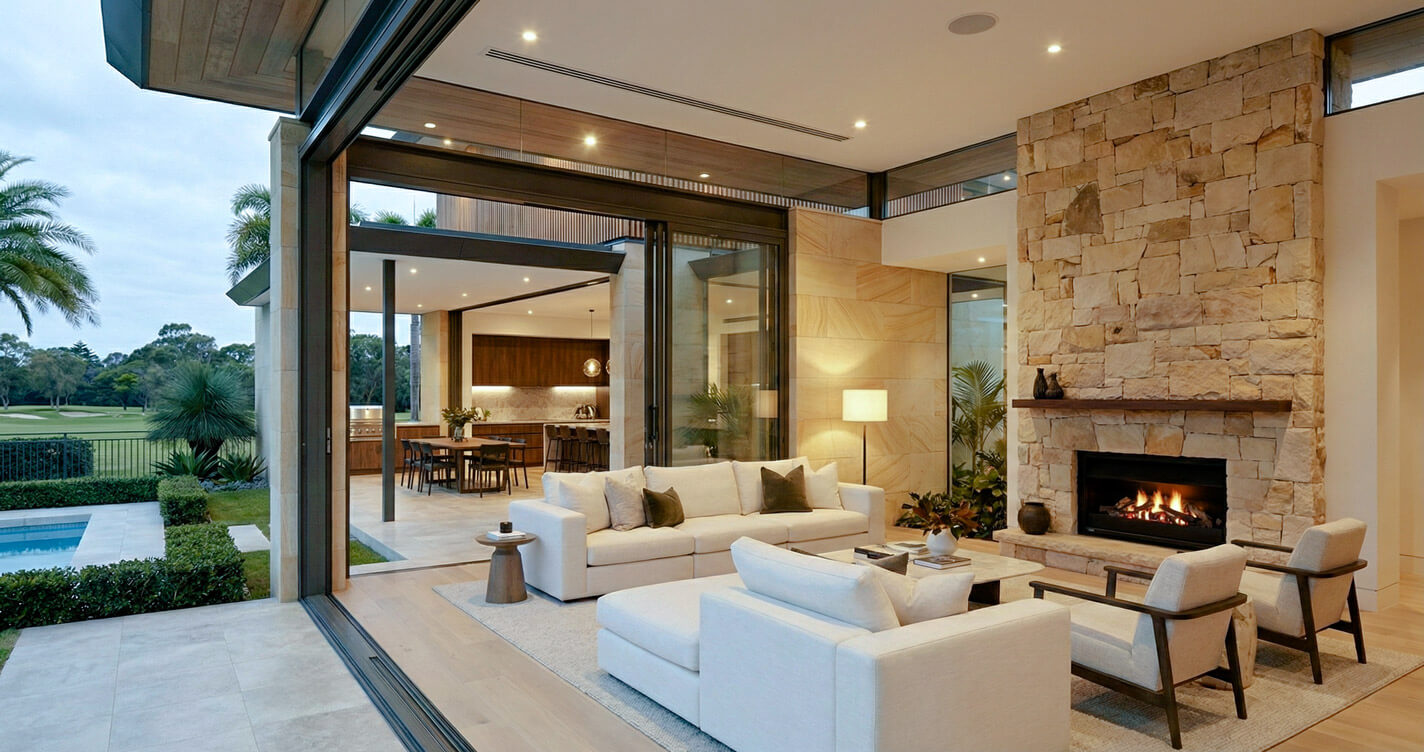 The movement of light. Instead of the flat, sterile glare of overhead lighting, a more intuitive approach captures the shifting spectrum of the day. Clerestory windows capture the warm afternoon sun, signalling the brain to decompress and making the house a place for rest rather than just residence .
The Movement of Light
Instead of the flat, sterile glare of overhead lighting, a more intuitive approach captures the shifting spectrum of the day. High-level clerestory windows capture the soft, blue light of morning, while interior lighting is designed to warm as evening arrives.
Research in neuro-architecture shows that this connection to the natural passage of time supports the body’s circadian rhythms - signalling the brain to decompress and making the house a place for rest rather than just residence.
 The geometry of peace. Shifting sunlight casts dynamic shadow patterns through timber screens, creating rhythmic "biophilic fractals" on the concrete canvas. This connection to the passage of time grounds the nervous system in the present moment.
Natural Patterns and Visual Rest
Studies in environmental psychology identify that the human mind finds a particular kind of peace in the imperfect lines of the natural world. Whether it is the grain of a timber beam or the rhythmic shadows cast by a batten screen, these biophilic patterns provide the eye with a definitive place to rest.
By moving away from sharp, synthetic surfaces and toward raw materiality, the architecture delivers the visual 'breaks' a busy mind craves. This connection to the organic - the essence of biophilic design - acts as a grounding force within the home.
 Acoustic layering. Soft textures and sheer curtains act as filters for light and sound, countering reflective surfaces to achieve a pocket of silence and promote psychological rest.
Acoustic comfort serves as a critical layer of design integrity, as excessive sound reflection is technically proven to heighten the subconscious sense of activity. Research in psychoacoustics indicates that high reverberation times in modern interiors can inadvertently elevate cortisol levels. To counter the reflective properties of expansive glass and hard surfaces, a strategy of acoustic layering is utilised.
Soft, porous materials act as a gentle filter for sound energy, while the irregularities of textured surfaces provide the sensory dampening necessary for the nervous system to recalibrate.
The Architecture of Stillness
The value of architecture is found in the stillness it provides. When a home is designed with the subconscious experience in mind, it becomes more than a building. Through the application of Neuro-architecture, the home can be transformed into a restorative environment - offering a clear, quiet space for the life unfolding within it.
Building a Home That Actively Supports Your Wellbeing?
Neuro-architecture isn't a trend - it's a design methodology grounded in how our bodies respond to light, sound, and spatial proportion. If you're investing in a new home and want the design to go beyond aesthetics - creating spaces that are considered around how you feel in them, not just how they look - we can show you how these principles inform our approach to your specific site and climate.


