
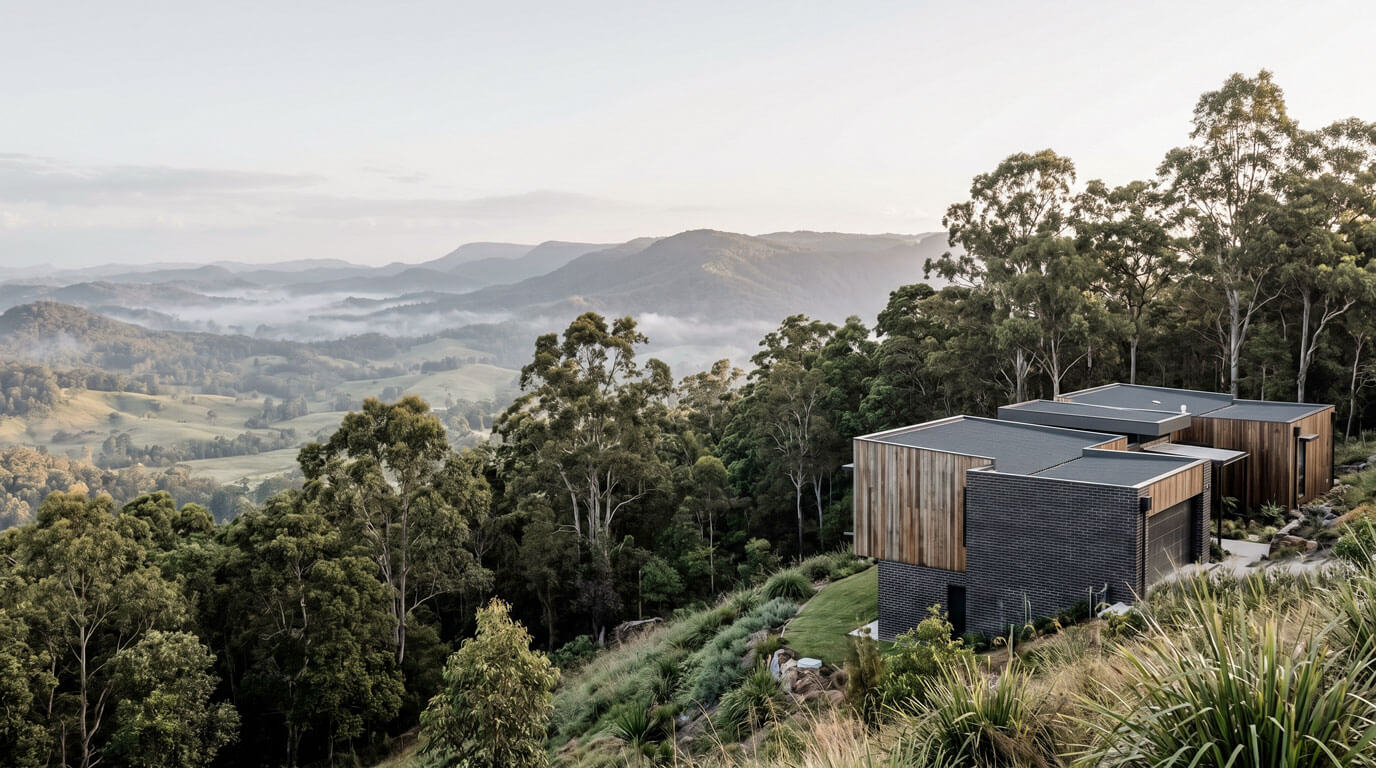
 A home shaped by its site - stepping with the land, oriented to the view, settled into the ridge rather than imposed on it.
Designing to the Site, Not the Season
A trend is, by definition, a style imported from elsewhere. It arrives fully formed, indifferent to the orientation of your block or the way your western wall catches the summer glare. It flatters the photograph more than the house.
Site-responsive design works the other way around. It begins with what is already there - the slope, the outlook, the neighbours, the noise, the path the sun traces across the block between December and June. The form of the home emerges from those constraints rather than being laid over the top of them. When a house is shaped by its site, it reads as inevitable. When it is shaped by a mood board, it reads as imported - and eventually, as dated.
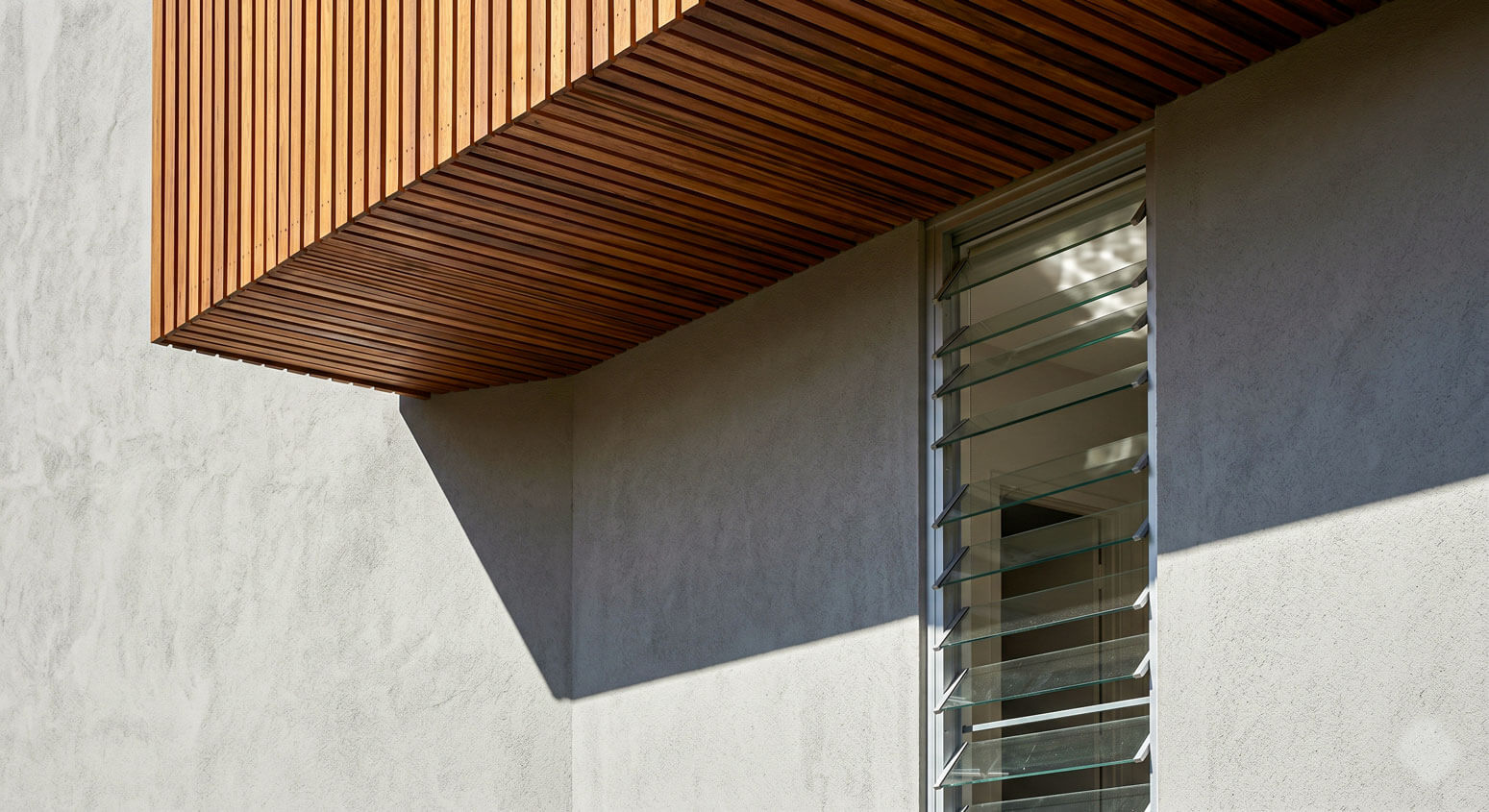 Eaves, orientation, and cross-ventilation as primary decisions — not afterthoughts. Designed for the climate, not sealed against it.
Climate as the First Brief
On this coast, the climate is not a backdrop. It is the brief. Humidity, salt, sub-tropical storms, a sun that moves through a wide arc across the year - these are the forces the architecture actually has to answer to, long after the aesthetic moment has passed.
A home designed for this climate reads eaves, orientation, and cross-ventilation as primary decisions, not afterthoughts. Openings are placed to catch the north-easterly. Shading is calibrated to the latitude, not borrowed from a cooler, drier place. Where a trend-led design treats climate as something to be sealed against and air-conditioned through, a contextual design works with it - and tends to be quieter, more comfortable, and less demanding to run as a result.
A house shaped by its site cannot go out of fashion, because it was never in it.
— Brett McDonald, Principal Architect
 Stone that mottles, timber that silvers, concrete that softens. Materials chosen for how they age, not how they photograph.
The Honest Question of Maintenance
Every material makes a promise and every material has a cost. The cost is rarely visible at handover; it reveals itself over ten, fifteen, twenty years, in the form of sealing schedules, replacement cycles, and the slow creep of salt into anything that was not chosen to meet it.
The question we return to on every project is a simple one: how will this element look, and what will it ask of the owner, in a decade? A material that weathers gracefully - that develops a patina rather than a problem - is almost always the more honest choice than one that depends on being kept pristine. Trends tend to prioritise the hero shot. Longevity prioritises the second decade.
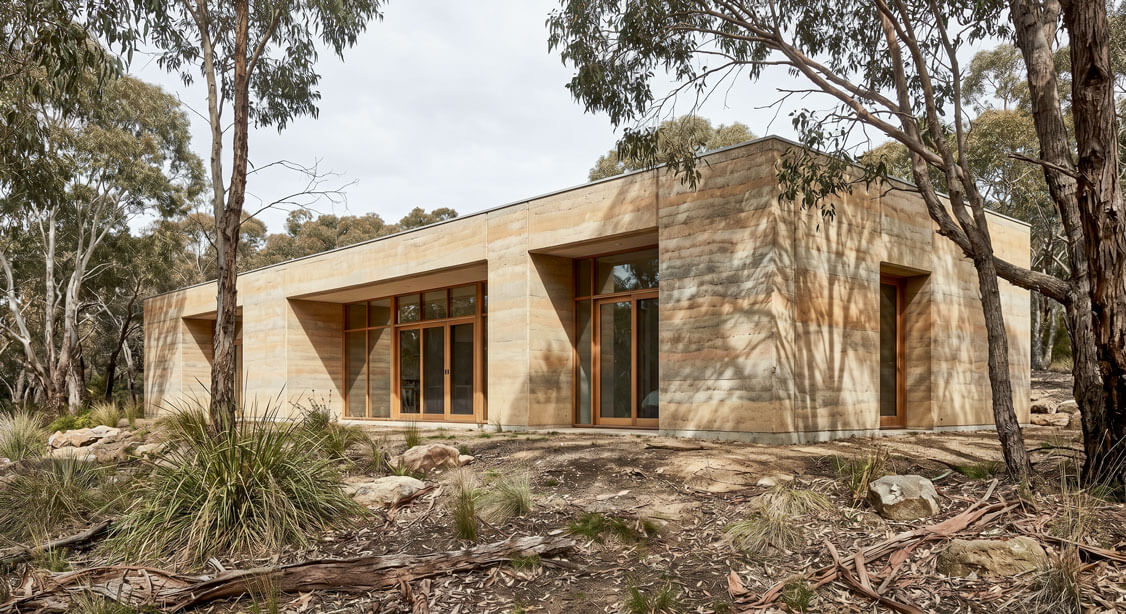 Restraint is a more difficult discipline than novelty. Proportion, material, and the relationship between solid and void doing the quiet work.
The Discipline of Restraint
Choosing not to follow a trend is not the same as choosing to be plain. Restraint is a more difficult discipline than novelty, because it has fewer places to hide. Proportion has to be right. The relationship between solid and void has to be considered. The materials have to be chosen for how they will age, not how they will photograph.
The reward for that discipline is a home that continues to feel considered long after the current vocabulary of curves, scallops, and signature silhouettes has cycled through. It does not date, because it was never trying to be current. It simply continues to fit - its site, its climate, its owners, and the way the coast actually weathers a building over time.
Architecture that outlasts its moment is rarely the loudest on the street. It is the one that has quietly answered the right questions: what does this site want, what does this climate demand, and what will this home still feel like in twenty years. The answers to those questions do not change every season - which is precisely why the homes that ask them do not either.
Building Beyond the Trend Cycle?
The most enduring homes on this coast are the ones designed to their site and their climate, not to the moment. If you are planning a new home or a considered renovation, we work with clients who want architecture that will still feel right long after the current aesthetic has moved on.


