
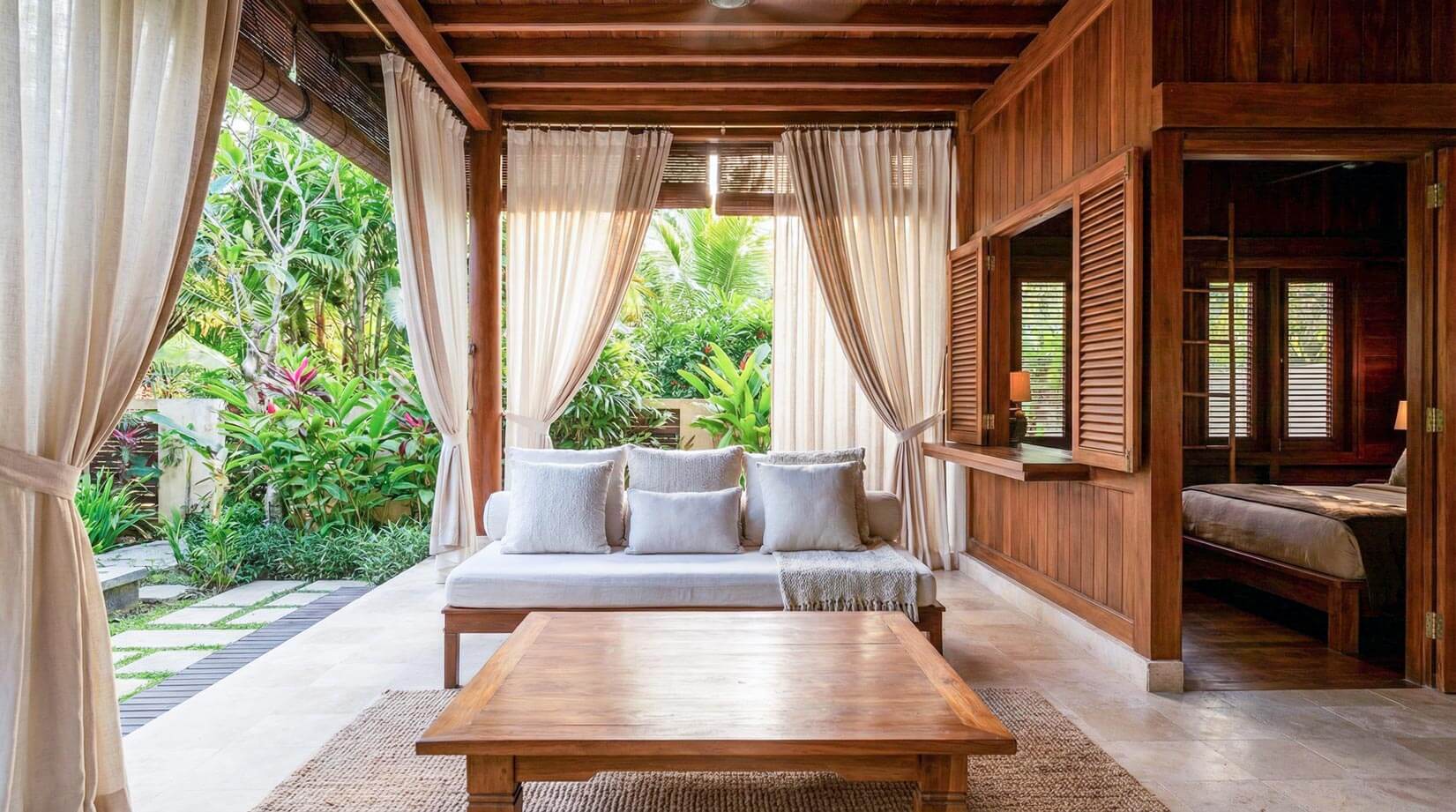
 Framing the wild. Rich, tactile timber and soft textiles provide a domestic anchor against the vibrant, untamed backdrop of the subtropical garden.
The Tactile Transition
An outdoor room requires a psychological anchor. Transitioning from the enclosed home to the expansive outdoors can feel exposing if not properly staged. Utilising rich, organic materials like deep-toned timber for structural columns and ceilings creates a sense of enclosure and shelter.
When paired with the unexpected softness of flowing curtains in an external setting, it establishes a profound sense of domesticity. The architecture acts as a viewing pavilion - a highly refined, tactile space designed specifically to frame the wilder biological elements beyond.
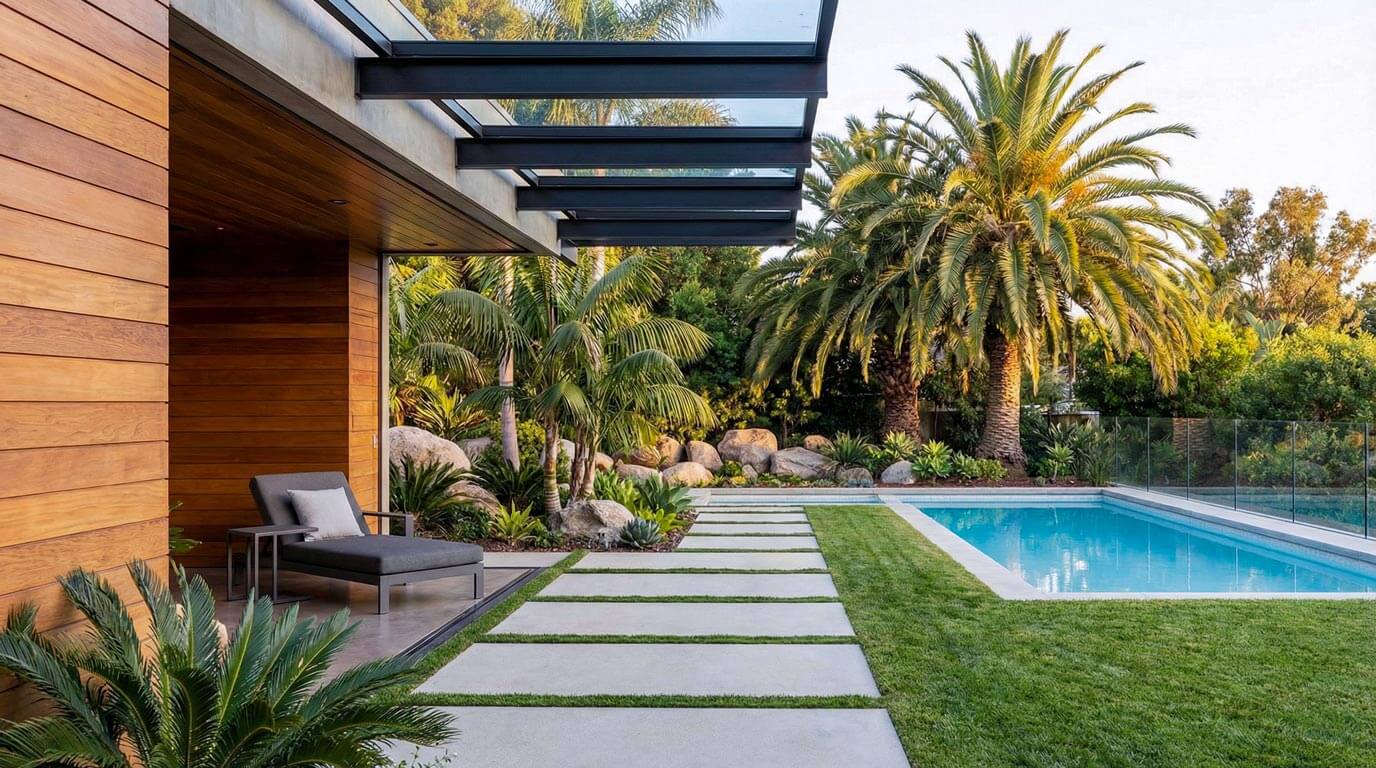 The geometry of movement. Large-format concrete pavers set into turf establish a structural rhythm, guiding the eye and the occupant through the landscape.
The Geometry of the Ground Plane
Without walls to define a corridor, the ground plane must do the heavy lifting in directing circulation. A continuous expanse of lawn or paving can often feel directionless. Introducing a strong geometric rhythm - such as oversized concrete stepping stones interspersed with soft turf - provides a clear, architectural pathway.
This linear rigidity creates a striking visual contrast against the organic, sculptural forms of mature palms and natural boulders. It is a deliberate juxtaposition of the built and the biological, anchoring the modernist glass-and-steel canopy to the earth.
Anchoring the Gathering Space
To successfully draw inhabitants outside for an evening, an outdoor space must offer the same focal points as an interior lounge or dining room. A monumental element, such as a dry-stacked stone fireplace, serves as the ultimate anchor for an al fresco dining zone. The heavy texture and thermal mass of the stone provide a permanent, grounding presence.
When contrasted with the sleek lines of a concrete dining table and the shelter of a glass-roofed pergola, the space is elevated from a simple patio to a curated dining pavilion capable of functioning in varying weather conditions.
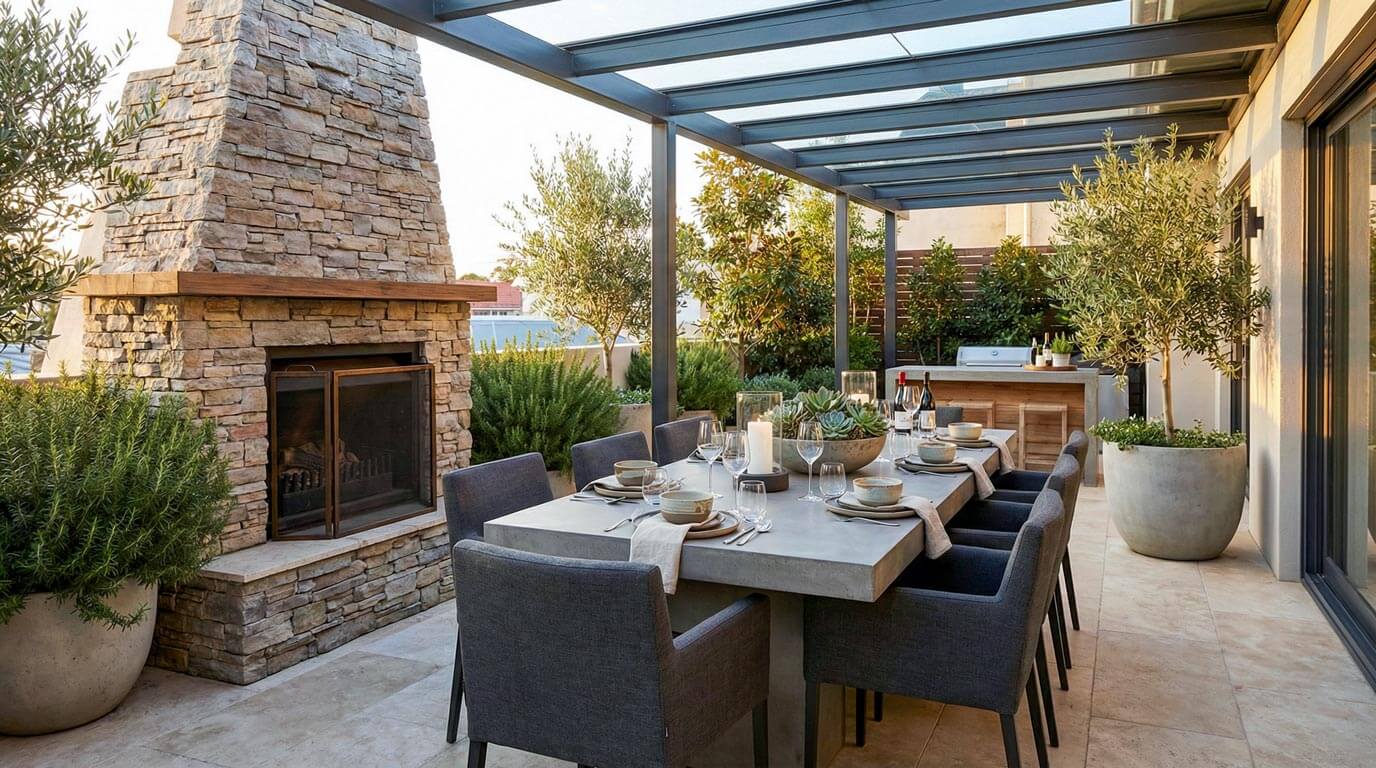 Anchoring the open air. A robust, dry-stacked stone fireplace serves as a monumental focal point, transforming a terrace into a definitive dining room.
The architecture of the open air relies on treating the landscape not as an afterthought, but as a primary living volume.
— Brett McDonald, Principal Architect
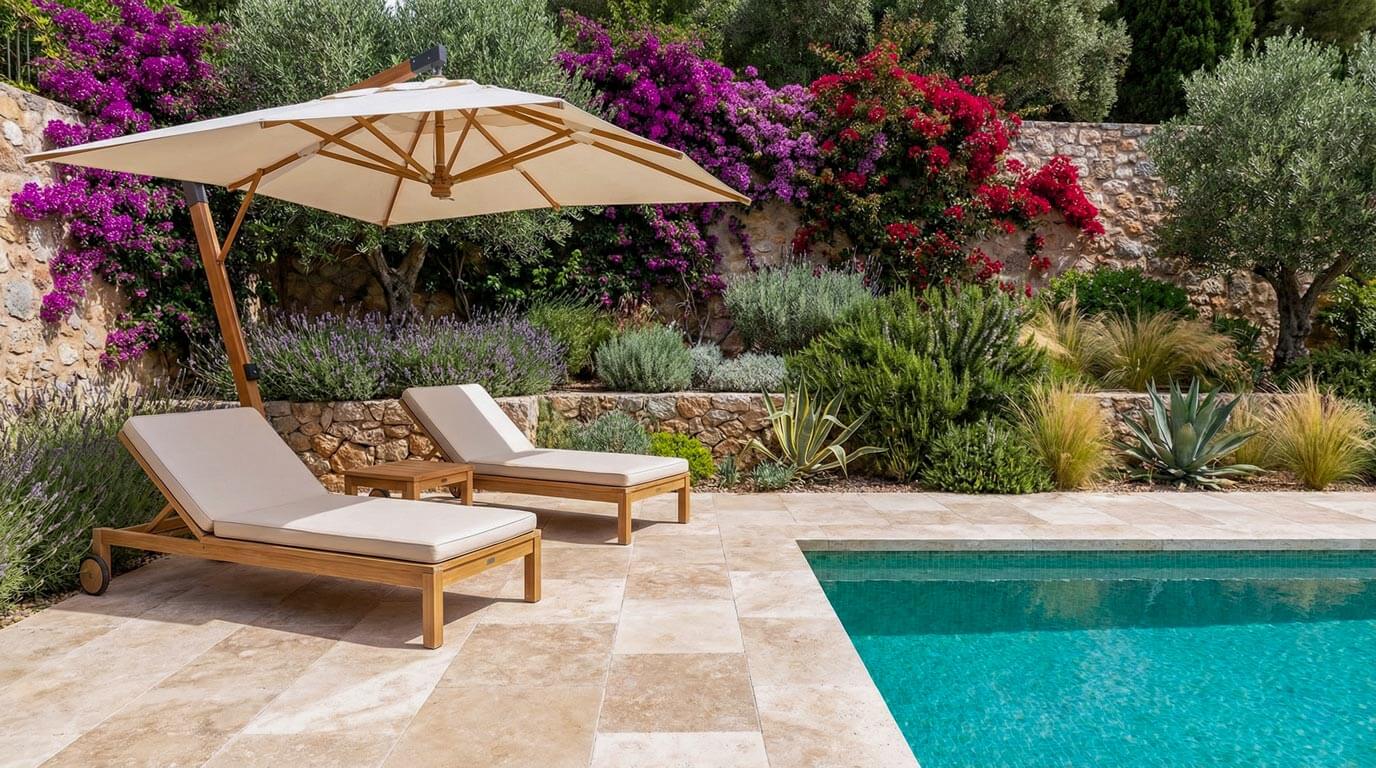 Climate-responsive palettes. Light travertine paving mitigates heat, while dry-stone walls and drought-tolerant planting offer a resilient response to the coastal sun.
Climate-Responsive Materiality
The selection of exterior materials must respond directly to the harsh realities of the coastal sun and salt. Light-coloured natural stone, such as unfilled travertine, is often selected for pool surrounds due to its ability to remain cool underfoot while offering natural slip resistance. Pairing this refined ground plane with rugged, dry-stone retaining walls introduces necessary thermal mass to the garden.
By integrating drought-tolerant, vibrant flora like Bougainvillea and olive trees, the landscape borrows from Mediterranean principles, creating an environment that thrives in intense heat with minimal intervention.
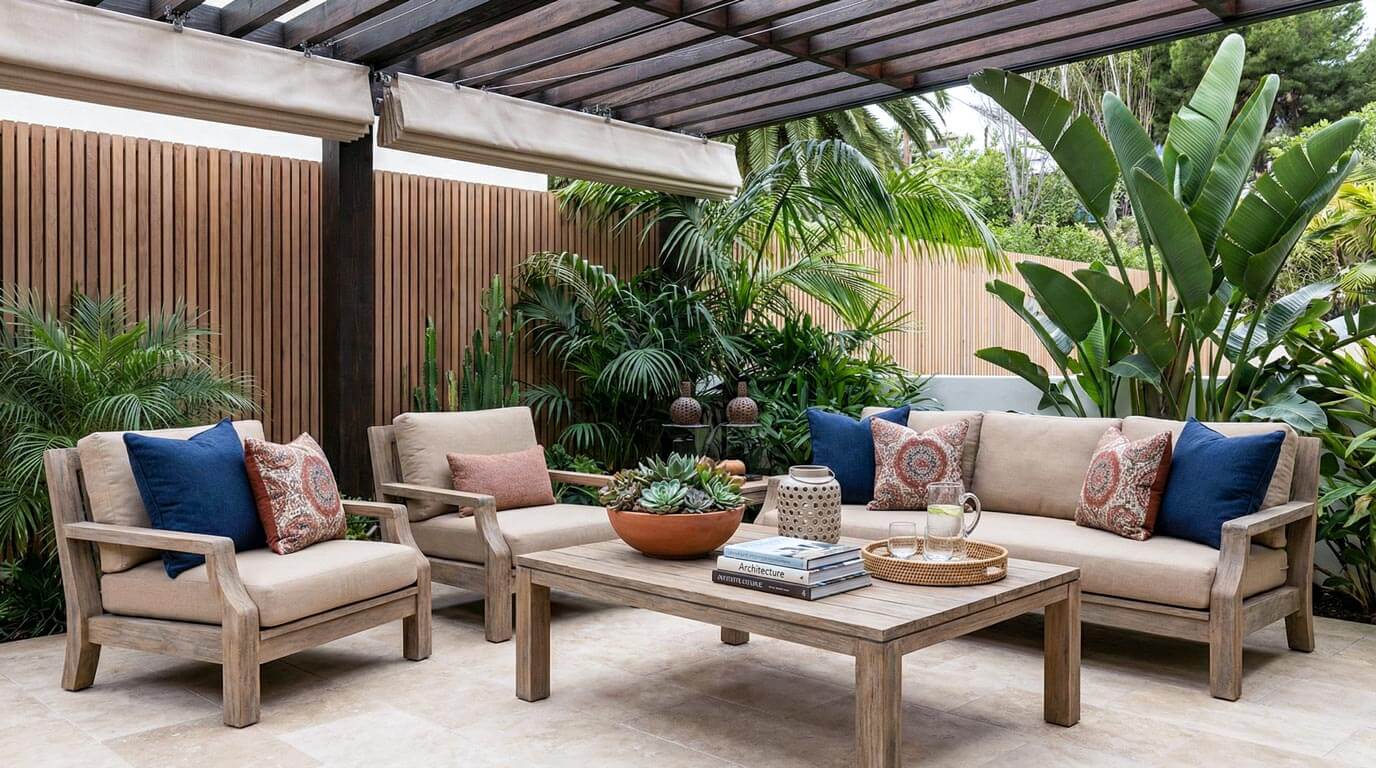 Modulating the canopy. A timber pergola integrated with retractable canvas allows the occupants to actively filter the intense coastal sunlight.
Modulating the Canopy
A successful outdoor room must offer refuge from the elements. While deep eaves provide static shade, a dynamic landscape allows the occupant to control their environment. Overhead structures utilising timber battens offer a permanent filter, fracturing the harsh midday sun into comfortable, dappled light.
The integration of retractable canvas shades beneath the architectural frame provides ultimate flexibility, allowing a sun-drenched terrace to instantly transform into a shaded, intimate lounge. Enclosed by vertical timber screening and layered tropical foliage, the space becomes a deeply private, adaptable sanctuary.
The Architecture of the Open Air
The architecture of the open air relies on treating the landscape not as an afterthought, but as a primary living volume. By applying rigorous material selection, structural geometries, and adaptable canopies, the boundary between the house and the environment dissolves, resulting in a holistic, site-responsive coastal home.


