
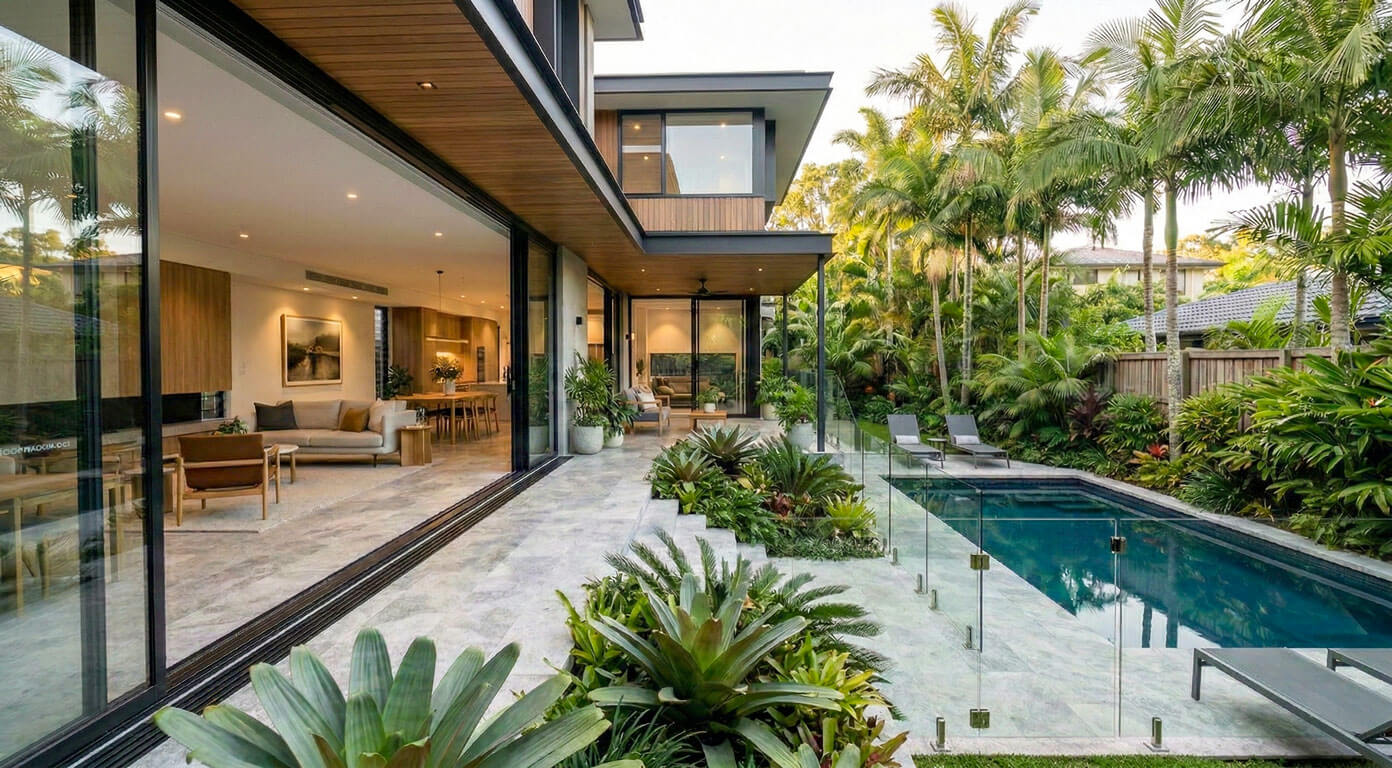
 A truly responsive landscape serves as a thermal buffer.
The Thermal Buffer
The design intent is to move beyond the 'sealed box' mentality of residential cooling. Instead, a stratified approach to planting facilitates passive airflow.
By drawing air through shaded, moist garden pockets and funneling it into primary living zones, the landscape becomes a natural extension of the building’s thermal performance.
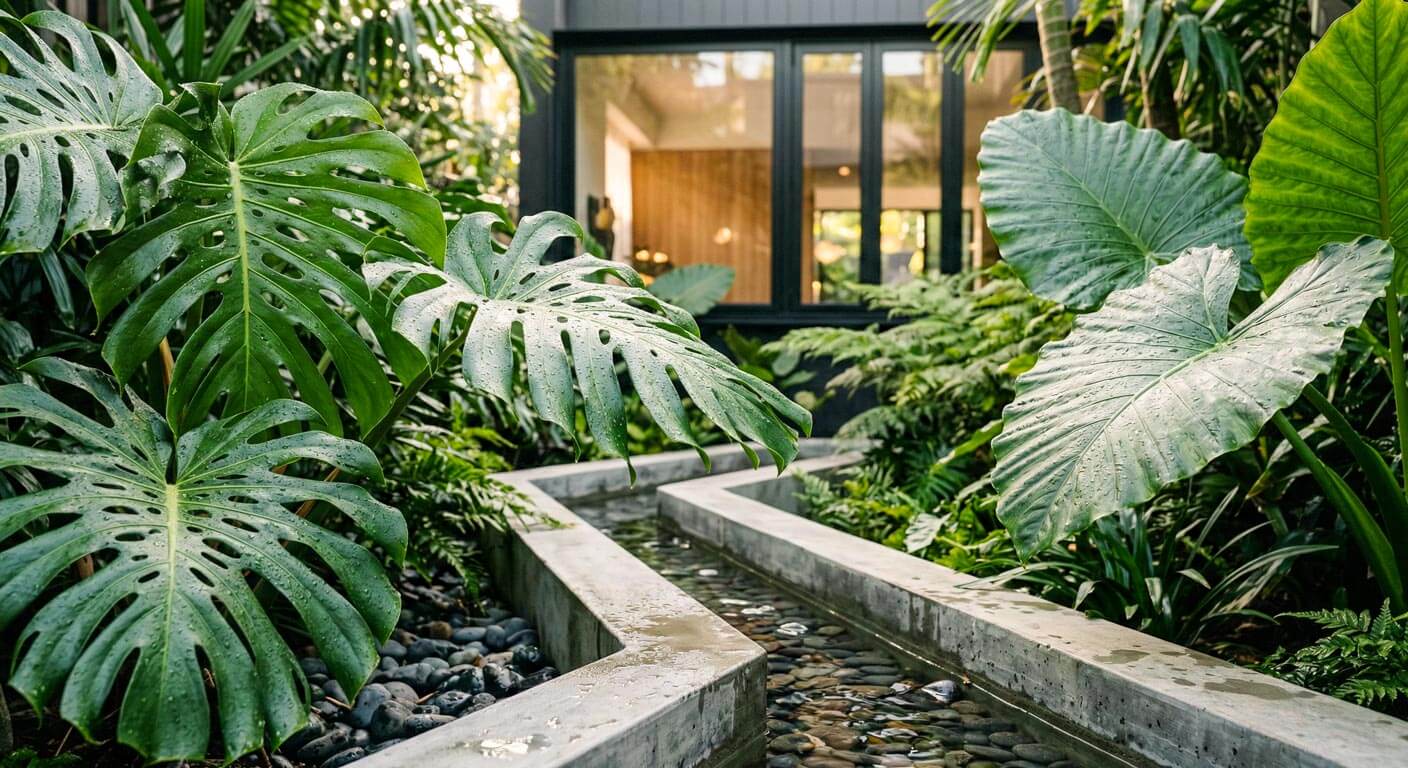 Strategic placement of biological mass to create natural cool pockets.
The Venturi Effect in the Garden
The concept of a 'breezeway' is a staple of coastal architecture, yet its potential is often lost at the building’s edge. To create a home that breathes, the placement of biological mass becomes the primary tool.
Strategic 'cool pockets' - densely planted zones often incorporating a small water feature or permeable stone - find their place adjacent to prevailing windward openings. As air passes through these shaded, transpiring foliage zones, the temperature drops naturally before it ever crosses the threshold of the home.
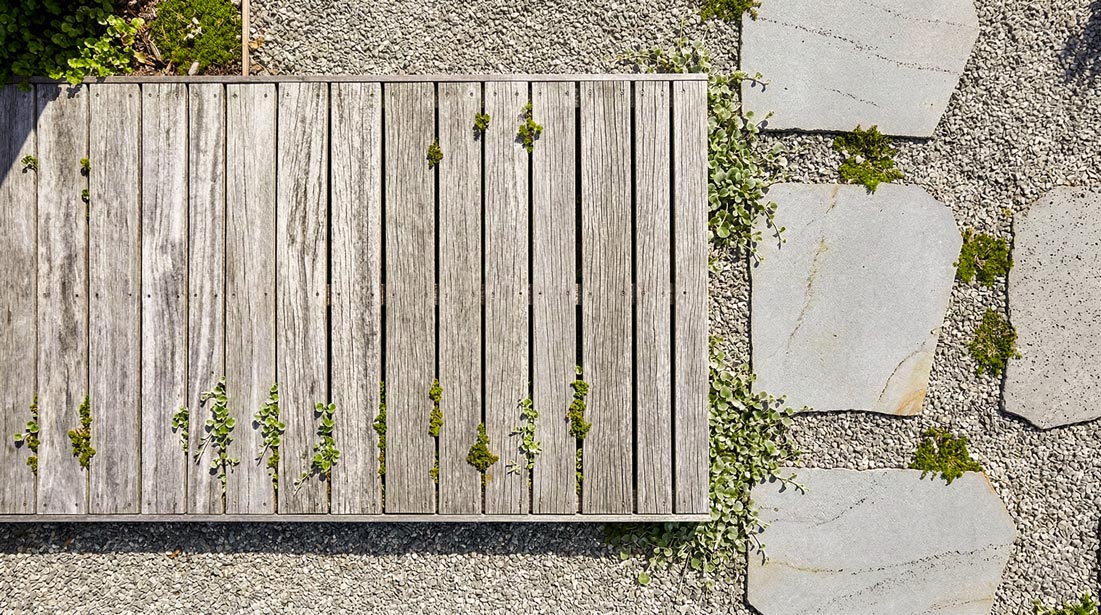 Breathable surfaces like timber and natural stone on gravel mitigate heat reflection.
Permeability vs. Reflection
Hardscaping is frequently the enemy of the microclimate. Large expanses of concrete or dark tiling act as thermal batteries, absorbing heat during the day and radiating it back into the structure long after the sun has set.
A more responsive approach relies on the use of permeable surfaces. Utilising natural stone on sand beds, gravel, or elevated timber boardwalks allows the ground to 'breathe' and moisture to evaporate, which actively cools the local air. The goal is to minimise heat reflection while maintaining the structural rigour appropriate for coastal living.
In the subtropics, a garden that only looks good is a missed opportunity.
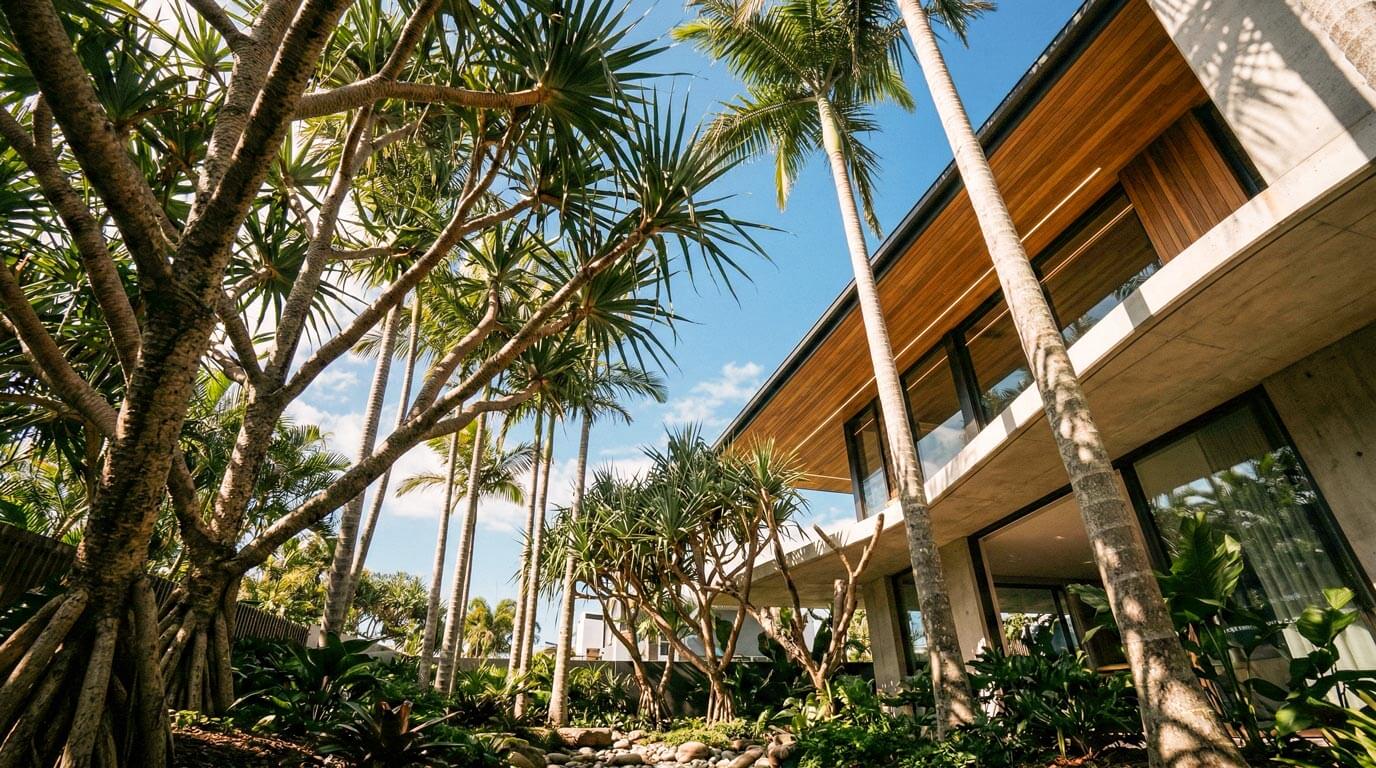 A stratified biological canopy protects the building from solar gain.
The Stratified Canopy
True climate control is an exercise in height. A single layer of turf does little to mitigate heat; however, a stratified canopy - comprised of ground covers, mid-tier shrubs, and high-level shade trees - creates a protected volume of air.
By layering the landscape, an 'overhead mantle' of shade emerges. This biological canopy protects the 'skin' of the building from direct solar gain, reducing the reliance on artificial cooling and allowing the home to remain a place of repose, even in the height of a Gold Coast summer.
A Lasting Coastal Refuge
Prioritising these biological layers creates a home defined by thermal comfort and ease. This orchestration of air and shade supports social connection and quiet repose, allowing the architecture to mature gracefully within the landscape. The result is a resilient sanctuary that responds naturally to the shifting coastal climate.


