 The seamless transition. By matching internal floor finishes with external decking and recessing door tracks, the psychological barrier between "in" and "out" is invited to dissolve..
The Dissolution of Boundaries
The concept of indoor-outdoor flow is often discussed but rarely executed with rigorous detail. True integration requires more than a sliding door; it requires a continuity of material and plane. Extending the internal ceiling plane outward to form deep eaves, or running timber flooring seamlessly into external decking without a step-down, tricks the eye.
When the datum line remains unbroken, the brain registers the outdoor deck as an extension of the interior volume. This creates the impression of a home that feels significantly larger than its footprint, borrowing space and light from the garden.
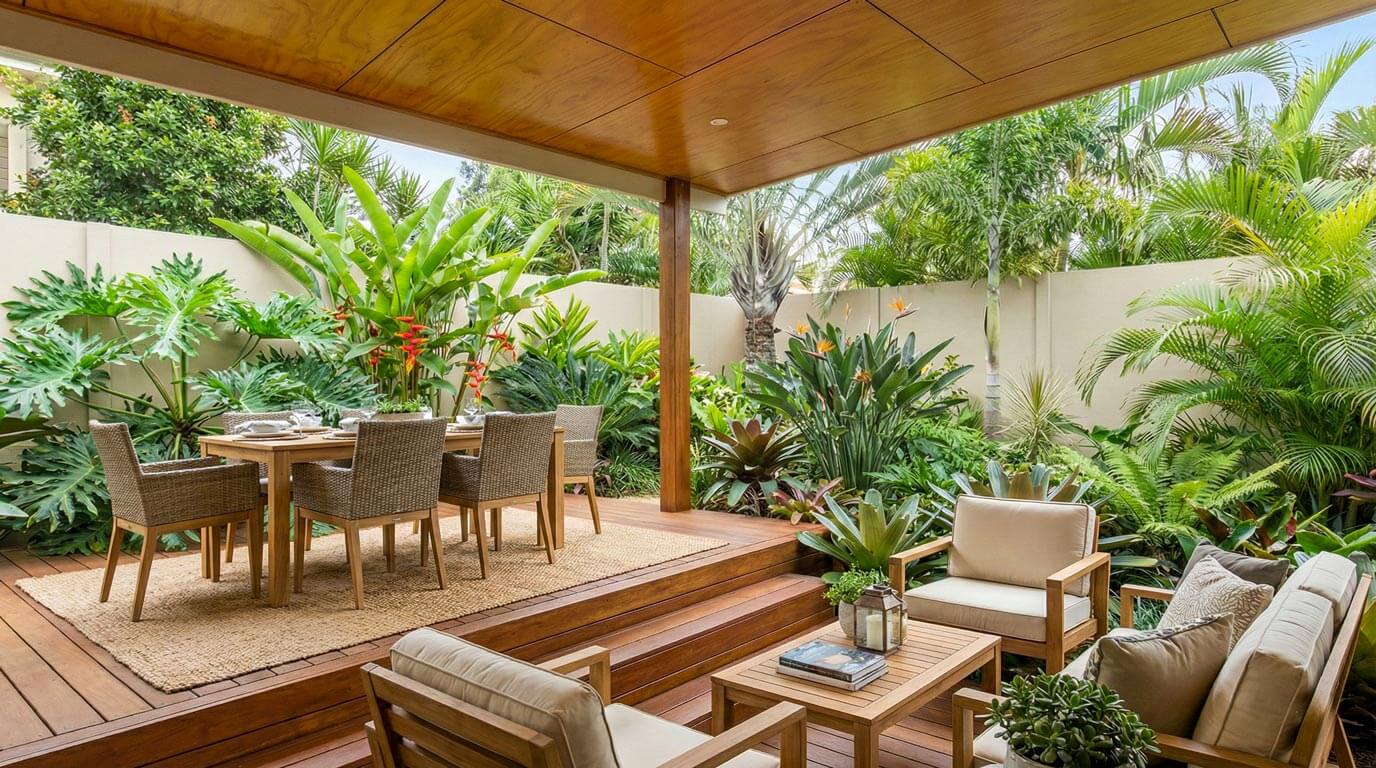 The Green Wall. Substituting masonry boundaries for dense, layered planting softens the acoustic and visual harshness of the suburban perimeter.
The Living Wall
In densifying coastal zones like Burleigh Heads, privacy is the primary currency. While the instinct may be to erect high rendered walls, these often create a "concrete canyon" effect - trapping heat and reflecting noise.
A more responsive approach is the "living wall." Utilising high-density planting - such as Heliconias or Palms - along the boundary creates a soft, permeable screen. This biological mass is intended to generate a microclimate that softens the heat before it enters the home, while the textured foliage serves to act as an acoustic baffle, diffusing the rush of the street.
Circulation as Journey
How one moves through a site is as important as the destination. Rather than paving a site into submission, "floating" circulation paths offer a lighter touch.
Timber boardwalks or stepping stones that hover above the ground cover serve a dual purpose. Hydraulically, they allow the earth to absorb heavy subtropical rains, encouraging the site’s natural drainage. Experientially, they invite a pause. Walking on timber creates a different acoustic and tactile feedback to concrete. It slows the pace, encouraging an engagement with the garden rather than a rush through it.
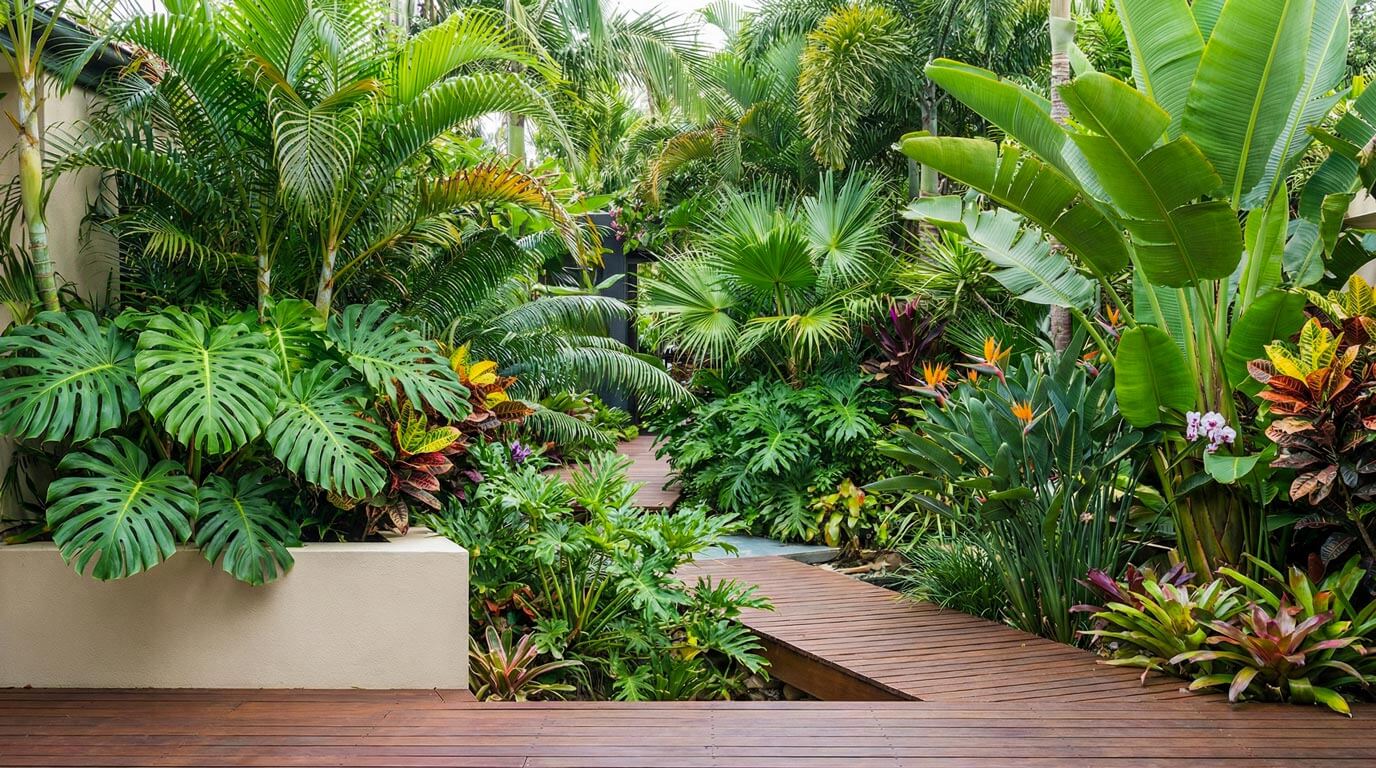 Floating planes. Elevating circulation paths above the ground plane allows the landscape to breathe and creates a sense of journey.
The focus shifts beyond the concept of a house with a garden, to a home within a landscape.
— Brett McDonald, Principal Architect
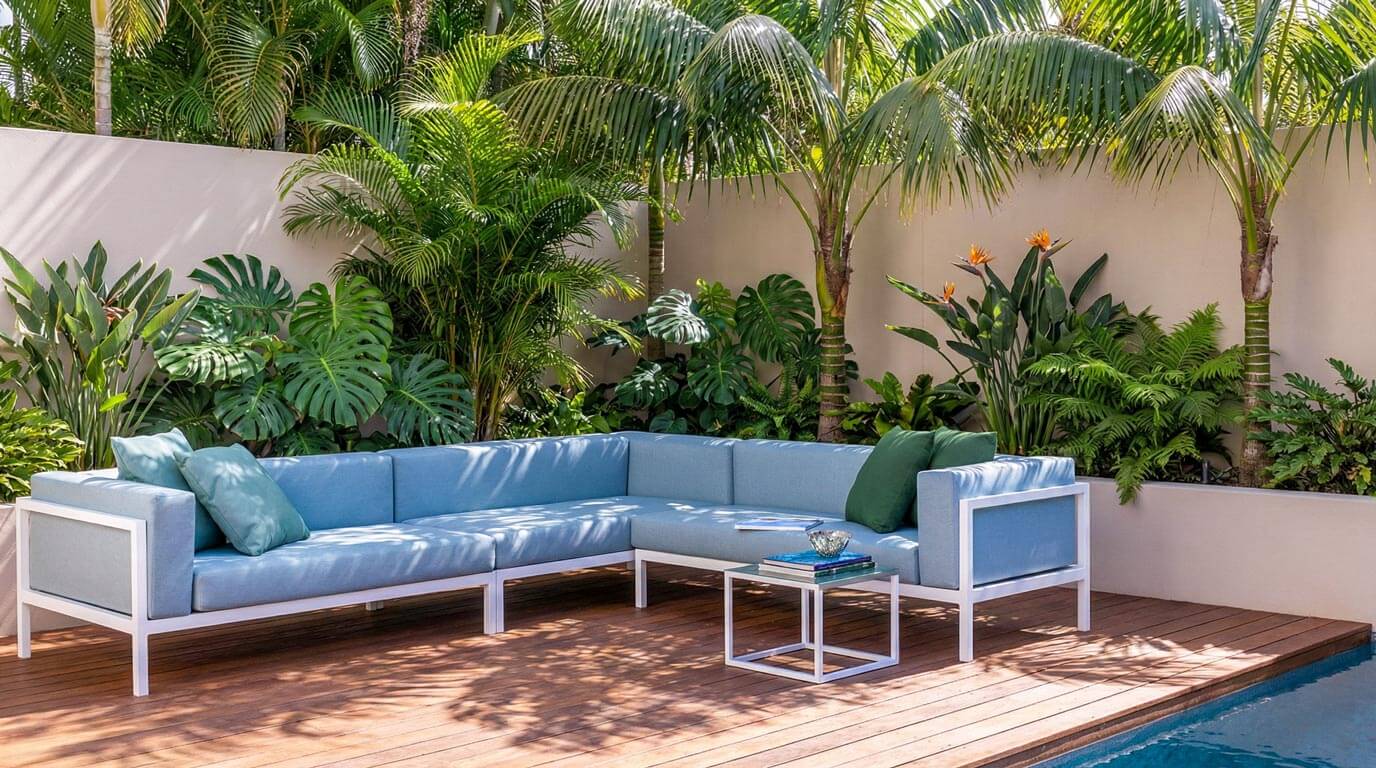 The outdoor room. Treating the external environment with the same curatorial rigour as the interior lounge.
The Curator’s Hand
A garden should not be a wild, unmanageable entity, but a curated space with the same architectural intent as a living room. This requires the selection of structural plants - species with architectural forms that cast deliberate shadows and hold their shape against the coastal breeze.
By framing these "outdoor rooms" with the same care applied to interiors, spaces of repose emerge. The furniture, the materials, and the lighting are selected to withstand the salt air while offering the comfort of an internal lounge.
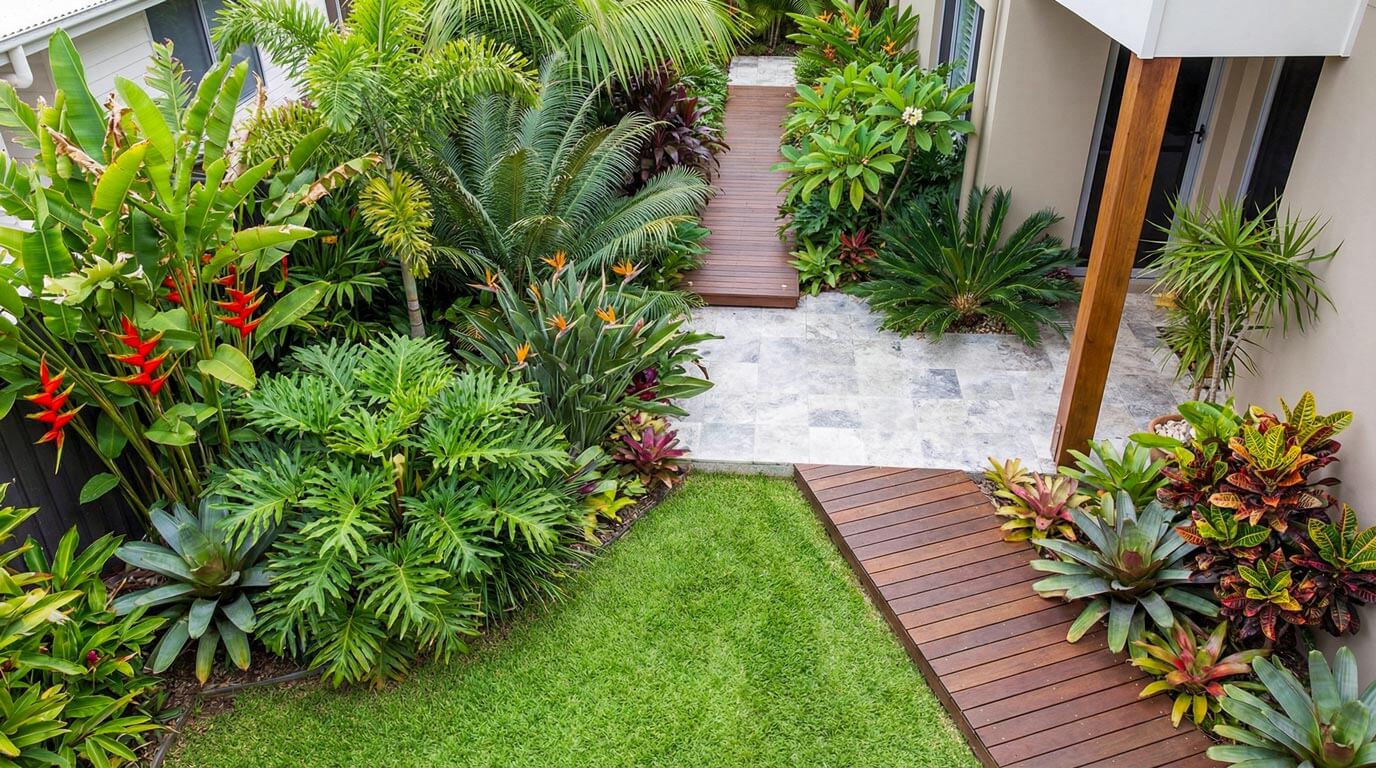 Landscaping provides the opportunity for a sensory journey through the site, utilising the juxtaposition of natural stone and elevated timber to guide the individual through varying biological layers.
A Home Within the Landscape
Ultimately, the goal of the botanical threshold is to create a home that breathes. By prioritising deep planting, permeable surfaces, and seamless transitions, the focus shifts beyond the concept of a house with a garden, to a home within a landscape.


