
Project 12 · Residential · Studio project
Sanctuary Cove House
Resort-Style Pavilions Between Fairway and Water
Sanctuary Cove · 2026
The driveway is ninety metres long. The first impression starts there.
Sanctuary Cove is a specific kind of place, defined by manicured fairways and deep waterways. The architecture here doesn't need to compete with that landscape; it needs to belong to it.
The Pavilion concept is conceived as two distinct volumes connected by a transparent link. It is a design strategy that breaks down the scale of the home, balancing the grandeur of the arrival sequence with the relaxed, open nature of life on the golf course. It reads not as a single mass, but as a series of forms anchored by sandstone and softened by timber.
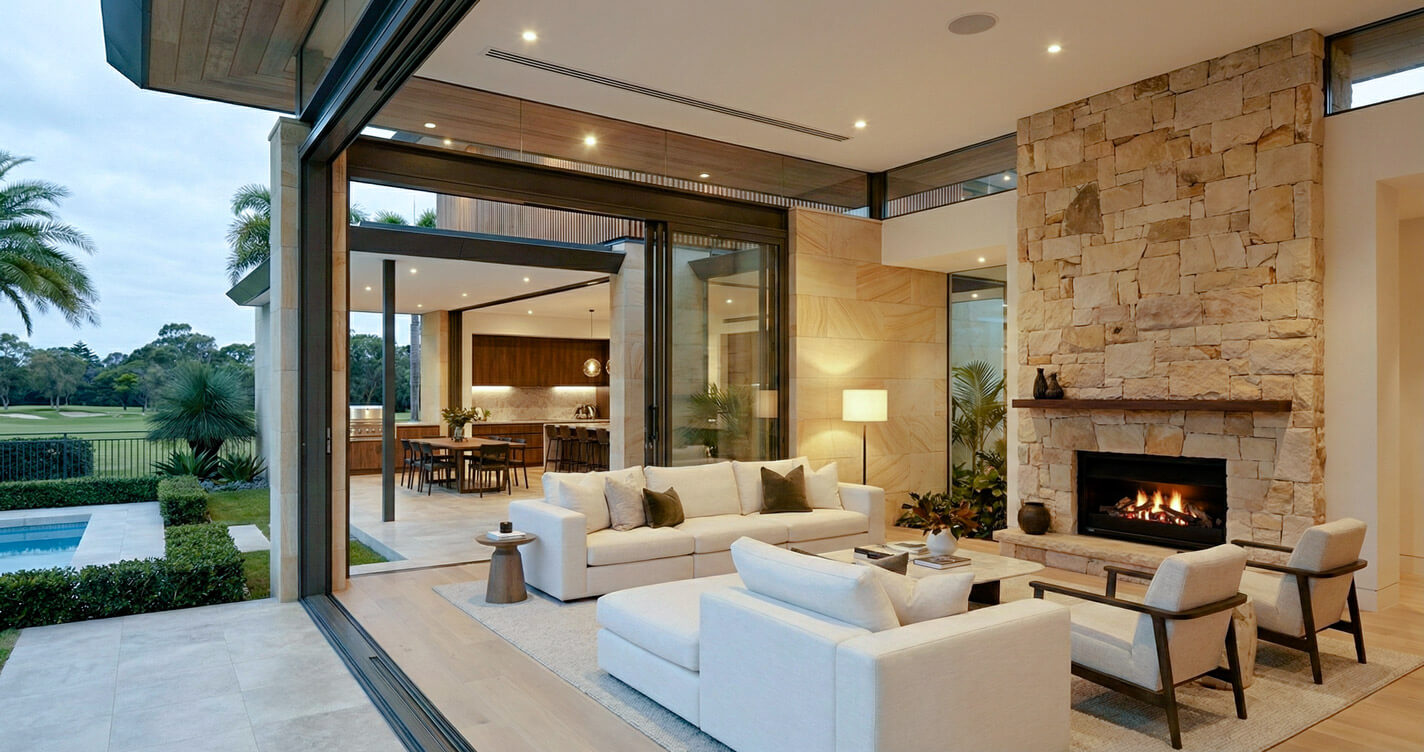 01 —The hearth as an anchor. A sandstone fireplace grounds the living space, providing a heavy counterpoint to the transparency of the glazing and the open vista of the fairway.
Living Without Boundaries
The primary living pavilion is designed to erase the line between interior and landscape. We utilised floor-to-ceiling glass that stacks away - transforming the lounge and dining areas into an open-air platform floating above the fairway.
A massive sandstone fireplace anchors the room, providing a necessary sense of enclosure and warmth during the cooler months. It gives the open space a centre of gravity, providing a solid counterpoint to the expansive green vistas that stretch out towards the horizon.
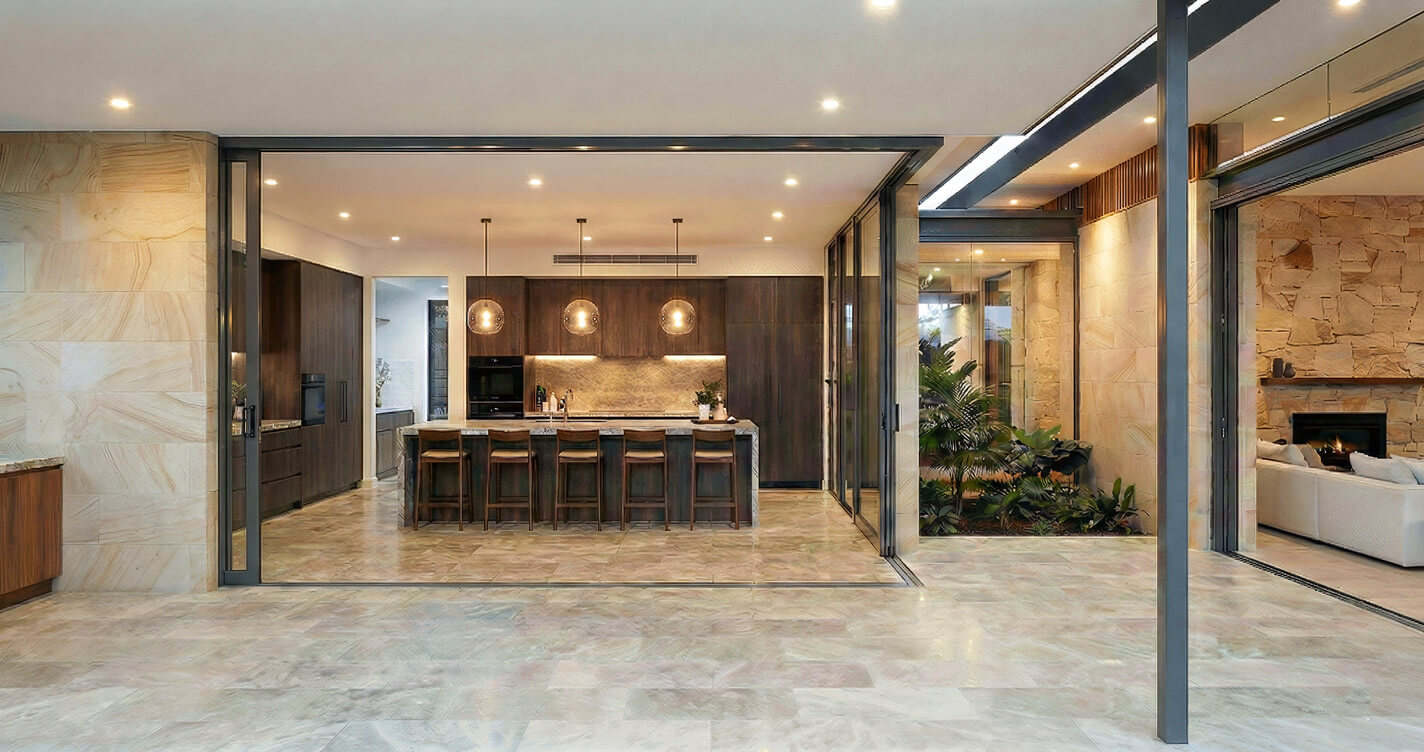 02 —The kitchen functions as a pivot point between the interior and the alfresco pavilion. Dark timber joinery recedes visually, allowing the natural stone and the connection to the landscape to define the space.
Connection and Transparency
The kitchen functions as the pivot point of the home. Anchored by natural stone and dark timber joinery, it serves as the bridge between the formal living zones and the alfresco pavilion.
The design intent here is transparency. By aligning the glazing and keeping the plan open, the kitchen allows for clear sightlines through the home to the water and the course. It creates a social environment where the host is never separated from the landscape or the conversation.
Curated Perspectives
Living on a golf course requires a delicate balance between enjoying the expansive outlook and maintaining a sense of retreat. The master suite achieves this through a dual-layer facade.
Floor-to-ceiling glazing captures the full breadth of the fairway, while operable timber screens on the exterior allow you to modulate the environment. You can open the room completely to the morning light, or angle the louvers to filter the sun and screen the room from the course - giving you total control over your connection to the landscape.
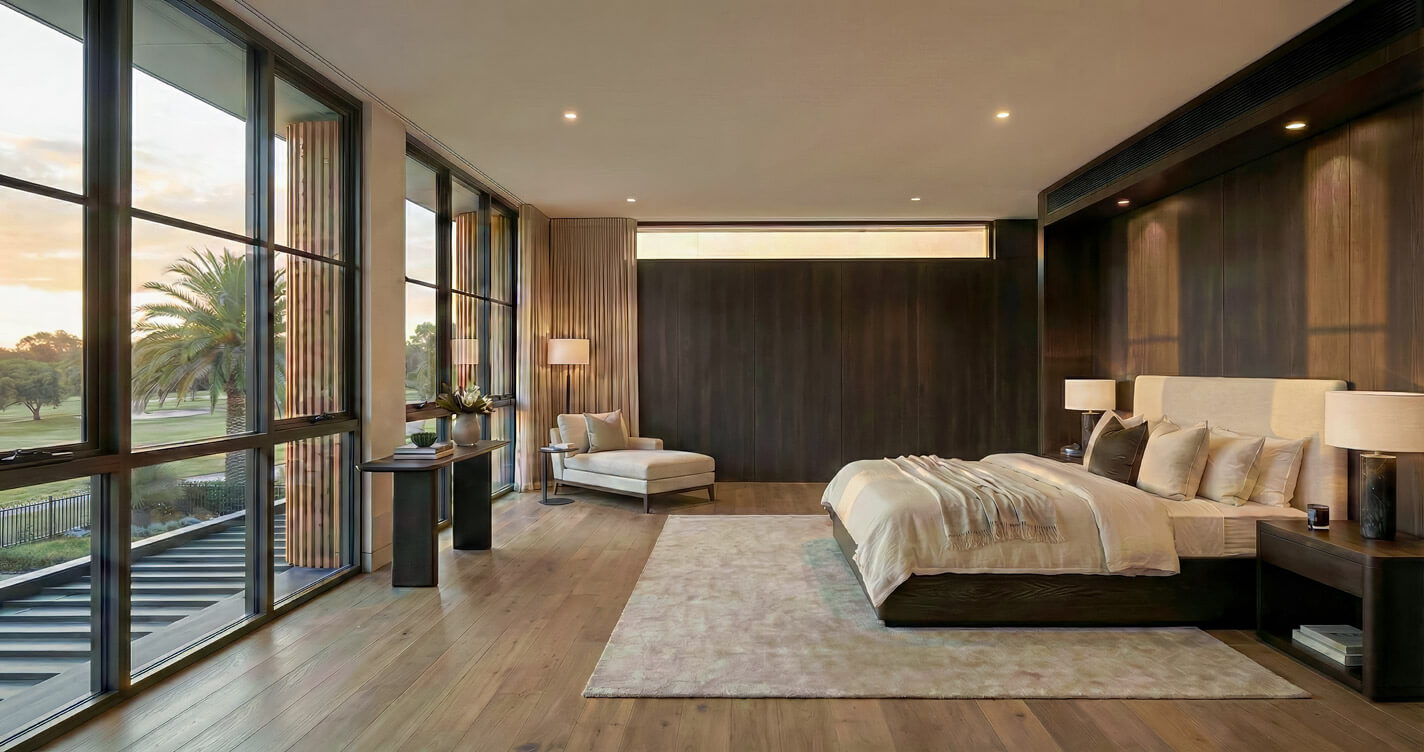 03 —The master pavilion balances a panoramic outlook with deep seclusion. Floor-to-ceiling glazing captures the fairway aspect, while external timber screens can be adjusted to modulate morning light and privacy.
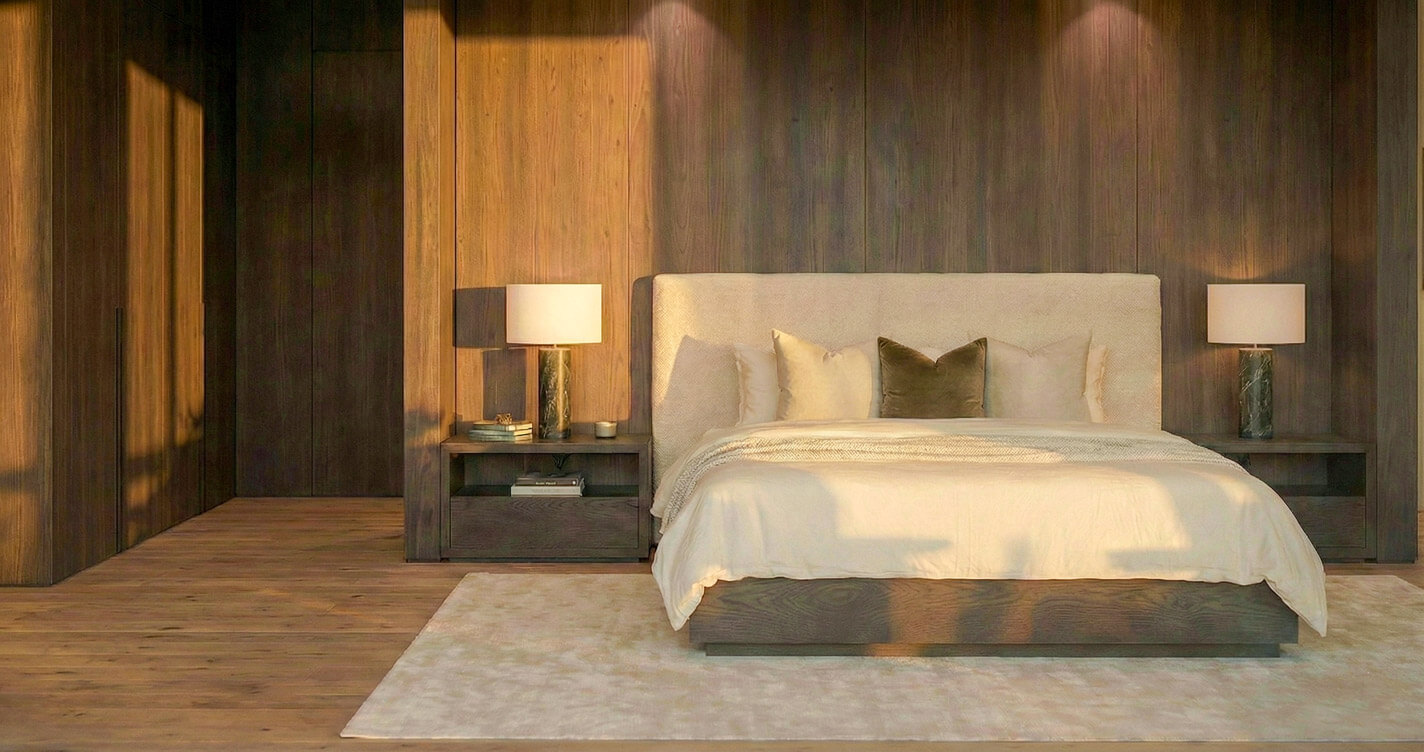 04 —A retreat defined by enclosure. The use of dark timber wall panelling creates a sense of intimacy and acoustic dampening, distinct from the open, glass-lined living areas.
A Hotel-Grade Retreat
While the living areas are light and open, the master retreat introduces a moodier, more intimate palette. We utilised dark timber wall panelling to wrap the room, creating a sense of acoustic dampening and psychological separation from the active zones of the house.
The aesthetic draws on the discipline of a luxury hotel suite - clean lines, integrated lighting, and a focus on texture rather than ornamentation. It is a space designed specifically for rest, distinct from the social energy of the rest of the home.
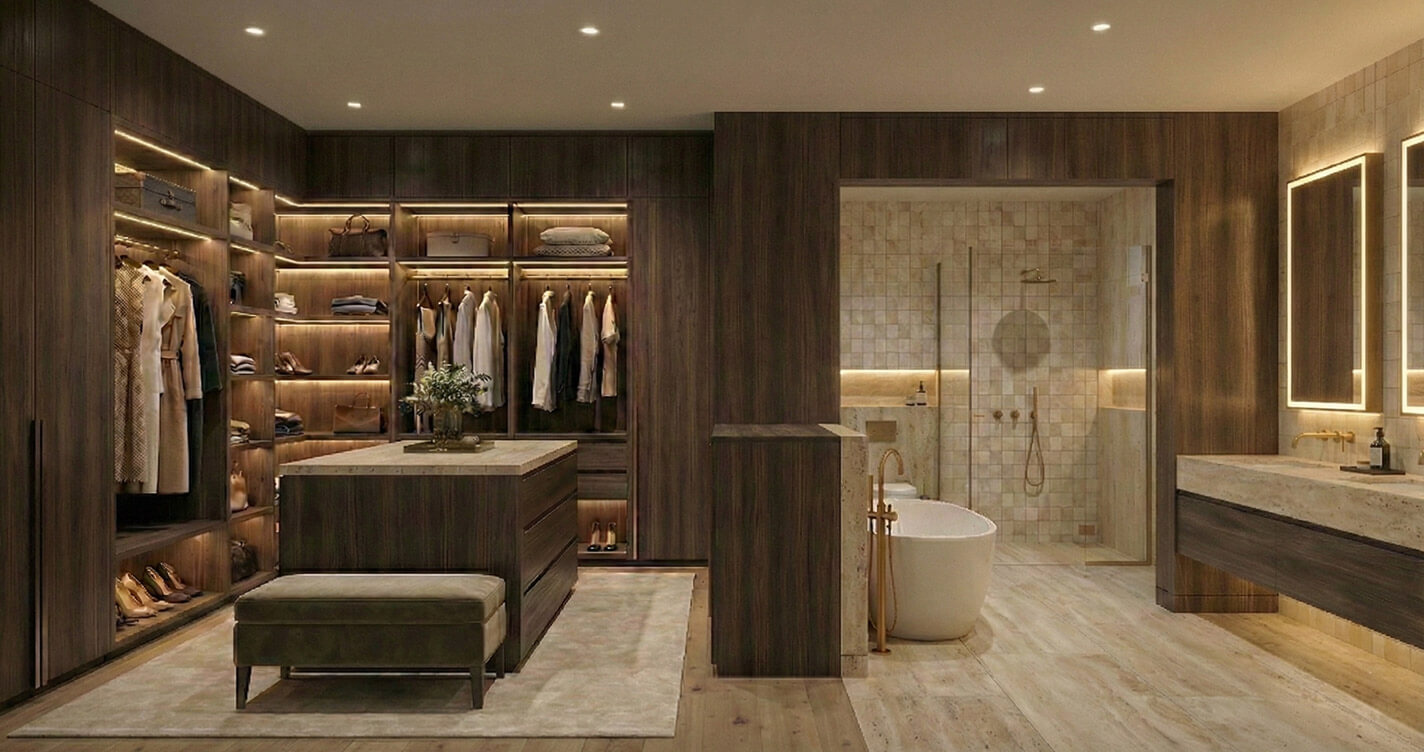 05 —The utility of the robe merges with the ritual of the ensuite. High-end joinery and natural stone tiling create a seamless transition between dressing and bathing zones, emulating a luxury hotel suite.
The Ritual of Dressing
In a residence of this calibre, the wardrobe and ensuite are treated as a single, cohesive dressing zone. High-end joinery defines the space, offering the storage and lighting detailing expected in a boutique retail environment.
The transition into the ensuite is seamless, with natural stone flooring and a freestanding bath positioned to capture light while maintaining seclusion. It is a space designed for slow mornings and personal ritual.
Architecture of Belonging
The Pavilion concept represents a departure from the traditional suburban floor plan, favouring a series of interconnected forms that respond to the scale of the golf course landscape. It is an architecture that prioritises the "pause" - the moments spent moving between water features, garden links, and expansive living zones.
The intent is for the dry-stacked sandstone and dark timber joinery to provide a sense of grounded luxury that remains relevant as the surrounding landscape matures. It is a residence conceived for the long term; a permanent resort environment that captures the ease of a getaway within the fabric of a daily home.
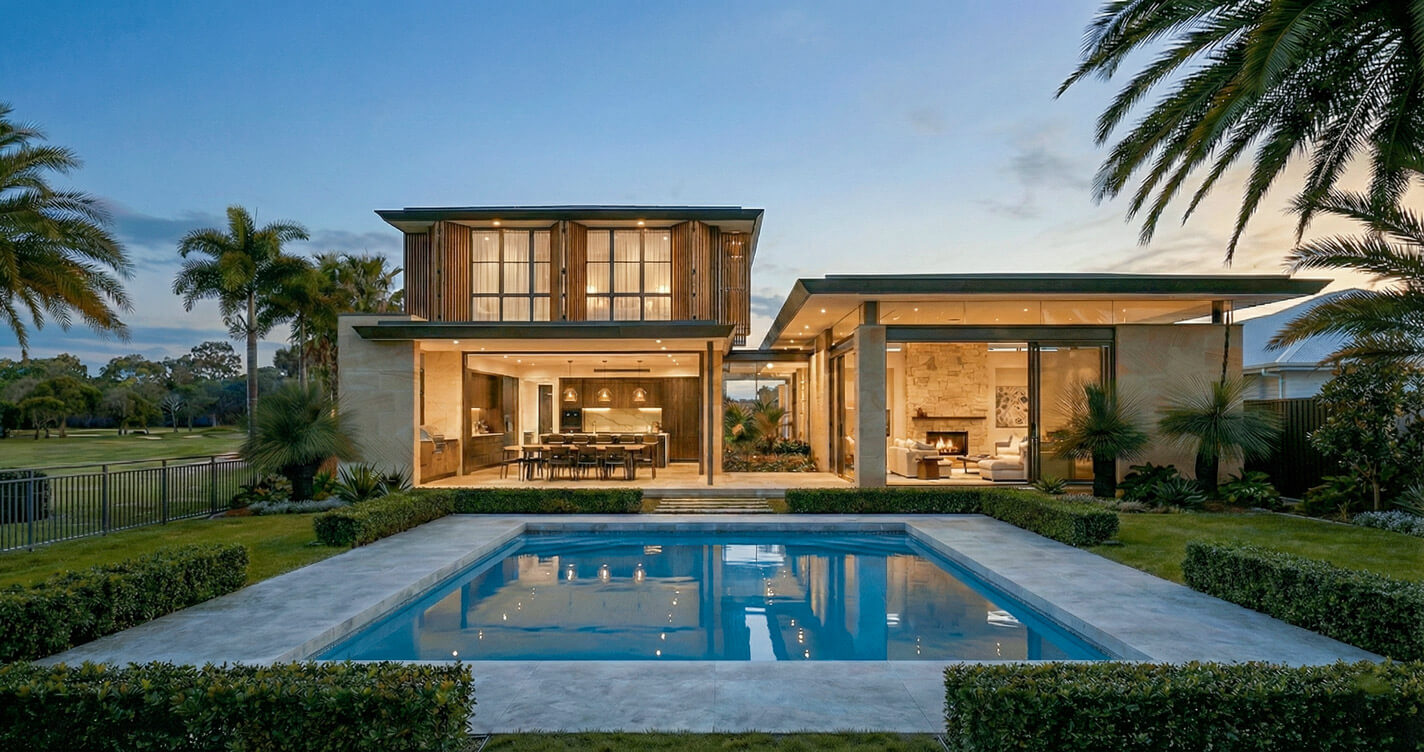
The architecture doesn't compete with the landscape; it belongs to it - a ninety-metre arrival sequence that transitions from the public realm into a secluded resort environment.
A site of your own?
Every project here began with the same questions: where does the sun come from, where does the water go, and what is worth keeping. If your site raises them too, that's the conversation to have.
Discuss your project