
Project 01 · Residential · Studio project
Ironbark Ridge House
A charred timber refuge anchored to the Gold Coast Hinterland.
For Gold Coast Hinterland. · 2026
The site falls away through ironbark and spotted gum on a north-facing slope in the Gold Coast Hinterland. On a clear day the coast is visible. The everyday outlook is canopy.
The temptation with a site like this is to cut a level platform and glaze the north. The problem with that approach is you risk living in a greenhouse that overheats by 10am, making the landscape feel like a screensaver rather than something you’re actually part of. Ironbark Ridge takes the opposite position. It uses deep overhangs, heavy masonry, and strategic orientation to create a home that feels like a place of refuge, not a fishbowl.
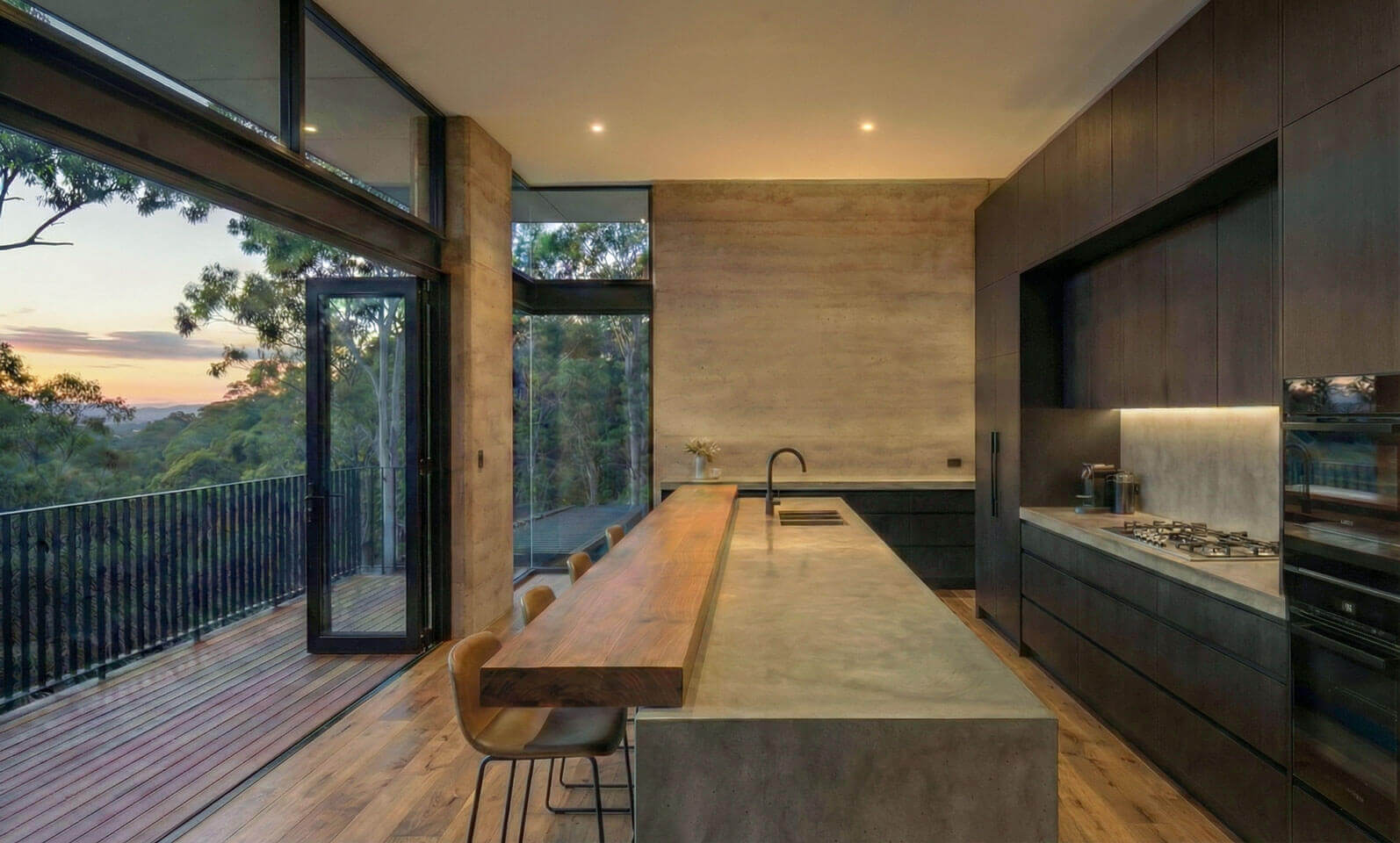 01 —A concrete island bench provides cool, quiet mass, grounding the open-plan living space before it transitions seamlessly to the outdoor deck and the view beyond.
The Social Spaces: Concrete and Canopy
Inside, the material palette is designed to ground you. In the kitchen, a monumental off-form concrete island serves as the anchor. It provides cool, tactile mass in the centre of the open plan, balancing the lightness of the timber joinery and the expansive views beyond.
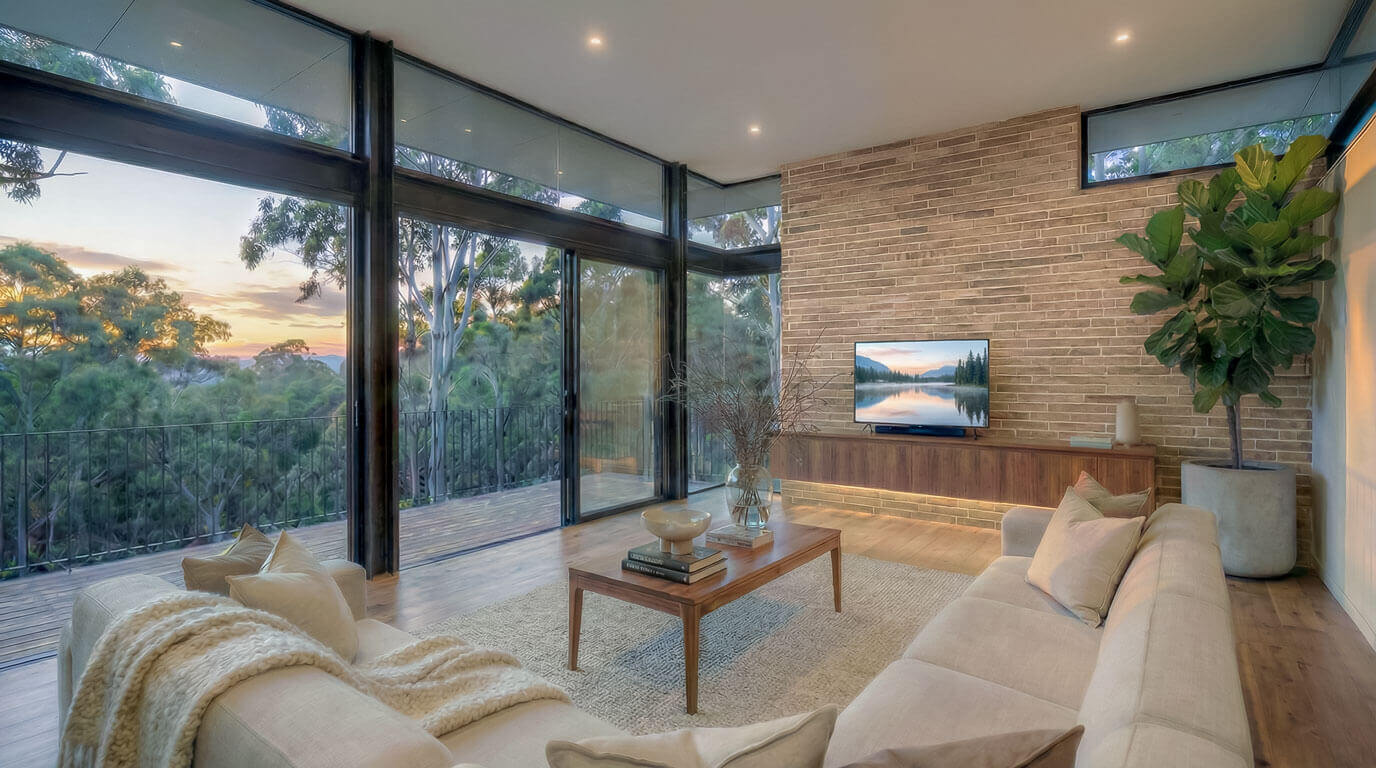 02 —Face brick is carried into the interior palette, offering thermal mass and a textural connection to the home’s structural spine.
The living space continues this conversation between the heavy and the light. The face-brick spine of the home is exposed internally, bringing the texture of the earth right into the lounge room.
It offers a sense of permanence and protection, while the floor-to-ceiling glazing peels back to let the eucalypt shadows dance across the timber floors. It is a space designed for prospect and shelter - you are protected by the masonry, yet immersed in the trees.
The Exterior: Charred Timber & Shadow
Approaching the home, the Shou Sugi Ban cladding - timber charred using a traditional Japanese technique - sets the tone. The char hardens the surface against weather and insects, and holds the depth of black that lets the building sit back into the shadows of the canopy.
Visually, the deep black texture allows the building to recede into the dark shadows cast by the ironbark canopy. The home doesn't fight the landscape for attention; it sits quietly within it, anchored by the brick, shaded by the eaves, and wrapped in the colours of the bush.
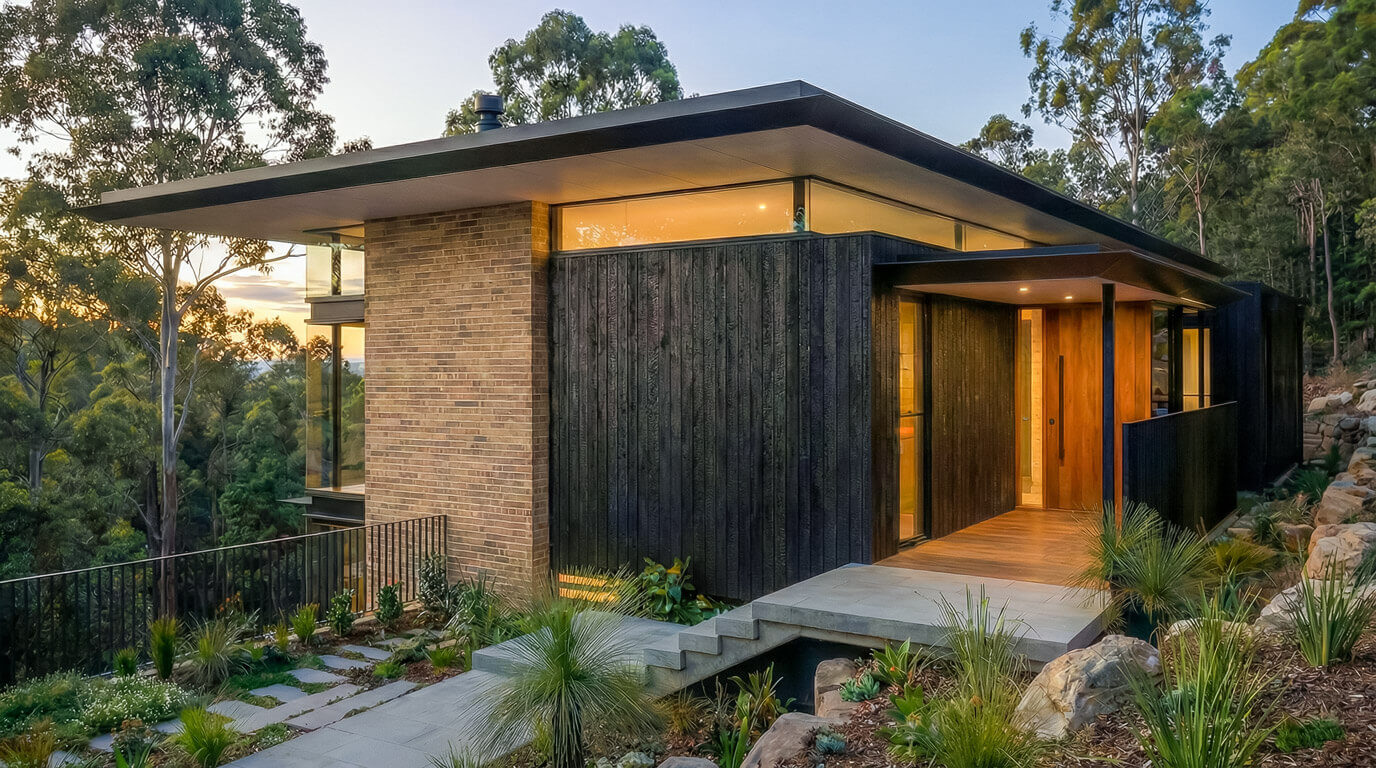 03 —The central masonry spine anchors the building to the ridge, while lighter volumes cantilever outward to float among the canopy without fighting the steep terrain.
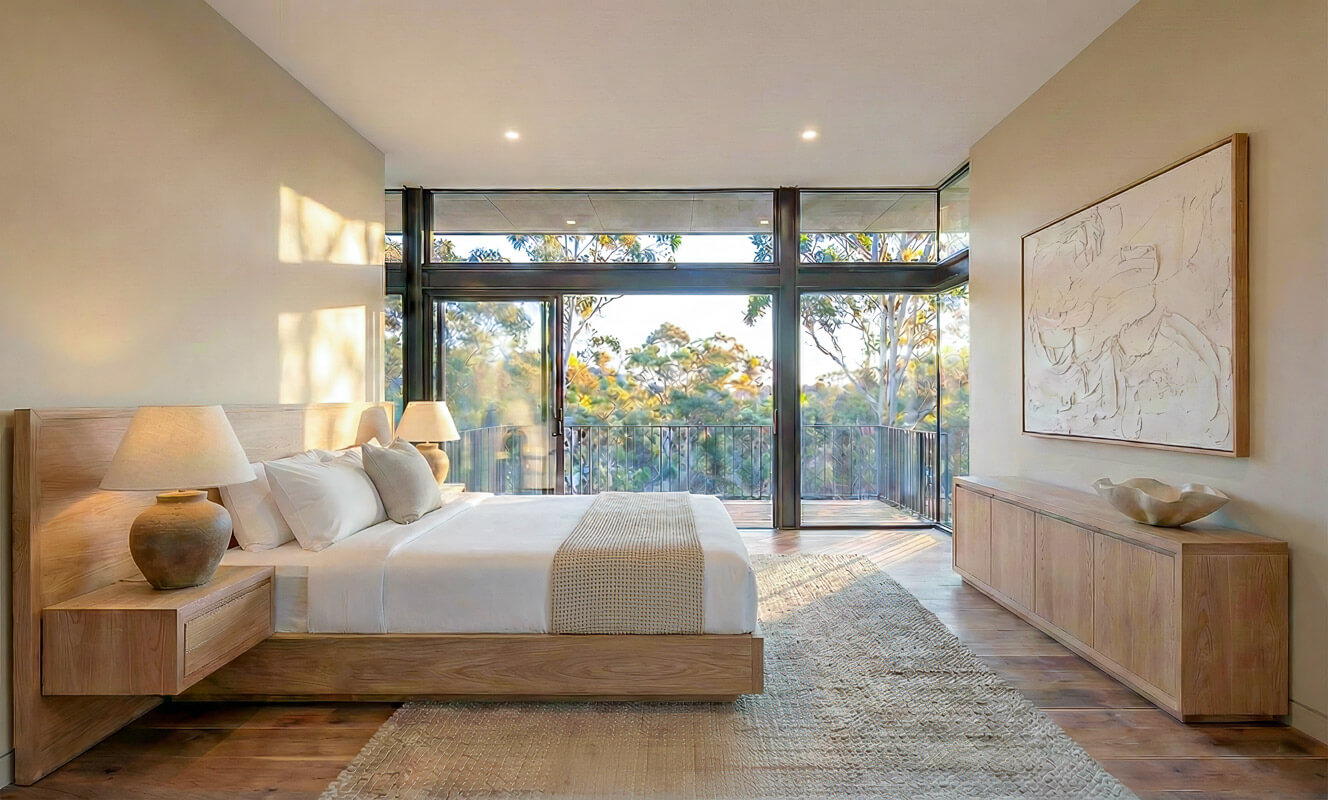 04 —Glazing is positioned to frame specific aspects of the landscape rather than an overwhelming panorama, inviting the morning light and tree canopy into the retreat.
The Master Suite: Waking up in the Treetops
The private quarters cantilever outward, floating among the tree canopy. In the master suite, the design moves away from the 'wall of glass' concept. Instead, corner glazing is positioned to frame a specific, curated view of the bushland.
This creates a bedroom that feels intimate rather than exposed. The morning sun filters through the leaves, and the architecture allows you to wake up with the rhythm of the ridge. The timber flooring and joinery add warmth, softening the acoustics and making the room feel like a private retreat from the rest of the house.
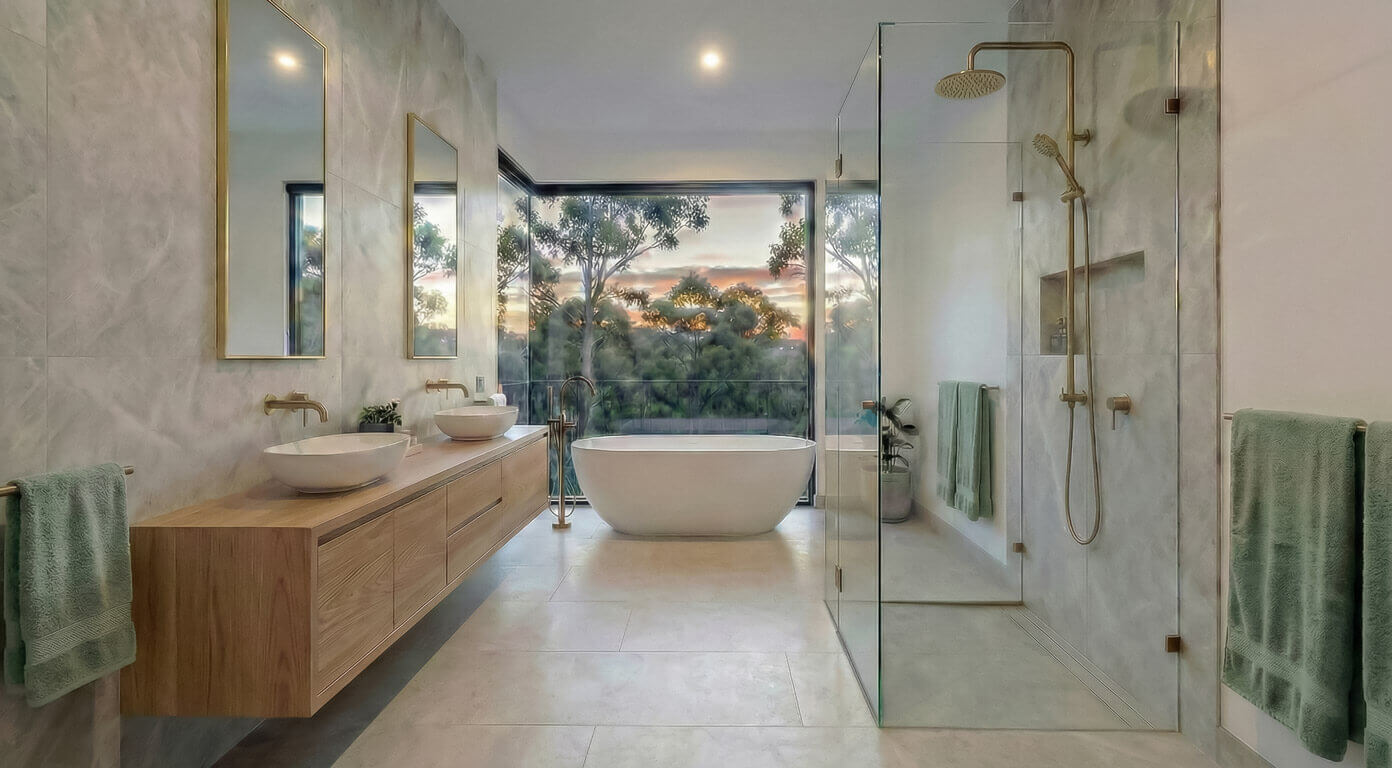 05 —The design prioritises privacy through positioning rather than walls, allowing the inhabitant to bathe within the quiet shelter of the tree line.
The Ensuite: Privacy by Position
The ensuite redefines privacy. Rather than relying on heavy blinds or frosted glass, the design relies on positioning. Because the home steps down the steep slope, the bathroom sits high within the tree line, naturally screened by the dense foliage.
The expansive corner glazing creates an immersive connection to nature from the freestanding tub. You can bathe in the quiet seclusion of the gum trees, feeling unseen yet entirely connected to the landscape. The intent is to turn a daily routine into a moment of calm.
A hinterland retreat anchored by masonry and sheltered by cantilevered planes — where charred timber recedes into the shadows of the gum trees. Architecture that frames the view rather than competing with it, and improves with every season.
A site of your own?
Every project here began with the same questions: where does the sun come from, where does the water go, and what is worth keeping. If your site raises them too, that's the conversation to have.
Discuss your project