
Project 04 · Residential · Studio project
Eucalyptus House
A raw concrete sanctuary framed by the Currumbin Valley canopy.
For Currumbin Valley · 2026
In the vastness of a valley, there is a distinct psychological need for a sense of protection. It is a common misconception that a connection to nature requires a lightweight structure. In this design for Currumbin Valley, the architecture does not compete with the forest; it provides a steadfast anchor within it.
 01 —The architecture presents as a horizontal pavilion, anchored by board-marked concrete and softened by the transparency of timber-framed apertures.
A Level Datum in the Landscape
The design presents as a low-profile pavilion that respects the natural fall of the land. A wide timber deck sets a single level across the slope, holding the house flat against ground that falls away beneath it.
Deep roof overhangs are a functional necessity, shielding the interior from the high summer sun while inviting the warmth of winter light deep into the plan.
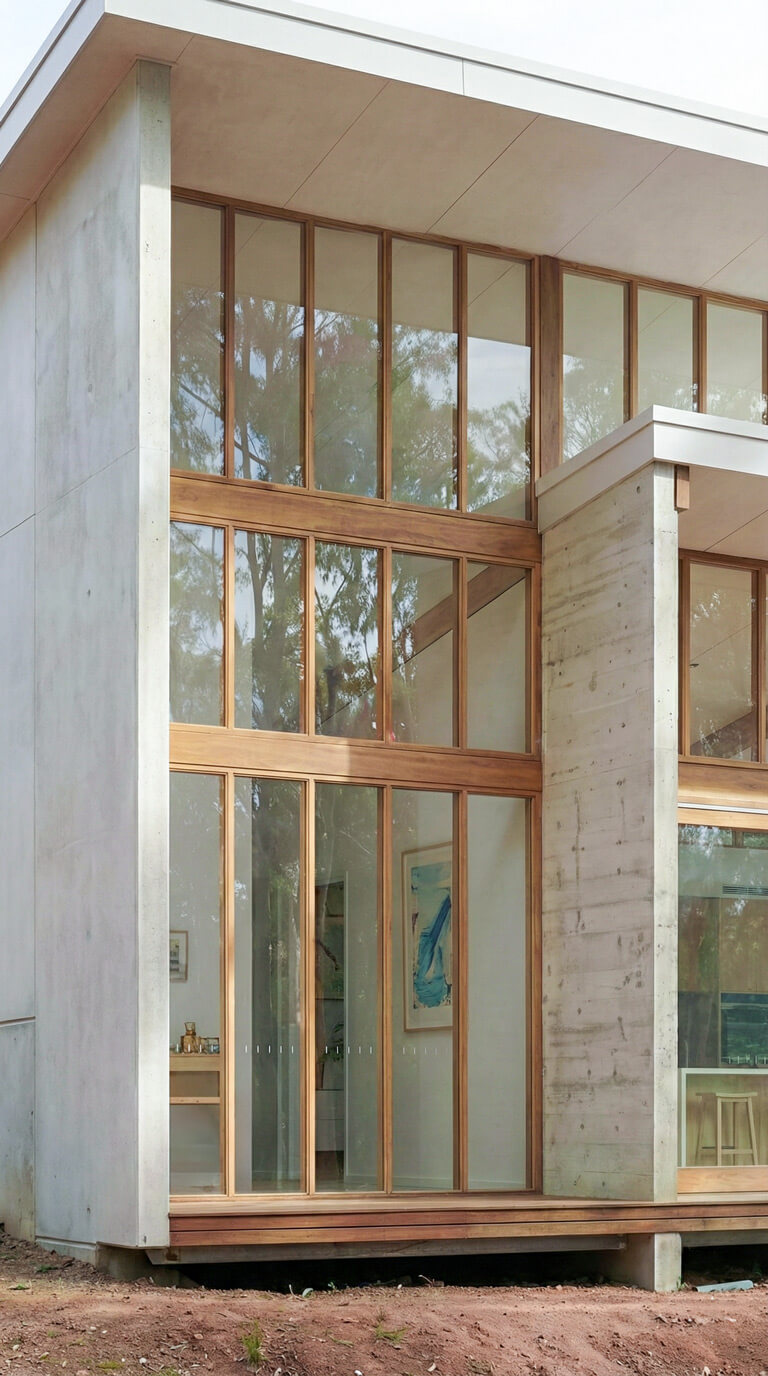 02 —Vertical structural elements and high-set glazing facilitate a connection to the sky, allowing filtered light to penetrate deep into the internal plan.
Structural Sincerity
Board-marked concrete forms the primary structure. The texture of the timber formwork stays visible in the finished surface — a mark of how the building was made, industrial and organic at once. It also provides the thermal mass to regulate the internal climate.
Because the walls carry the load, the openings are free to sit high, set above eye level where they catch light off the canopy rather than framing a view. It moves across the concrete through the day, so the wall reads differently morning to afternoon.
The Inverted Canopy
The interior volume is defined by a repetitive rhythm of exposed timber rafters. This system acts as an internal canopy, echoing the tall, straight lines of the forest outside. By drawing the eye upward, the architecture increases the perceived volume of the room.
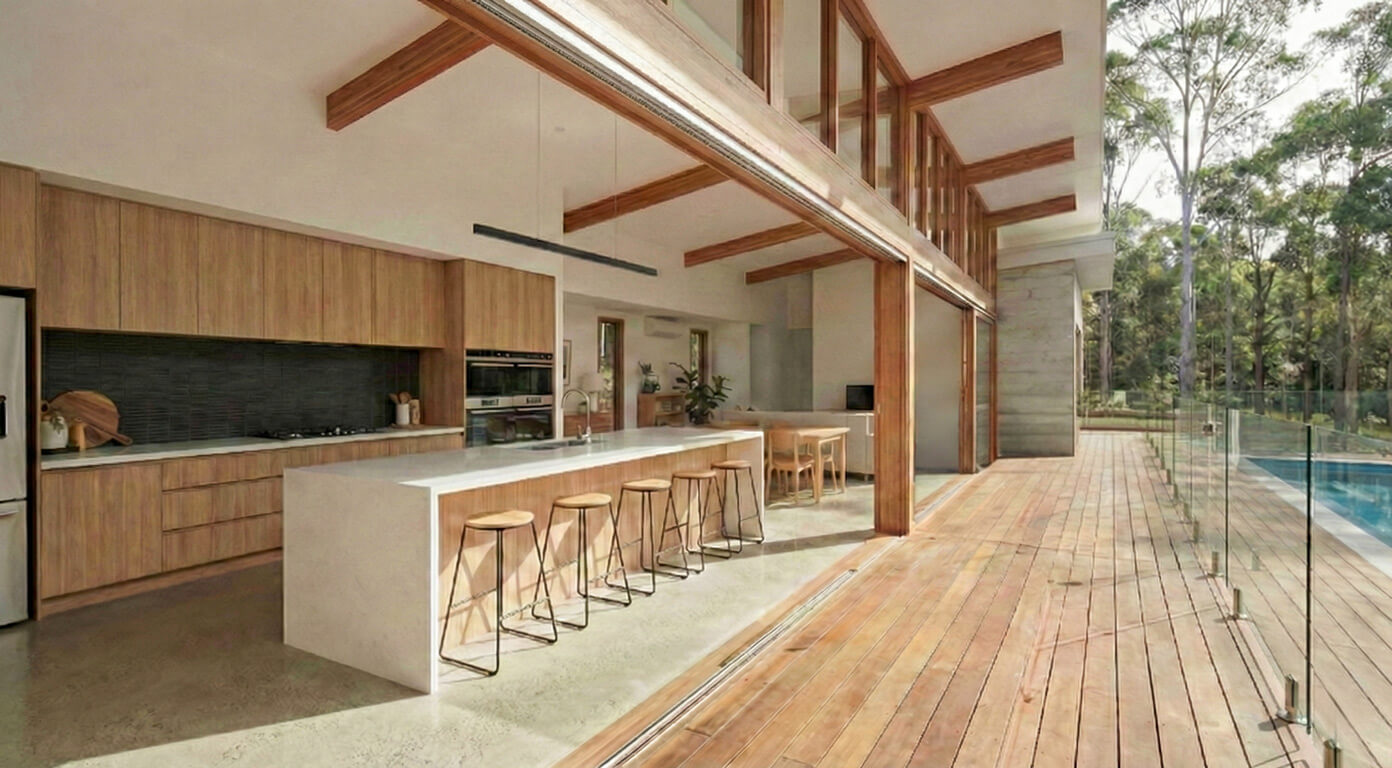 03 —The kitchen is defined by a monolithic island bench and a repetitive rhythm of timber rafters that extend the interior volume toward the canopy.
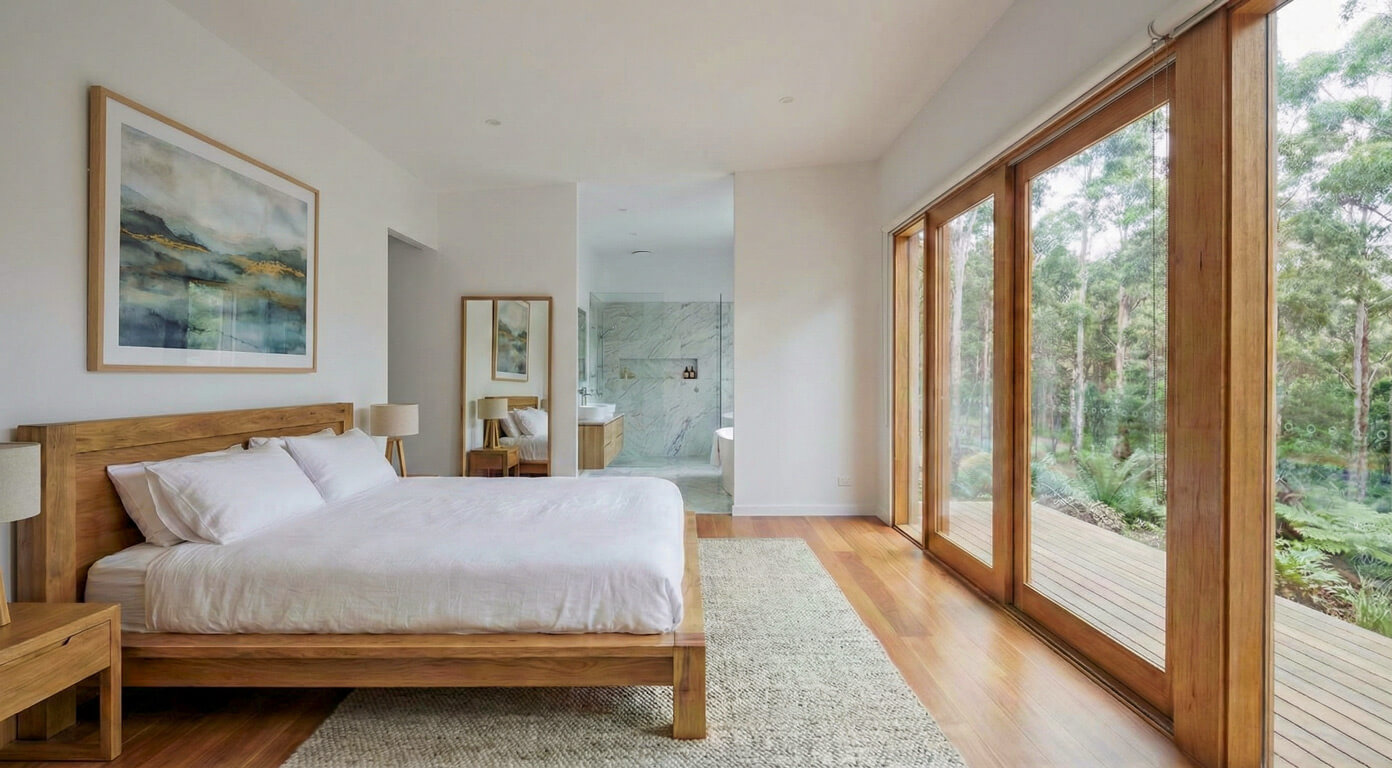 04 —The sleeping sanctuary utilises timber flooring and expansive glazing to maintain a constant dialogue with the forest floor.
Sanctuary and Stillness
The master suite sits low, close to the forest floor. Timber flooring and simple joinery carry the warmth of the trees into the room, and the glazing is large enough that the surrounding bushland does most of the decorating.
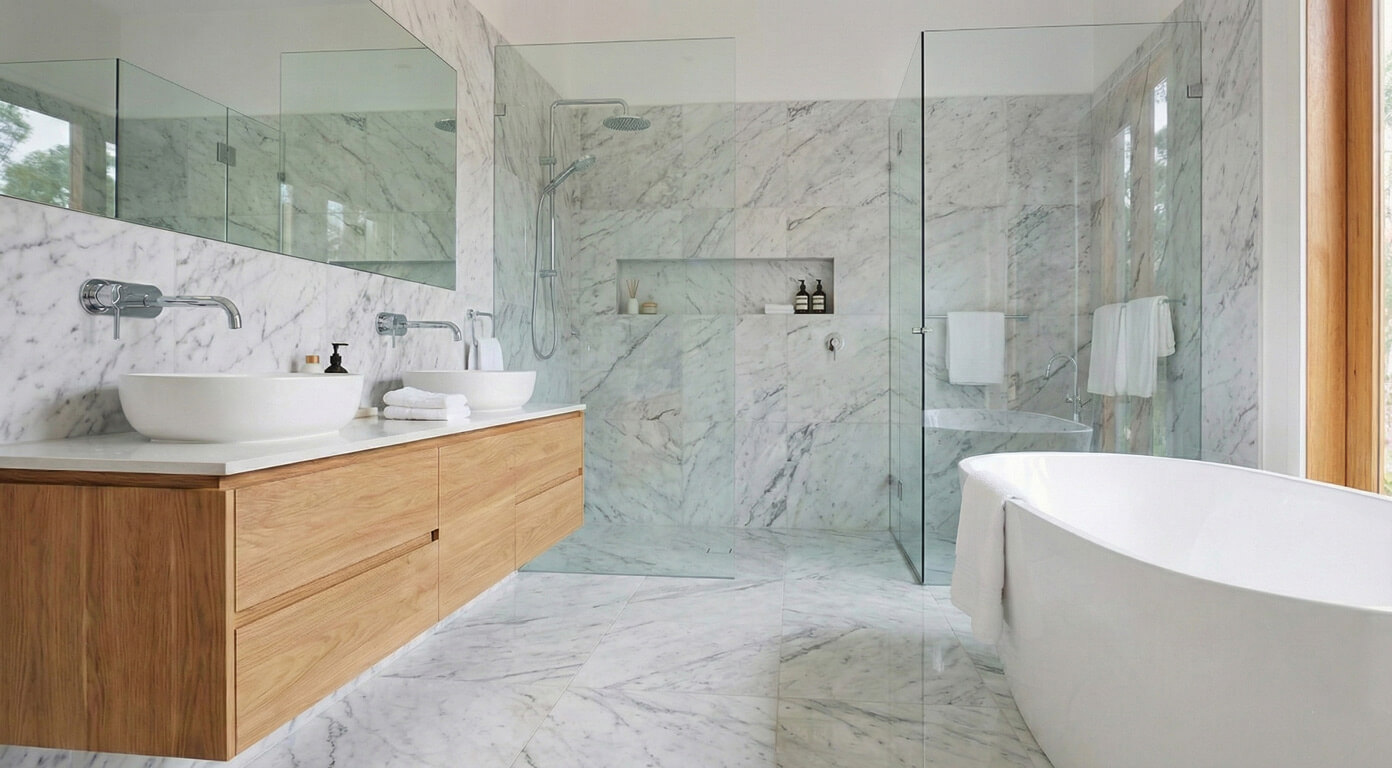 05 —In the ensuite, the use of marble and timber creates a tactile contrast, where the density of stone is balanced by the warmth of the custom joinery.
Tactile Contrast
In the ensuite, the density of marble provides a cool, sensory contrast to the warmth of the timber throughout the rest of the home. Concrete carries the weight of the building, while the materials you come into contact with are softer: marble underfoot, timber at hand, and joinery you notice because it's been thought about.
It is a space stripped of visual noise, where the focus returns to the tactile quality of stone and the surrounding greenery.
The Dissolving Boundary
Large sliding doors allow the kitchen and living area to work as an open-air pavilion. When the glass is retracted, the boundary between the kitchen and the deck effectively vanishes. The layout is designed for passive cooling, drawing valley breezes through the house and reducing the reliance on mechanical systems.
06 —Large-scale sliding portals dissolve the boundary between the internal social hub and the external environment, fostering a seamless spatial transition.The Principles of Equilibrium
Eucalyptus House is a study in balance — how architecture can give way to its setting while still offering shelter, open to the forest on every side and solid at its core. By harmonising the weight of concrete with the transparency of timber-framed glass, the design offers a way of living that is passive, quiet, and enduring.
A site of your own?
Every project here began with the same questions: where does the sun come from, where does the water go, and what is worth keeping. If your site raises them too, that's the conversation to have.
Discuss your project