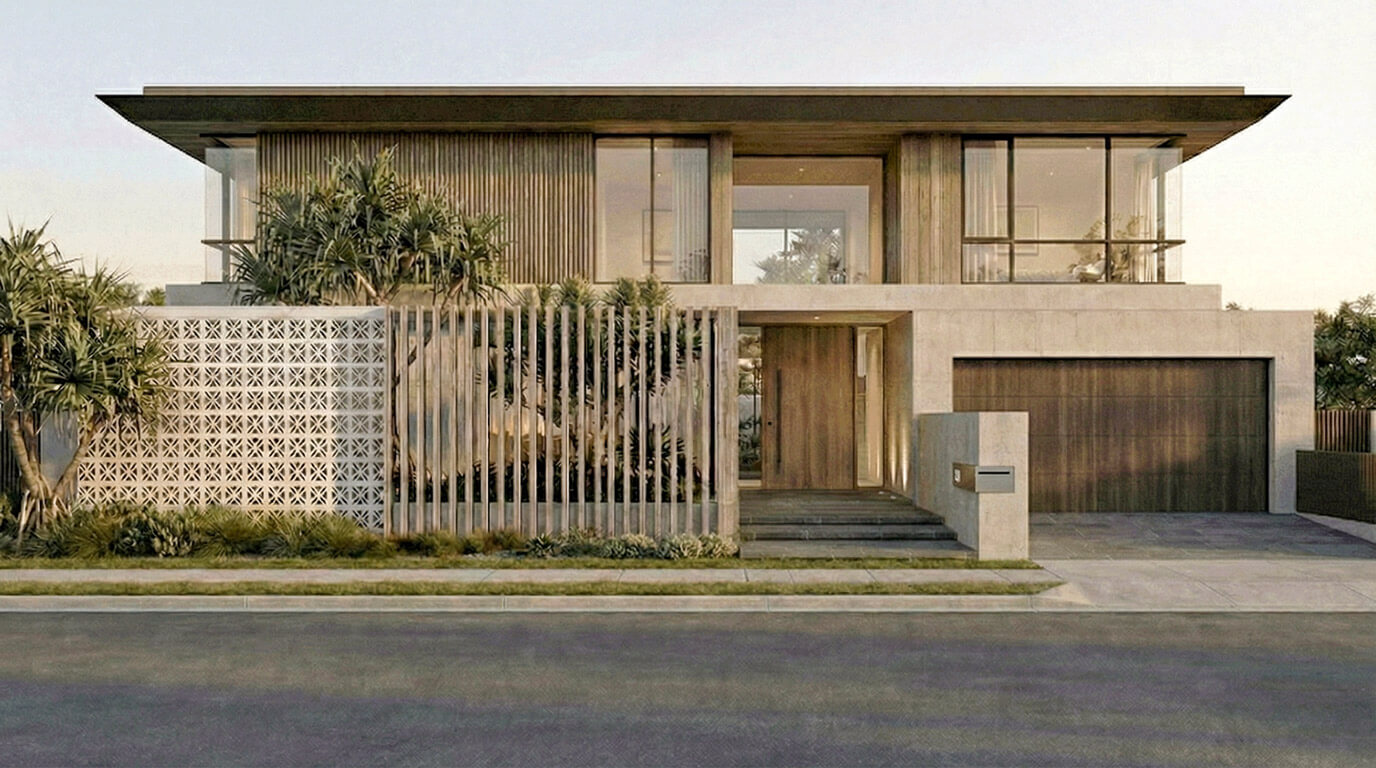
Project 13 · Residential · Studio project
Burleigh Heads Sanctuary
Subtropical Modernism designed for the heart of Burleigh
Burleigh Heads · 2026
Burleigh Heads is one of the Gold Coast's most desirable addresses, but that popularity brings density. The challenge for this concept was to create a sense of seclusion on a suburban site where neighbours are always close by.
The design solution is a sanctuary that looks inward. By using Subtropical Modernist principles - deep eaves, breathable walls, and thermal mass - the home allows you to live openly without feeling exposed. It is a defensive architecture that doesn't feel like a fortress; a home that filters the neighbourhood out so you can focus on the calm within.
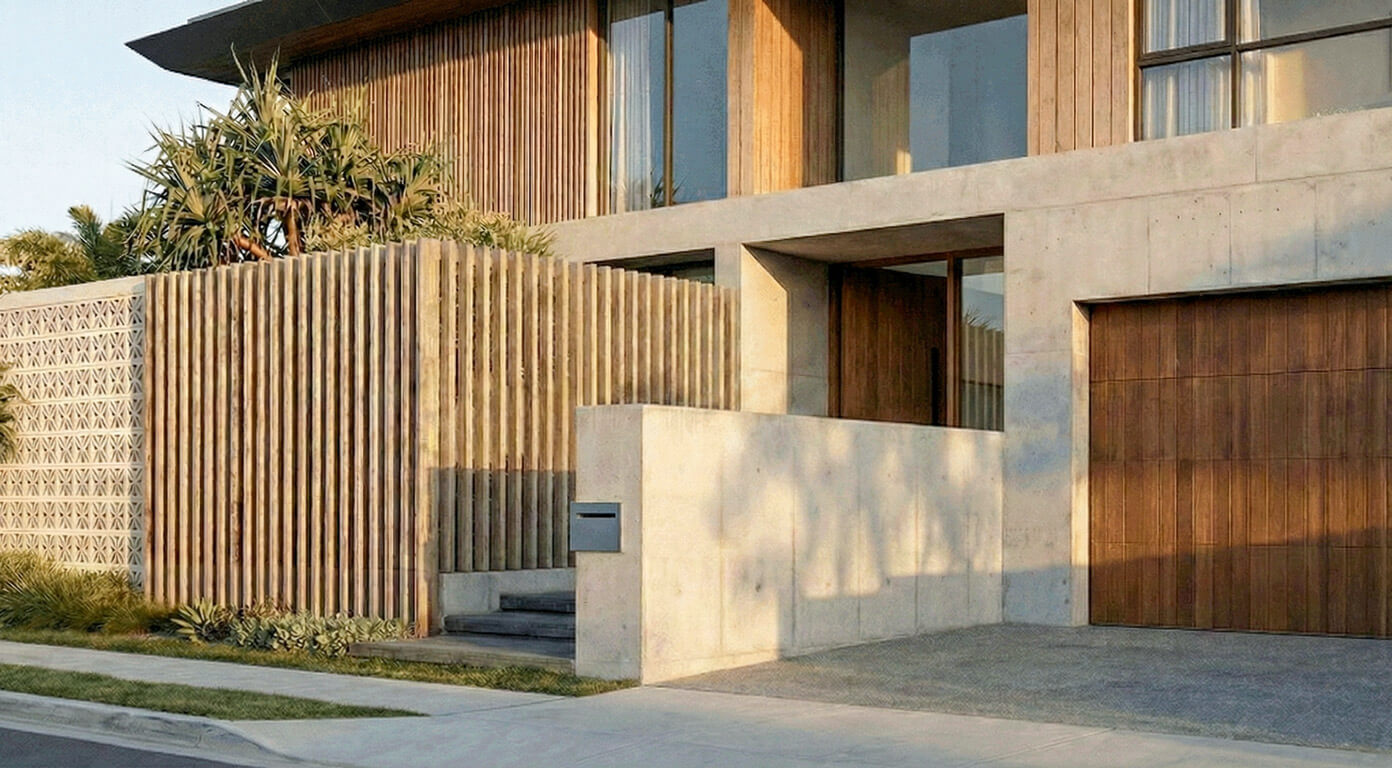 01 —The street face uses breeze blocks to filter light and air without surrendering privacy. It is a functional response to the suburban context.
Privacy Without Shutting Down
The common mistake in privacy design is to build a solid wall, which blocks the view but also restricts airflow. We addressed this by using decorative breeze blocks at the street threshold.
This permeable layer does two things: it acts as a privacy veil to obscure direct sightlines from the street, while allowing cooling coastal breezes to pass through into your courtyard. It creates a sense of protected enclosure combined with the airflow of an open verandah—a modern interpretation of the classic Gold Coast beach house.
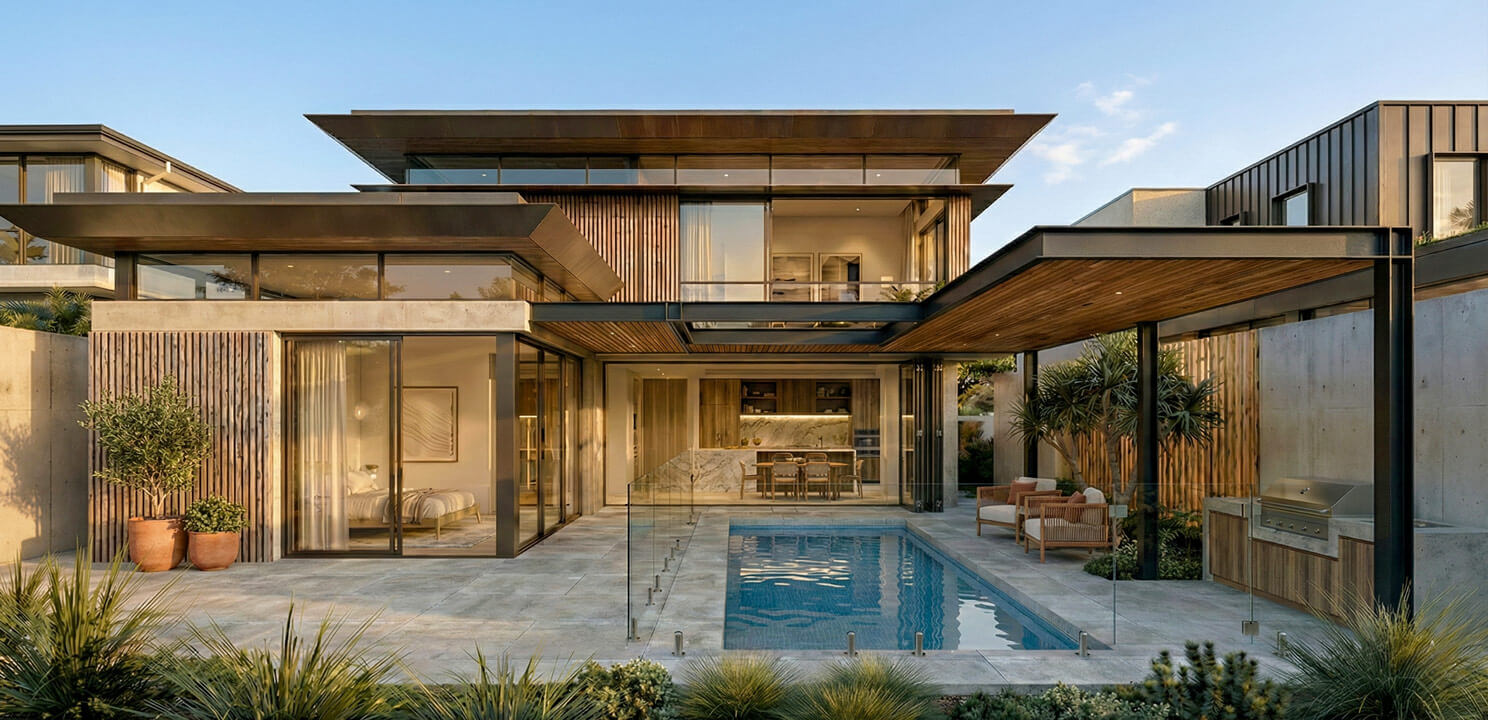 02 —The rear face prioritises connection. Stacking doors disappear, allowing the pool and alfresco areas to function as an extension of the living room.
Extending the Living Footprint
On a tight coastal site, you cannot afford to have dead space. The rear elevation is designed to dissolve the boundary between inside and out.
By using full-height stacking doors, the internal living room expands directly onto the pool terrace, significantly increasing your entertaining area. Deep cantilevered concrete eaves protect the glass from the harsh midday sun, allowing you to keep the doors open even in the height of summer and blur the line between the lounge room and the pool.
The Social Anchor
The kitchen is designed as furniture rather than just a utility zone. Anchored by a striking natural stone island, it connects the dining, living, and alfresco zones into one cohesive social volume.
We selected rich walnut timber joinery to offset the coolness of the concrete floors. It brings a necessary warmth and sophistication to the palette, creating a space that feels inviting for a dinner party while being robust enough to handle the wear and tear of daily family life.
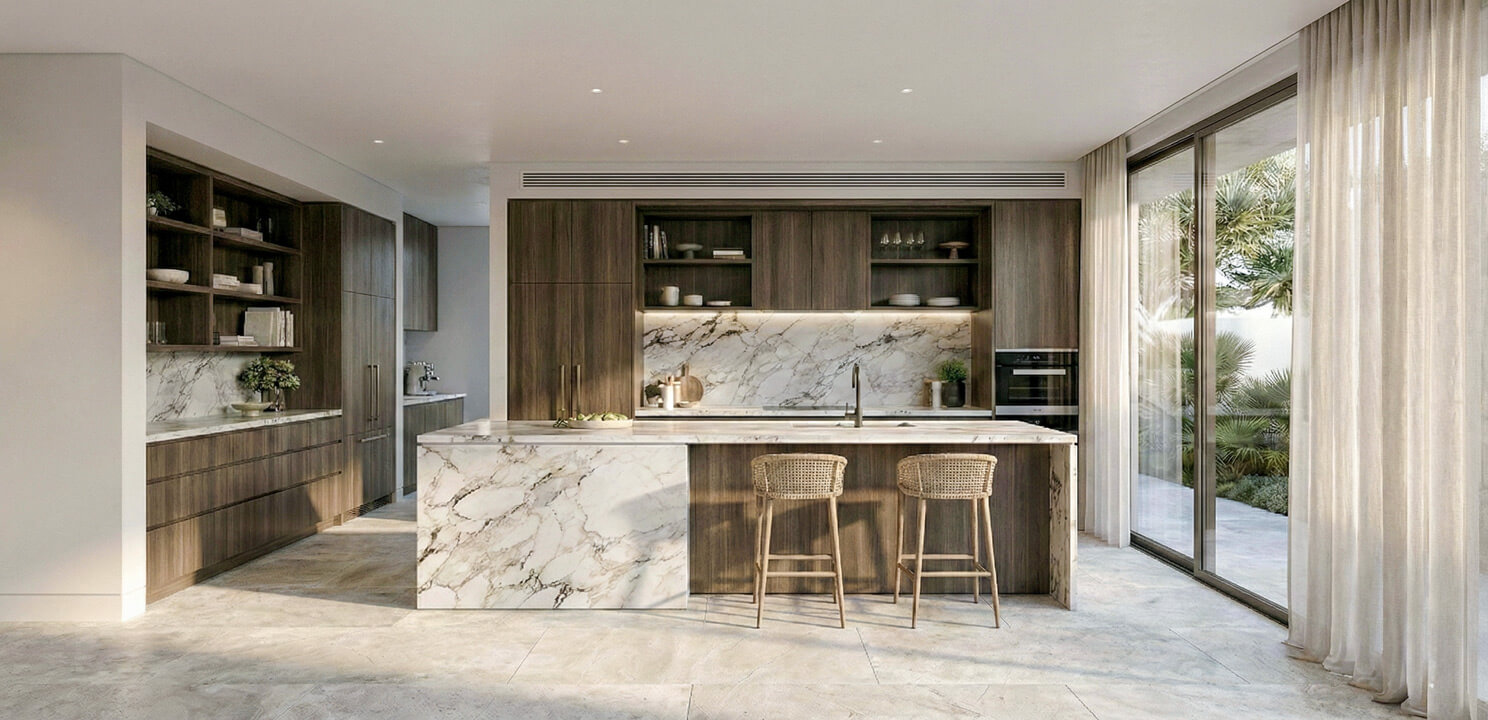 03 —Walnut joinery and limestone add warmth to the concrete structure. The material palette is designed to withstand coastal conditions while maintaining a refined interior aesthetic.
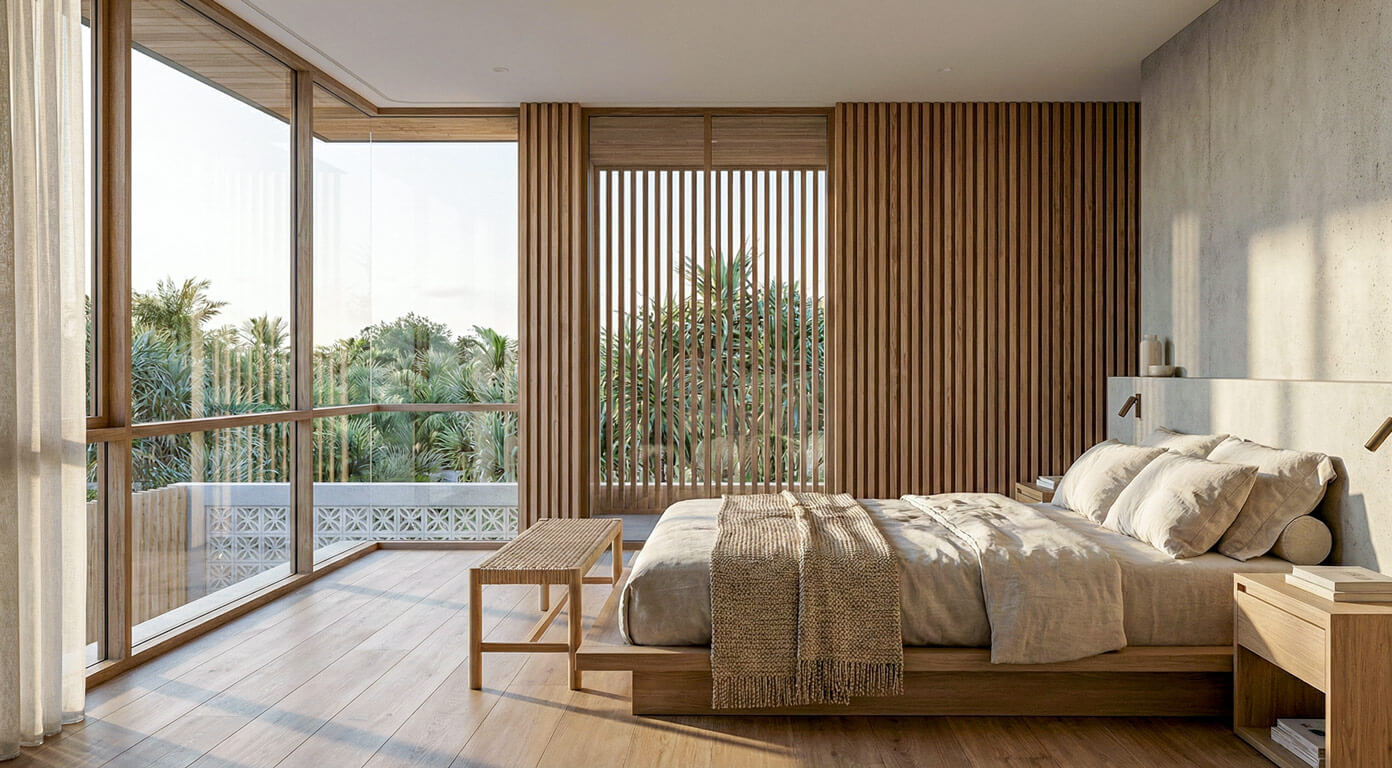 04 —A study in texture. The raw solidity of the structure is softened by the warmth of timber screening and natural linen, creating a space defined by tactile contrast.
A Texture-Driven Retreat
Bedrooms in this climate often suffer from a trade-off: you either close the curtains for privacy (and lose the breeze) or open them (and lose privacy).
The master suite resolves this through a considered application of texture and form. Vertical timber battens are utilised as an architectural screen to filter natural light and soften the connection to the street. This layering creates a calm, protective atmosphere, allowing the space to feel open and airy while maintaining the necessary seclusion for a private retreat.
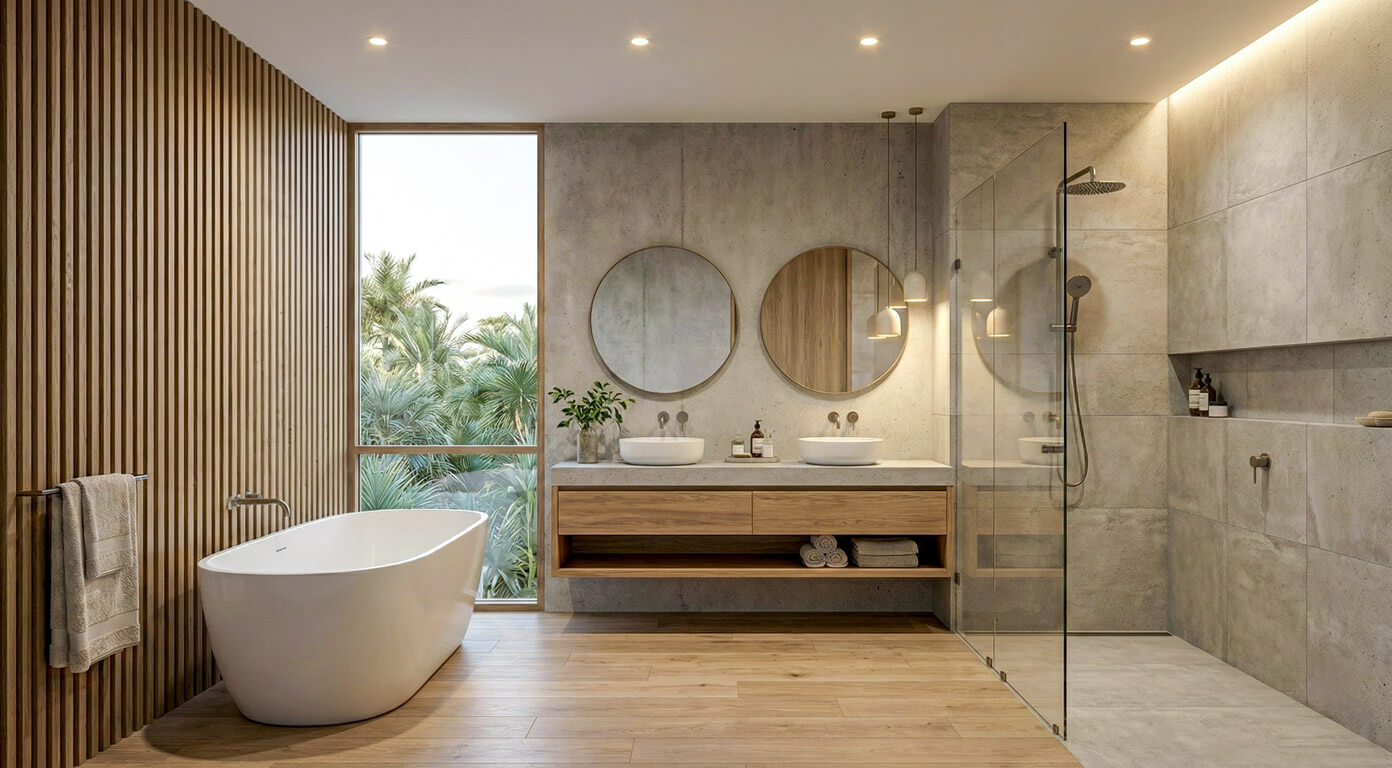 05 —The ensuite utilises limestone, concrete, and natural light. The design intent is to strip away excess, leaving only essential forms and materials.
The Ritual of Bathing
In the ensuite, the design intent is to strip back the visual noise. We relied on the tactile warmth of limestone and the cool solidity of concrete to create a space that feels calm, grounded, and permanent.
The layout positions the freestanding bath to take advantage of natural light without compromising seclusion. It is a space designed for decompression, where the materials themselves provide the sense of luxury.
Defined Spatial Zoning
A successful family home relies on the ability to be together without being on top of each other. The upper level is designed as a distinct secondary pavilion - a "breakout zone" separated from the noise and activity of the kitchen and pool below.
Elevating this living space captures the cross-ventilation and the warm evening light. It creates a dedicated place to retreat to at sunset, allowing the home to function seamlessly as children grow and the need for personal space increases.
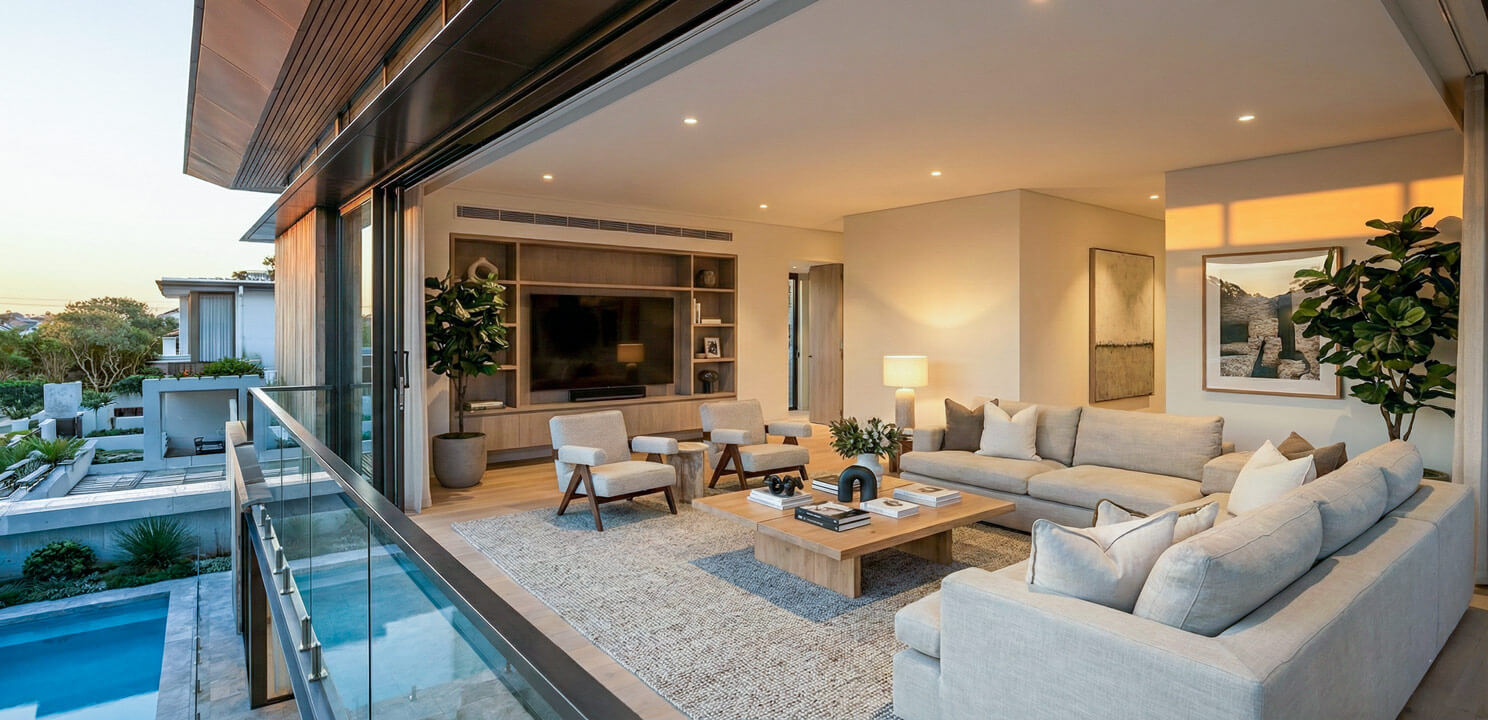 06 —An elevated sanctuary separated from the active ground floor. The upper volume captures the cooling evening air and shifts the focus upward toward the sky.
Designed for Longevity
Real luxury in the coastal environment is not about polished surfaces that require constant maintenance; it is about materials selected to settle into their environment.
The Burleigh Heads Sanctuary is conceived to embrace the aging process. The design intent is for the concrete to develop a soft patina and the timber screens to naturally silver to a driftwood grey. It is a concept for a home built for permanence - offering a private, enduring backdrop to the shifting seasons of family life.
A site of your own?
Every project here began with the same questions: where does the sun come from, where does the water go, and what is worth keeping. If your site raises them too, that's the conversation to have.
Discuss your project