
Project 07 · Residential
Bilambil Heights House
A tiered architectural response to steep topography and elevated valley vistas.
Bilambil Heights · 2016
 01 —Capturing the horizon. Seamless transitions between the master suite and the elevated aspect allow for natural ventilation and constant valley views.
The Private Retreat
The master suite functions as a private sanctuary, oriented to prioritise the vista across the valley. High 2.7m ceilings and ceiling-height glass allow the interior to feel expansive, while the layout provides a sense of quiet containment.
The design allows the environment to become a permanent backdrop, fulfilling the requirement for a home that feels open and connected to the landscape from the moment of waking.
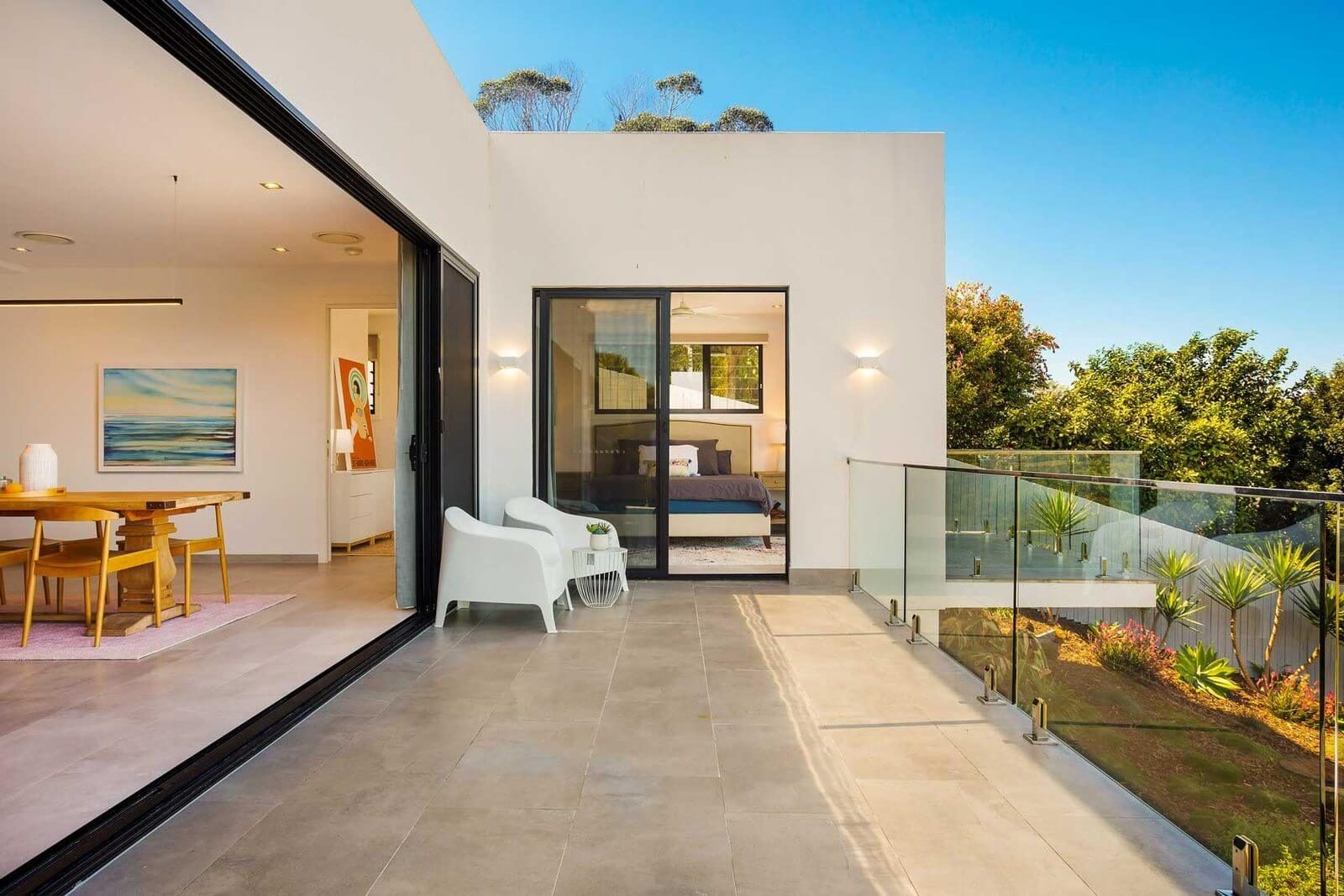 02 —Outdoor living on a gradient. Frameless glass balustrades and deep balconies extend the internal living areas into the coastal air.
Elevated Entertaining
A primary objective for the design was the inclusion of deep, cantilevered decks to maximise the north-easterly aspect. These outdoor terraces apply frameless glass balustrades and recessed tracks to remove visual boundaries, creating an effortless transition from the internal spaces.
This configuration provides sheltered entertaining zones that capture prevailing breezes, aligning with the project's focus on passive solar principles and site-responsiveness.
A Panoramic Horizon
The residence is designed to be inherently site-responsive, utilising its height to facilitate natural cross-ventilation through the open-plan levels. Large-scale openings frame the view over the valley, creating a home that feels both protective and entirely open to its environment. This results in a residence where the architecture honours the site’s topography, turning a difficult pitch into a definitive coastal advantage.
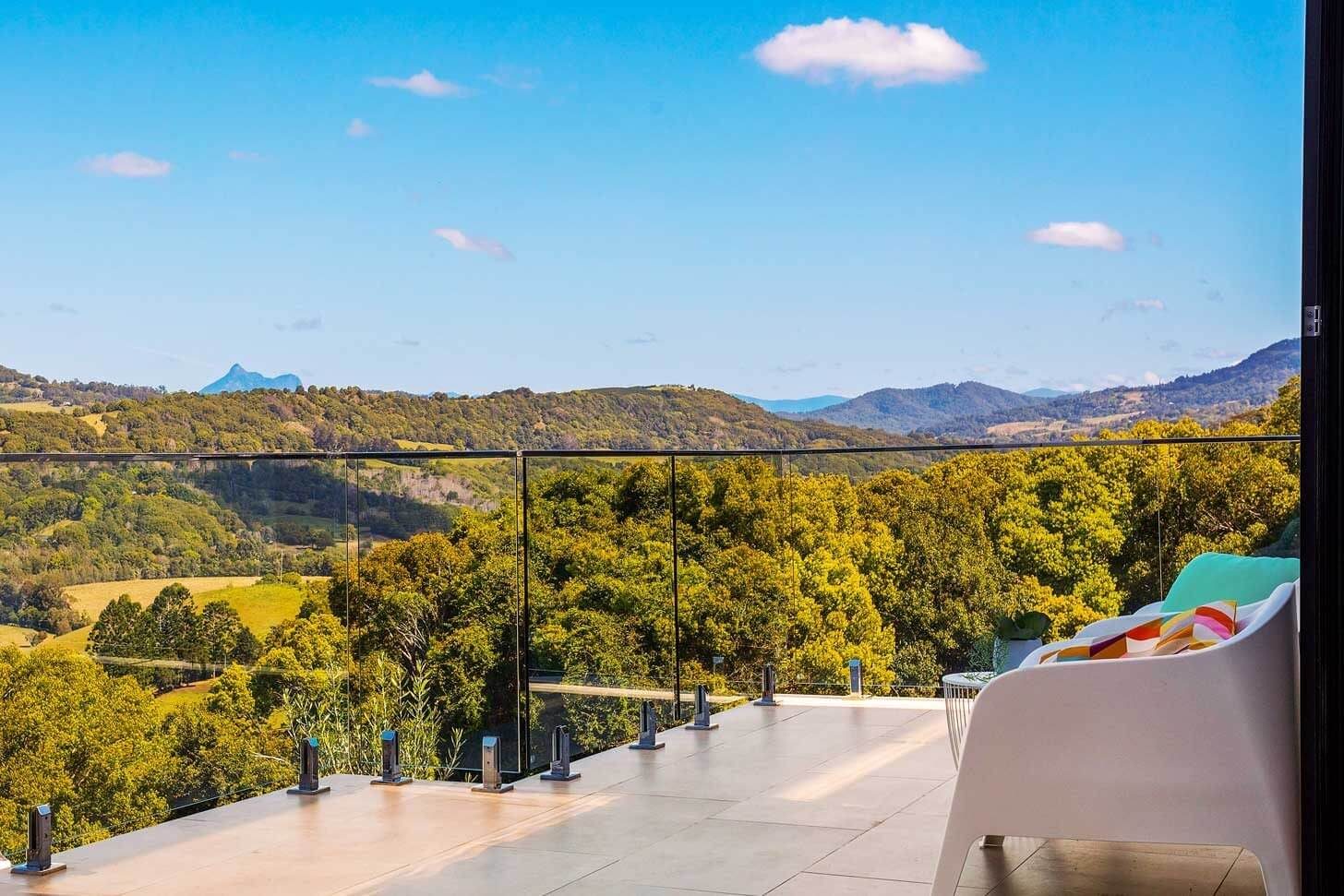 03 —The site’s elevation captures a panoramic hinterland vista, employing minimalist glass balustrading to maintain a constant visual connection to the natural environment.
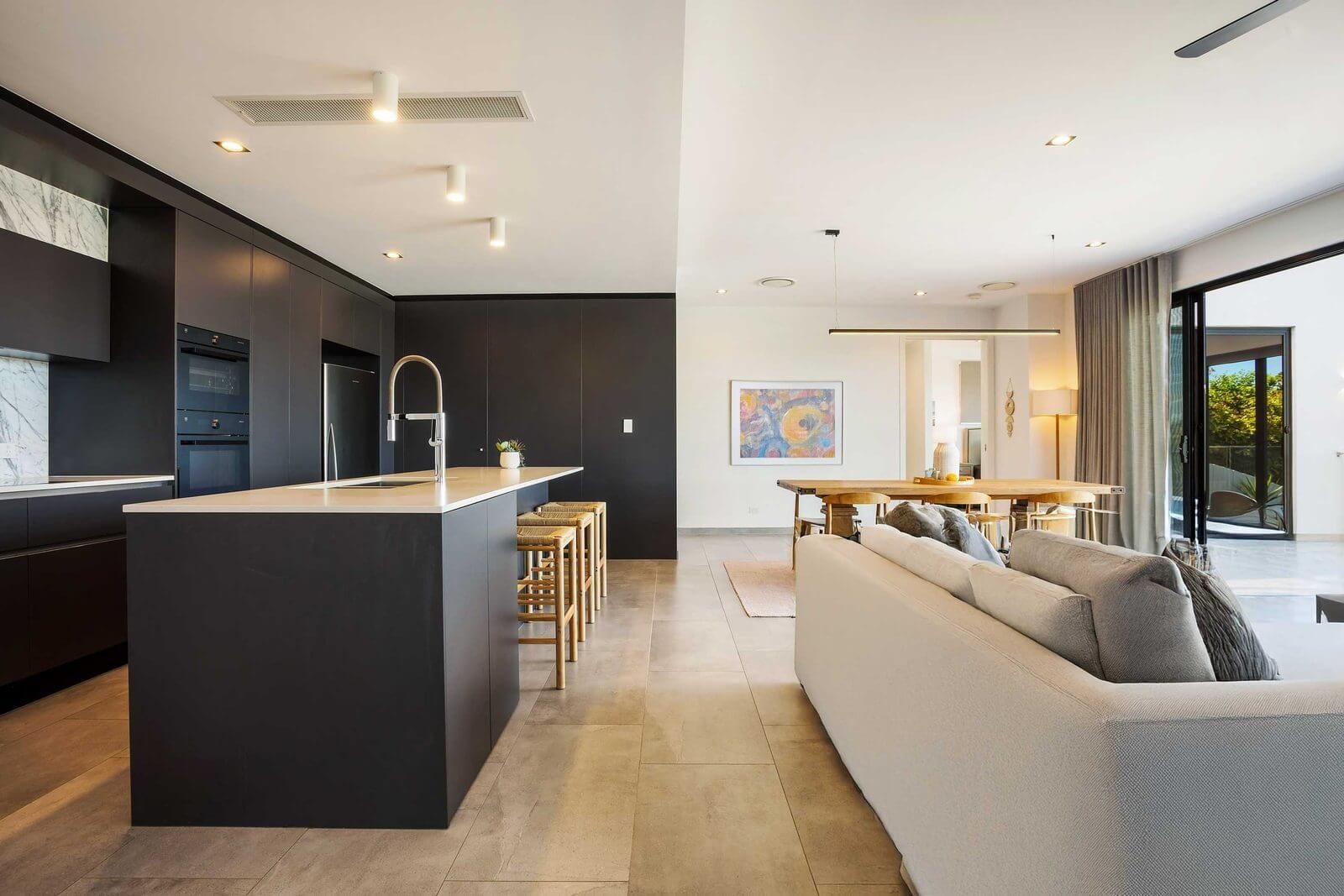 04 —Anchoring the shared space. Dark cabinetry and stone surfaces provide an internal weight, balancing the bright coastal light.
The Culinary Anchor
The kitchen and dining area serve as the home’s functional core, designed to anchor the open-plan layout. Dark, matte cabinetry provides a bold visual weight that contrasts with the light-filled interior, while the central island bench acts as a social bridge between the dining area and the outdoors.
This space was designed to maintain a direct visual connection to the living zones, allowing the household to engage with guests while moving through daily routines.
 05 —Hidden utility. A dedicated scullery allows the main kitchen to remain a clean, social space during entertaining.
Discreet Functionality
Tucked behind the primary kitchen zone, a discreet entrance leads to a walk-in scullery. This secondary workspace allows the practicalities of the household to remain hidden, keeping the main open-plan area clutter-free.
The continuity of the dark finishes into this zone demonstrates a commitment to quality throughout even the most utilitarian spaces of the home, providing a practical solution that values both form and utility.
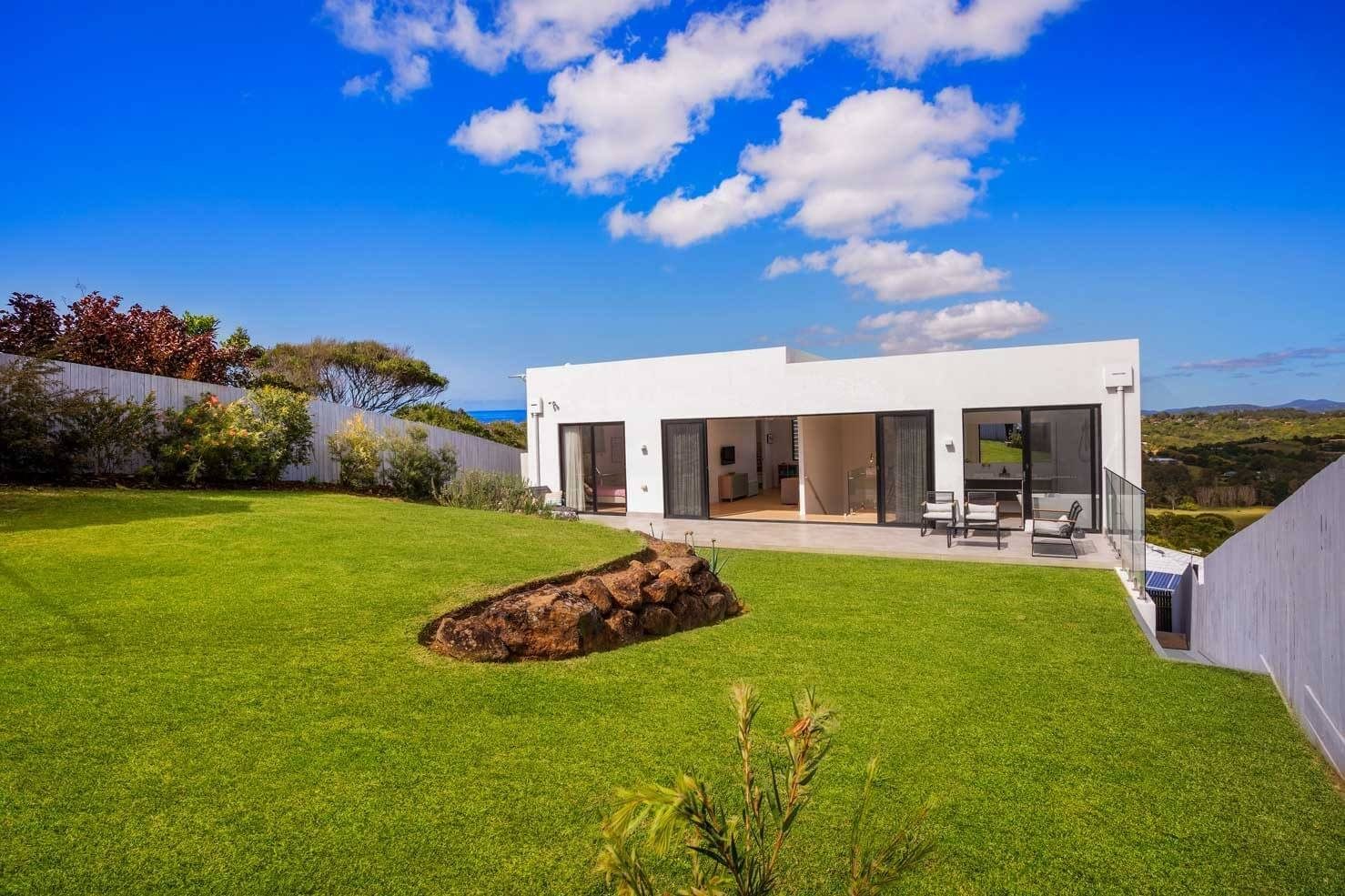 06 —Engineering for play. Level rear lawns are carved into the slope to provide a protected and private sanctuary for the family.
Carving Out the Backyard
Creating flat, usable ground on a steep gradient was a critical requirement for family living. By cutting into the hillside and implementing rock retaining walls, the design creates a level rear courtyard and lawn—a significant achievement on such a precipitous lot.
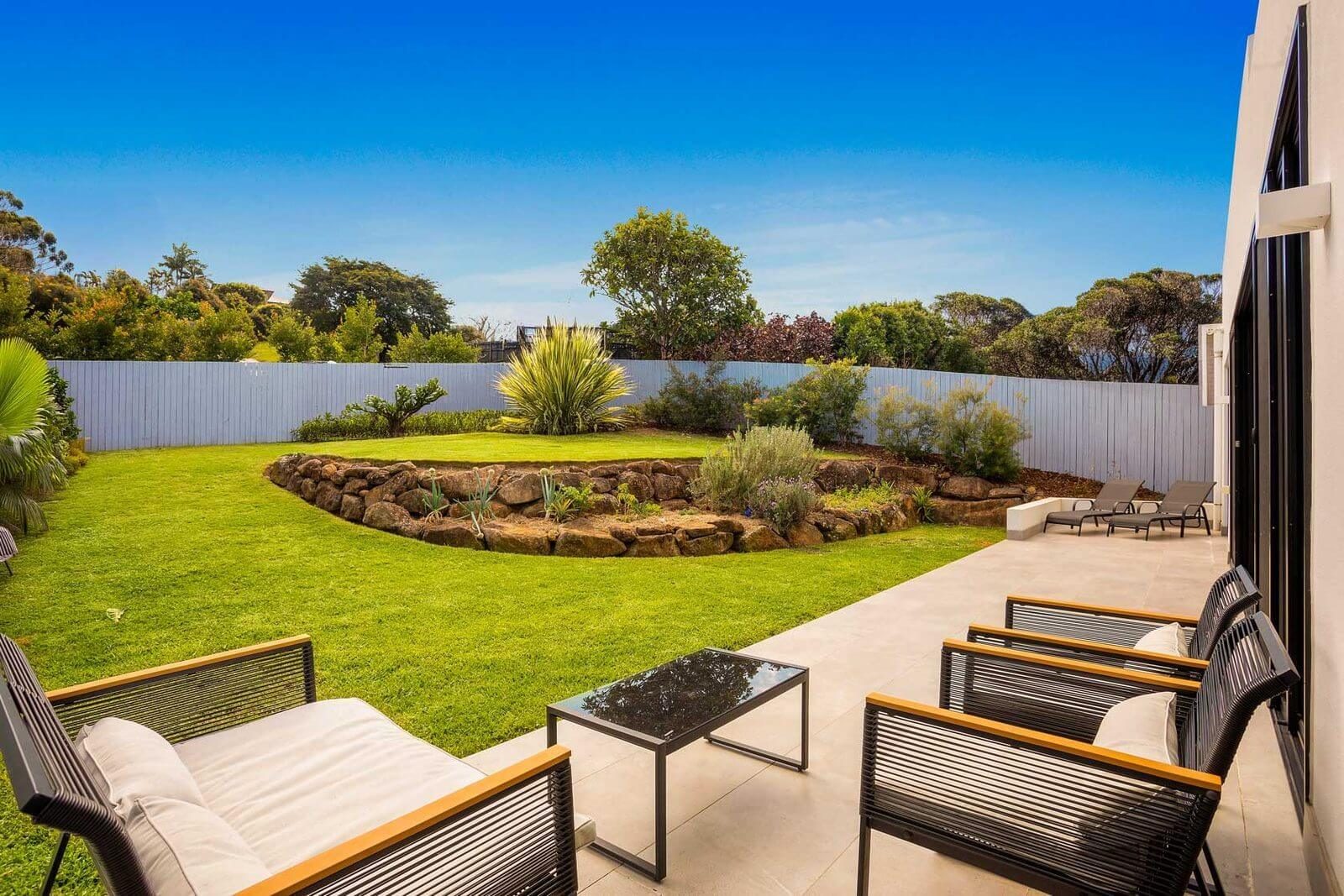
This engineered sanctuary provides a protected outdoor space that connects directly to the lower living areas, offering a private backyard for play and relaxation.
A Landmark on the Hillside
The Bilambil Heights residence represents a definitive response to the challenges of vertical living. By respecting the natural fall of the land while introducing modern clarity, the home establishes a presence that is both commanding and secure. It captures the essence of a contemporary lifestyle - light-filled, connected to the valley, and balanced by a practical rear garden - delivering a family residence that remains deeply aligned with its steep coastal context.
A site of your own?
Every project here began with the same questions: where does the sun come from, where does the water go, and what is worth keeping. If your site raises them too, that's the conversation to have.
Discuss your project