Project 19 · Commercial
Leagues Club Kitchen Refurbishment: Operational Precision
High-Volume Commercial Kitchen & Front of House Upgrade
Burleigh Heads · 2015
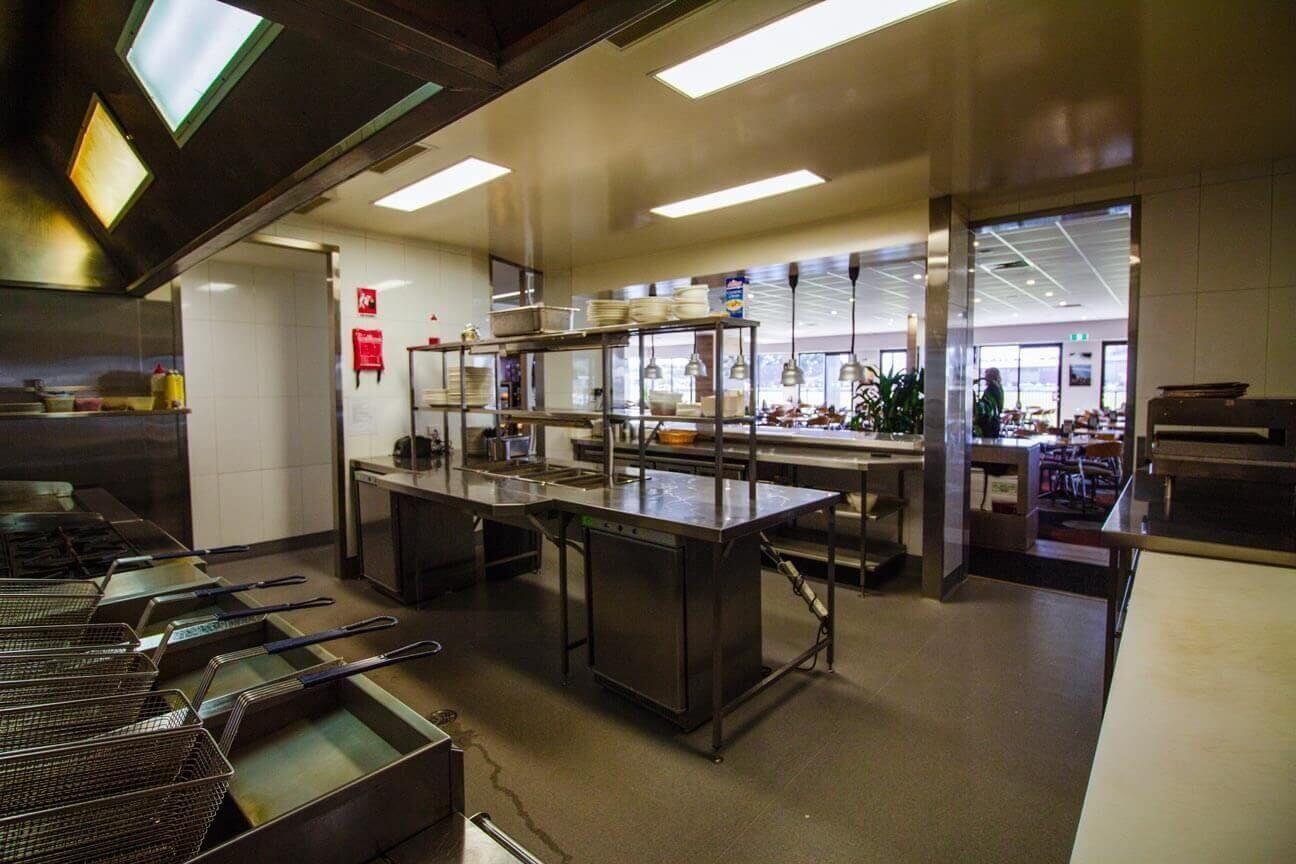
The refurbishment of this local Leagues Club commercial kitchen and front-of-house servery responded to a need for increased operational efficiency within a high-volume hospitality environment. The architectural intent focused on resolving conflicting circulation paths and bottlenecked service zones to better support the kitchen team during peak periods.
By reimplementing the fundamental layout of the prep and service areas, the design addresses the complexities of serving over 500 meals in a single session. The resulting environment prioritises a seamless transition between back-of-house industrial functions and a tactile, welcoming patron interface.
 01 —Central stainless steel work surfaces and stacks of plates arranged for high-volume service efficiency.
Path Segregation and Hygiene
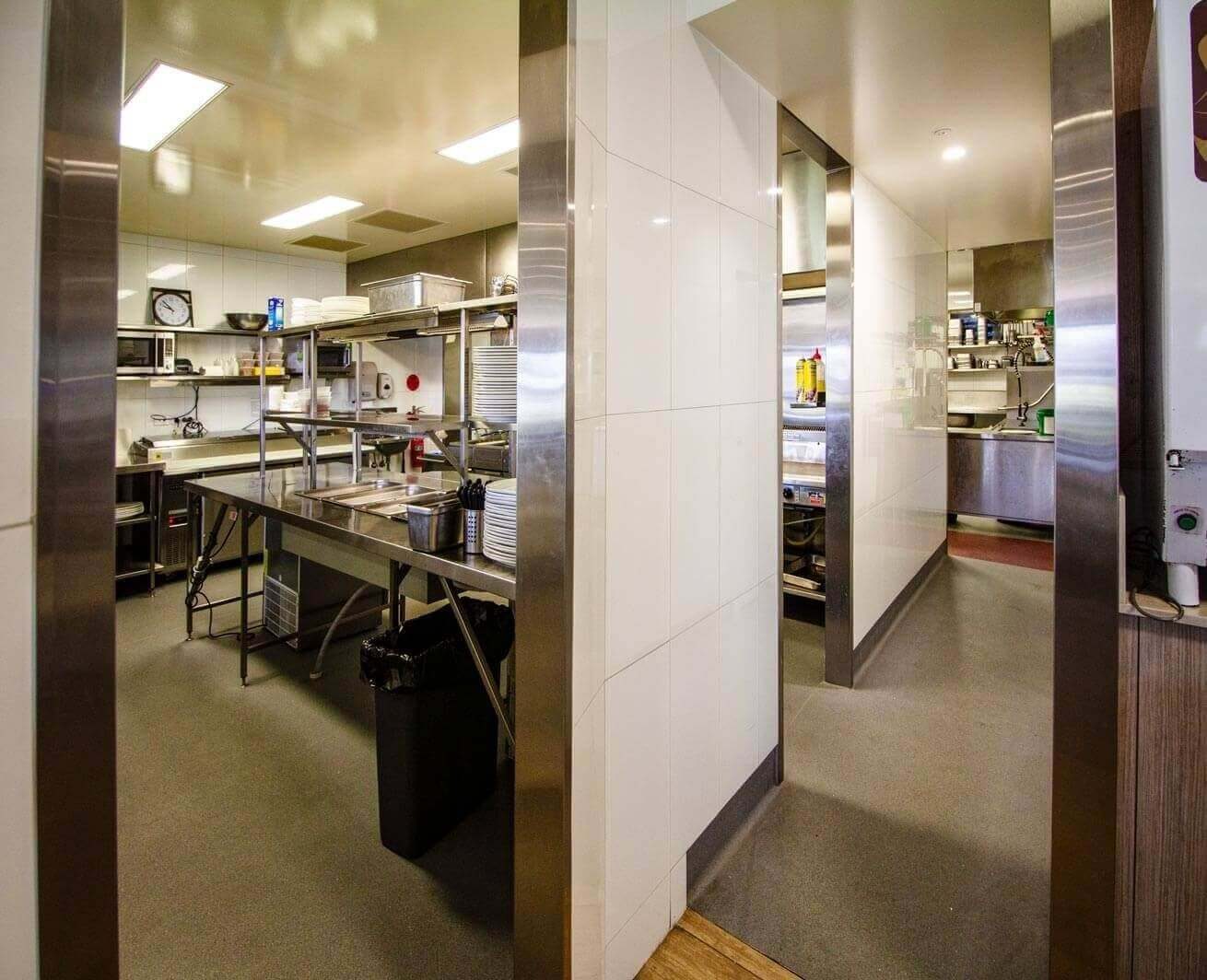
A primary design intervention involved the creation of a dedicated circulation path for soiled dishes, effectively separating this movement from the food preparation and service lines. This segregation directs returns to a distinct, redesigned dishwashing zone, which is fundamental to maintaining high hygiene standards within a high-volume hospitality environment.
The architectural response removes the crossover between soiled returns and clean food dispatch, resolving significant workflow bottlenecks that previously impacted staff performance.
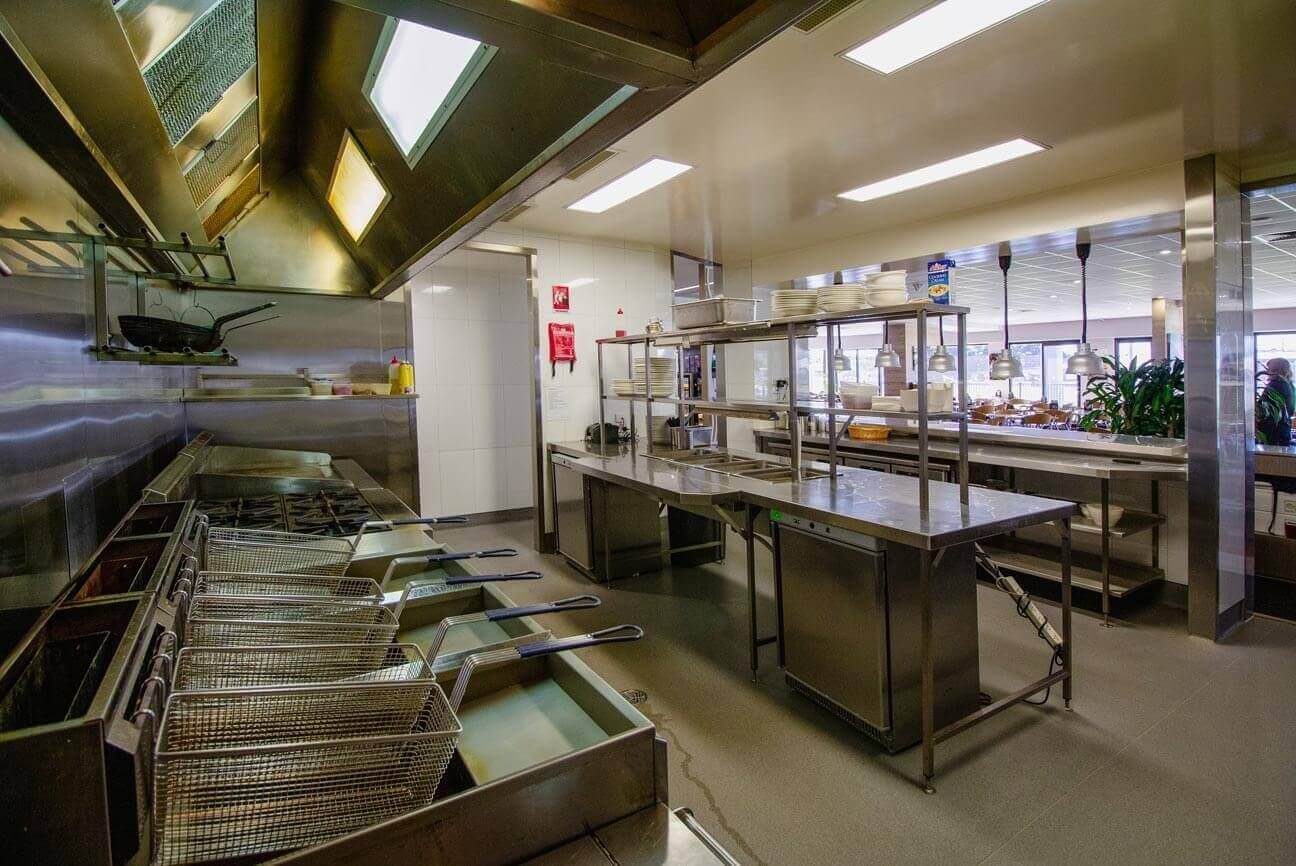
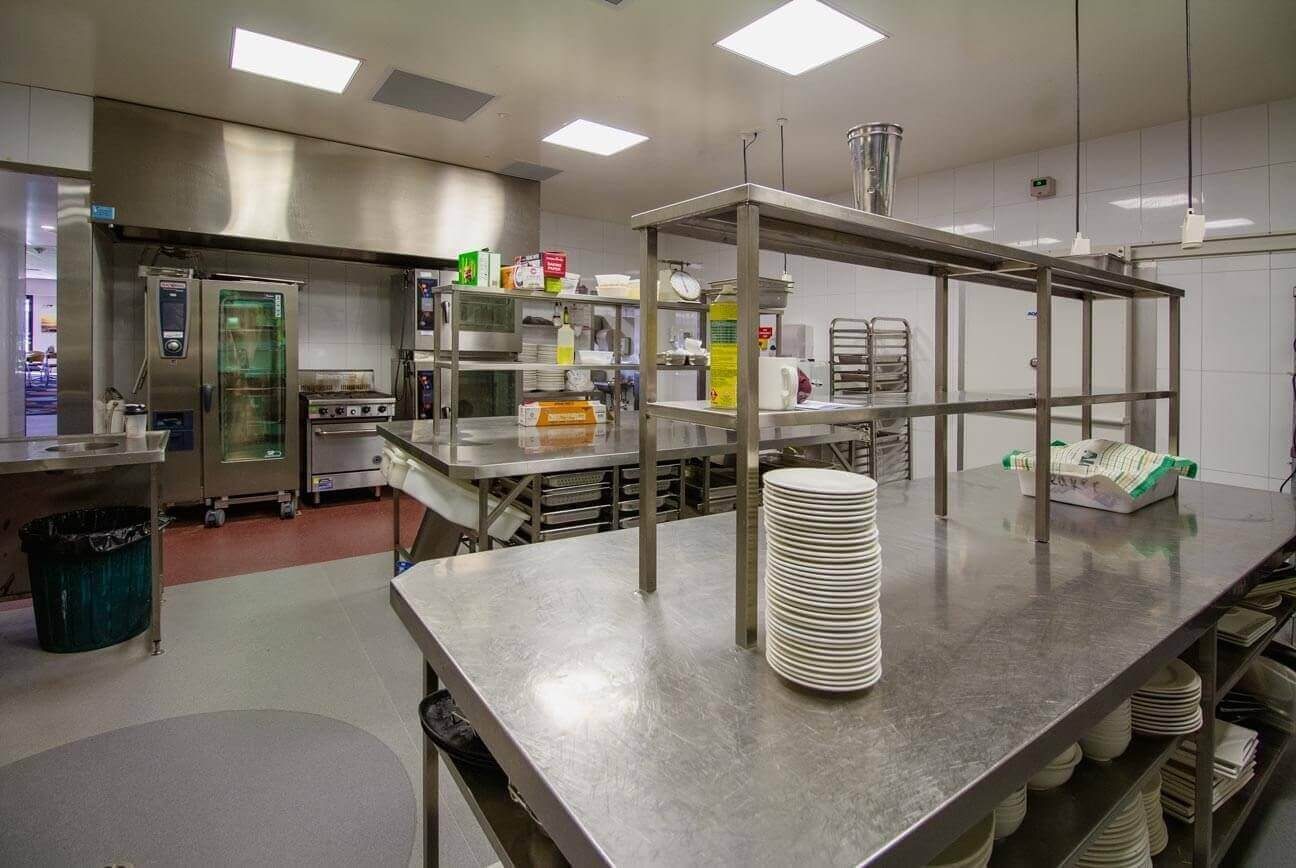 02 —Precision equipment placement along the main cooking line facilitates a logical, linear workflow for high-volume service peaks.
Linear Workflow
The main cooking line and central preparation benches are configured to support a logical, linear workflow for the kitchen team. High-quality stainless-steel surfaces provide a durable, non-porous environment suited for intense daily use, while the placement of equipment and storage for plating facilitates a rapid transition from cooking to service.
This deliberate spatial allocation supports the team during service peaks, providing a structured workspace that prioritises functional health and professional safety.
 03 —Strategic space allocation for preparation and plating prioritises hygiene segregation and staff safety under demanding conditions.
Material Longevity
Stainless steel surfaces and seamless transitions were specified to meet rigorous food safety requirements while supporting efficient daily maintenance.
High-risk equipment placement and enhanced task lighting contribute to a safer, more visible workspace for the kitchen team.
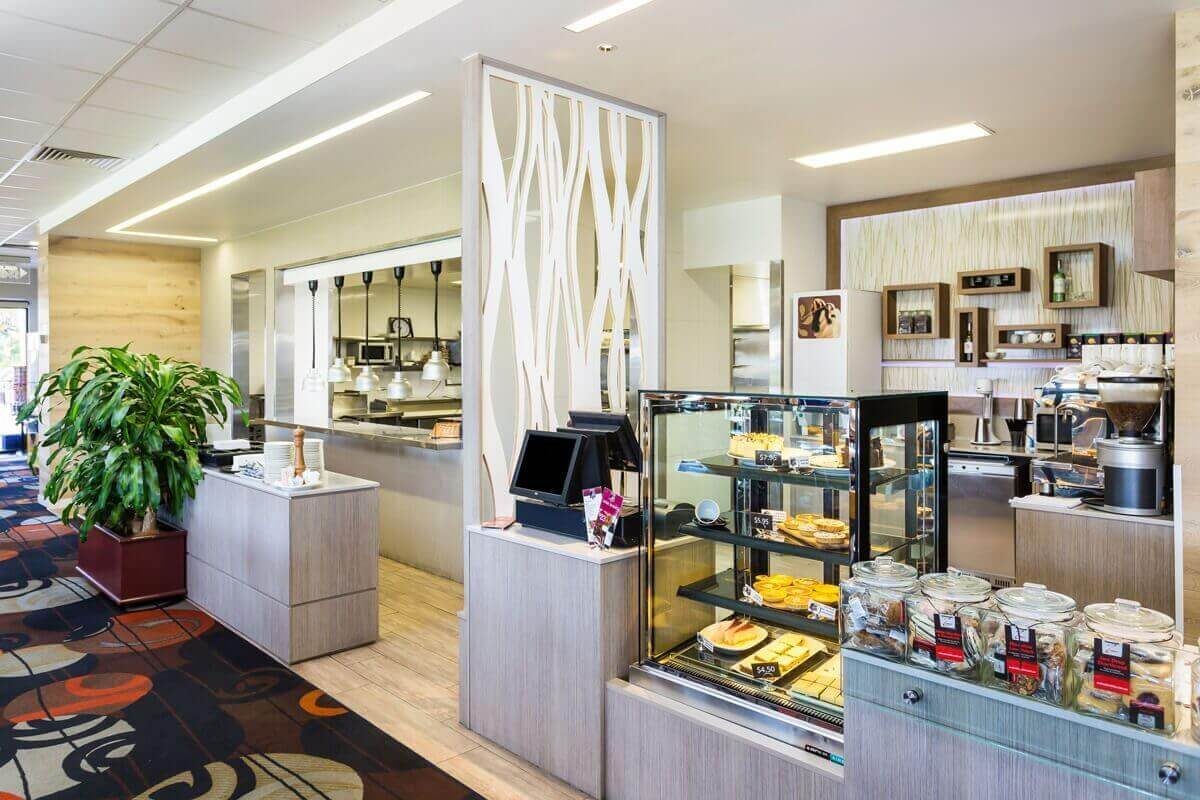 04 —The front-of-house interface utilises tactile timber-look finishes and integrated display units to bridge the gap between service and social spaces.
Front-of-House Interface
The cafe and servery design utilises custom timber-look cabinetry and laser-cut screens to define the ordering points clearly.
This architectural response reduces patron interference at the food pass, creating a more professional and organised environment for both staff and visitors.
Operational Success and Longevity
The implementation of a logical, linear workflow has significantly increased the team's capacity to manage intense service peaks with ease. This project proves that high-performance commercial design, when focused on human-centric movement and material durability, results in lasting operational success and improved social connection for the club community.
A site of your own?
Every project here began with the same questions: where does the sun come from, where does the water go, and what is worth keeping. If your site raises them too, that's the conversation to have.
Discuss your project